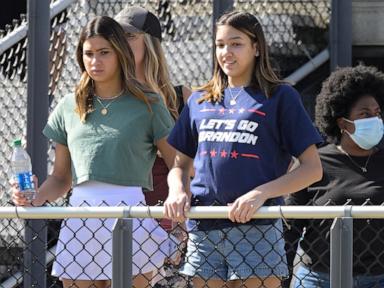
The United States Supreme Court just made its stance crystal clear on student political apparel. By turning away an appeal from a Michigan woman fighting a local school district's ban on "Let’s Go Brandon" sweatshirts, the high court left lower-court rulings standing and reinforced the wide latitude public schools hold when regulating student expression.
If you thought the courts would step in to settle the boundaries of free speech on school grounds over political slogans, think again. The justices declined to hear the case, meaning schools retain robust authority to keep controversial political statements out of classrooms.
Understanding the Legal Battle Over Student Expression
The controversy centers on a simple piece of clothing featuring a phrase that erupted into cultural prominence back in 2021. For anyone who missed the origin story, the phrase started at a NASCAR race when a crowd chanted an obscenity directed at then-President Joe Biden. A television reporter interviewing winning driver Brandon Brown famously interpreted the crowd's chant as "Let's Go, Brandon."
It instantly became a coded political meme, widely worn and displayed by conservative critics across the country.
When students showed up wearing sweatshirts bearing the phrase, school administrators drew a hard line. They argued that the slogan functioned as a proxy for profanity and caused disruptions in the learning environment. A Michigan family pushed back, arguing that student free speech rights under the First Amendment were being trampled.
Lower courts didn't buy the family's argument. They sided with the school district, leaning on decades-old legal precedents that give school boards the power to limit speech if it substantially disrupts school operations or invades the rights of others. By declining the appeal, the Supreme Court let that local ruling stand without issuing a new nationwide precedent.
What This Means for Free Speech in Classrooms
You might wonder how this fits into the broader history of student constitutional rights. Schools aren't constitutional free-for-alls. Back in 1969, the landmark Tinker v. Des Moines Independent Community School District ruling established that students don't "shed their constitutional rights to freedom of speech or expression at the schoolhouse gate."
However, Tinker came with a major caveat. Schools can censor speech that materially and substantially disrupts schoolwork or school discipline.
Over the years, the Supreme Court has steadily narrowed student speech protections. In 1986, the court ruled that schools can punish students for lewd or vulgar speech. In 1988, it ruled that schools can censor school-sponsored newspapers. More recently, the court ruled that off-campus speech on social media is protected in many cases, but on-campus expression remains tightly controlled by local administrators.
When a slogan like "Let's Go Brandon" walks the line between political commentary and coded profanity, school boards are given the benefit of the doubt. Administrators don't have to wait for an outright brawl to ban clothing; they just have to show a reasonable belief that the apparel causes disruption or steps over civility lines.
How School Districts Navigate Political Apparel Today
If you're a parent, teacher, or student trying to figure out what is actually allowed on campus, the landscape is messy. Dress codes vary wildly from one district to the next.
- Neutrality policies: Many districts enforce blanket bans on any clothing featuring political candidates, slogans, or controversial social movements to avoid accusations of viewpoint discrimination.
- Disruption thresholds: If a t-shirt or sweatshirt sparks arguments in the hallway or draws complaints from teachers trying to run a classroom, administrators will almost always pull the plug on it.
- Coded messaging: Slogans that rely on double meanings or inside jokes don't get a free pass just because they avoid direct profanity. Courts have consistently allowed schools to look past the literal words to the intended message.
The refusal of the Supreme Court to take up the Michigan case tells us that the justices are content to let local school boards make these judgment calls. If you want to wear political gear to school, expect pushback, and don't expect federal judges to rescue your outfit.
Check your local district's handbook before buying back-to-school apparel. Pay attention to vague clauses regarding "disruptive conduct" or "offensive language," because those are the exact tools administrators use to clear political clothing out of the hallways.