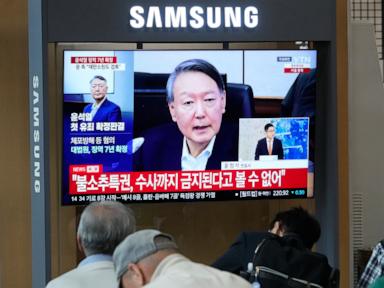
South Korea’s highest court just locked the door on former President Yoon Suk Yeol’s first major appeal. On Thursday, July 9, 2026, the Supreme Court upheld a seven-year prison sentence for Yoon, finalizing his guilt in a case that looks more like a political thriller than standard jurisprudence.
If you think a seven-year term is a massive blow to a former head of state, you’re missing the bigger picture. This is actually the smallest of Yoon's legal headaches. He is currently facing a stack of at least eight criminal trials stemming from his chaotic, hours-long attempt to impose martial law back in December 2024. Don't miss our previous coverage on this related article.
The real significance of Thursday's ruling isn't the duration of the sentence. It's the fact that the nation's top judicial body has officially validated the criminal nature of his actions, setting a definitive legal precedent for the bigger dominoes yet to fall.
The Paper Trail and the Locked Doors
This specific case didn't focus on the broad charge of trying to overthrow the government. Instead, it dismantled the procedural lies, cover-ups, and heavy-handed tactics Yoon used to push his decree through. To read more about the background here, The Guardian provides an informative breakdown.
The Supreme Court agreed with a lower appeals court's April ruling, finding Yoon guilty on a series of highly specific, damning charges:
- Falsifying the Proclamation: Yoon basically fabricated the official martial law document, forged the prime minister’s signature to make it look legitimate, and later destroyed the paperwork when the plan fell apart.
- Silencing His Own Cabinet: He completely bypassed the legally required cabinet consultation. Yoon called only 11 select ministers to a late-night meeting on December 3, 2024, to announce his decision rather than deliberate. Nine other cabinet members weren't even notified until it was too late, violating their constitutional rights.
- Blocking His Own Arrest: When lawmakers successfully voted to nullify the martial law order hours after it was issued, investigators moved to detain Yoon in January 2025. Yoon ordered his presidential security forces to physically block the investigators and defy the arrest warrant.
- Covering His Tracks: He instructed an army commander to erase secure military phone records and forced officials to blast misleading press releases to foreign media outlets to manage the fallout.
Yoon’s defense team expressed "deep regret" after the verdict, whining that the Supreme Court rushed to a conclusion without sufficient review. But the high court wasn't having it. The justices ruled that Yoon’s actions completely undermined the constitutional order. Because this was a Supreme Court decision, the seven-year sentence is final. There are no more appeals for this case.
The Much Bigger Legal Trap Awaiting Yoon
To understand why Yoon isn't just worried about this seven-year sentence, you have to look at the other verdicts already stacked against him. He has spent the last year in a detention center watching his presidency dissolve into a historic streak of criminal convictions.
First, the big one. In February 2026, a Seoul court handed Yoon a life sentence after convicting him of insurrection for deploying heavily armed troops to block the National Assembly during the martial law bid. He has appealed that sentence, but the legal mountain he has to climb just got a lot steeper now that the Supreme Court has branded his operational actions as criminal.
Second, the bizarre drone plot. Just last month, in June 2026, the Seoul Central District Court sentenced Yoon to 30 years in prison for abuse of power and aiding the enemy. The court found that Yoon deliberately ordered military drone flights over Pyongyang, North Korea, in October 2024. Why? Prosecutors argued—and the court agreed—that he was trying to manufacture a wartime security crisis to justify declaring martial law at home. Yoon’s lawyers claimed the drones were just a response to North Korea's trash balloons, but the judiciary saw right through it.
What This Means for South Korean Democracy
People outside of South Korea often wonder how a country can pivot so fast from a functioning democracy to martial law, and then to jailing the guy who ordered it. The truth is, South Korea’s institutions are remarkably resilient because they’ve been through this before. The country's Constitutional Court removed Yoon from office in April 2025, and a snap election in June 2025 put his liberal rival, Lee Jae Myung, into the Blue House.
By holding Yoon accountable for the granular details of his plot—like bypassing his cabinet and forging signatures—the courts are sending a clear warning to future leaders. You can't use the office of the presidency as a shield against the law.
What happens next? Don't expect Yoon to walk free anytime soon. While South Korea has a historical track record of pardoning former jailed presidents in the name of "national unity"—like coup leader Chun Doo-hwan in the 1990s—the sheer volume of Yoon's convictions makes an early exit highly unlikely. His immediate next step is fighting the appeals for his life sentence and his 30-year sentence. But with the Supreme Court already slamming the door on his first major case, Yoon's future looks firmly cemented behind bars.