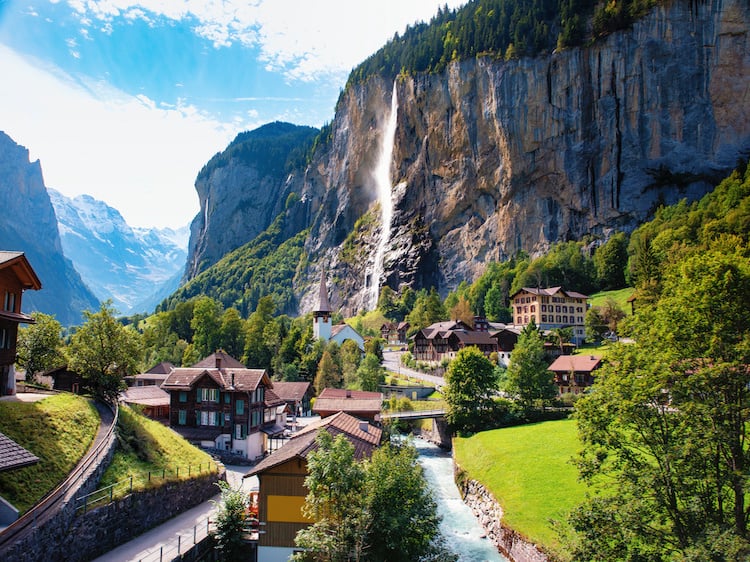
Neutrality is a religion in Bern. For over five centuries, Switzerland built its entire national identity around staying out of foreign entanglements. They didn't join the European Union. They spent decades hesitating on the United Nations. They proudly guarded their isolation like a family heirloom passed down through generations of bankers, watchmakers, and diplomats.
Things are changing. Fast.
The Swiss parliament just stared down a hardline conservative push to lock down strict new neutrality boundaries that would have practically banned any meaningful military alignment with NATO. Lawmakers rejected the proposal. They chose pragmatism over pure isolationism. If you think this is just standard European diplomatic shuffling, you are missing the massive shift happening beneath the Alpine surface.
The Reality Check Inside the Swiss Parliament
Let's look at what actually happened on the ground. The right-wing Swiss People's Party wanted to enshrine rigid neutrality restrictions directly into their constitutional framework. Their goal was simple. They wanted to block any joint military exercises, defense research partnerships, or weapon system interoperability with NATO members.
Parliament said no. By a clear margin, the National Council voted against tying their own hands.
Why did they reject it? Because the map of Europe was redrawn the moment Russian tanks rolled across the border into Ukraine. Bern woke up to a stark physical truth. You cannot sit in the middle of a burning continent and pretend your traditional firebreak still works the same way. Russian aggression shattered the comfortable illusion that neutrality guarantees safety by itself.
Switzerland's government realized that isolation doesn't mean security. It means vulnerability.
What NATO Partnership Actually Means For Bern
Nobody in Geneva or Zurich is talking about joining NATO tomorrow. Full membership remains a bridge too far for the Swiss public, and domestic political consensus on Article 5 collective defense simply does not exist.
Instead, the country is looking at practical alignment. They want to share air defense data. They want their troops to train alongside NATO forces so they can communicate if a crisis hits their borders. Modern security isn't about hiding behind a mountain range anymore. It is about cyber defense, early warning systems, and shared intelligence.
When your neighbors are upgrading their defense infrastructure to counter modern threats, refusing to talk to them isn't a moral high ground. It is military suicide.
Think about air defense initiatives like the European Sky Shield. Switzerland signed a declaration of intent to join it last year. Traditionalists screamed bloody murder, claiming it violated their sacred neutrality. Officials in Bern shot back with a simple reality check. Protecting Swiss airspace from modern ballistic missiles requires tracking them long before they cross the border. You cannot do that alone. You need data feeds from neighboring nations.
The Economic Cost of Isolation
Let us talk about money. Switzerland is heavily integrated into the Western economic grid, whether they admit it or not. When the European Union imposed sweeping sanctions packages against Moscow following the 2022 invasion, Bern faced an intense international squeeze.
Foreign partners pointed out the obvious hypocrisy. You cannot profit from Western financial systems while claiming neutrality exempts you from upholding international law.
The pressure worked, mostly. Switzerland adopted the EU sanctions packages, much to the anger of domestic isolationists who claimed the country had surrendered its soul. But sticking to neutrality while ignoring the economic fallout was never a sustainable strategy. International trade depends on trust, rules, and alignment with major security partners. If Switzerland looks like a rogue safe haven for dirty money and uncooperative diplomacy, its banking sector pays the price.
Shifting Public Opinion on Defense
Public perception is tracking right along with political maneuvering. For decades, the average Swiss citizen viewed the military as a well-funded civic duty rather than a fighting force for modern geopolitics. Conscription remained popular, but the idea of fighting alongside foreign allies was completely off the table.
Recent polling tells a different story. While a majority still guards the concept of neutrality jealously, support for closer cooperation with NATO has crept upward. People see the drone incursions, the hybrid warfare campaigns, and the rising cyber attacks hitting European infrastructure daily. They know neutrality doesn't stop a hacker in St. Petersburg from shutting down a Swiss hospital or a financial exchange.
What Comes Next For Swiss Security
The rejection of strict neutrality rules is a turning point. It signals that Switzerland's political establishment is willing to adapt to a dangerous new world order without completely abandoning its historical roots.
Expect to see quieter, deeper integration steps over the next few years. Joint cyber defense exercises will expand. Defense procurement will lean further toward equipment that matches NATO standards. Intelligence sharing will increase behind closed doors.
The myth of absolute neutrality is dying a quiet death in the Swiss Alps. It is being replaced by a much harder, more realistic understanding of survival in the twenty-first century.
If you want to understand where European security is heading, watch Bern. When even the most stubborn neutral state in the world decides to open the door to NATO, the old rules of the game are gone for good.
Take a close look at your own security assumptions. If legacy institutions are rewriting their core rules to survive modern threats, your organization or strategy needs to adapt just as quickly. Audit your dependencies, drop outdated playbooks, and build real partnerships before a crisis forces your hand.