Taiwan is finally putting its money where its mouth is. Taipei's cabinet has approved a massive supplementary budget that pushes total military spending past the historic NT$1 trillion mark for the first time, hitting roughly NT$1.12 trillion.
If you've been tracking cross-strait tensions, you know this isn't just about accounting tricks or inflating numbers. It’s a scramble to catch up with a rapidly closing window of deterrence. President Lai Ching-te’s administration is pushing defense expenditures beyond 3 percent of gross domestic product, driven by relentless pressure from Beijing's military exercises and quiet, persistent demands from Washington.
So, what is this financial firepower actually buying, and why did it take a supplementary budget to push things over the edge?
Where the Money Goes
Traditional big-ticket items like heavy armor and expensive fighter jets aren't the primary focus here. Instead, Taipei is heavily banking on asymmetric warfare capabilities. Think drones, precision missiles, and classified defense programs designed to make any potential cross-strait invasion a logistical nightmare for the People's Liberation Army.
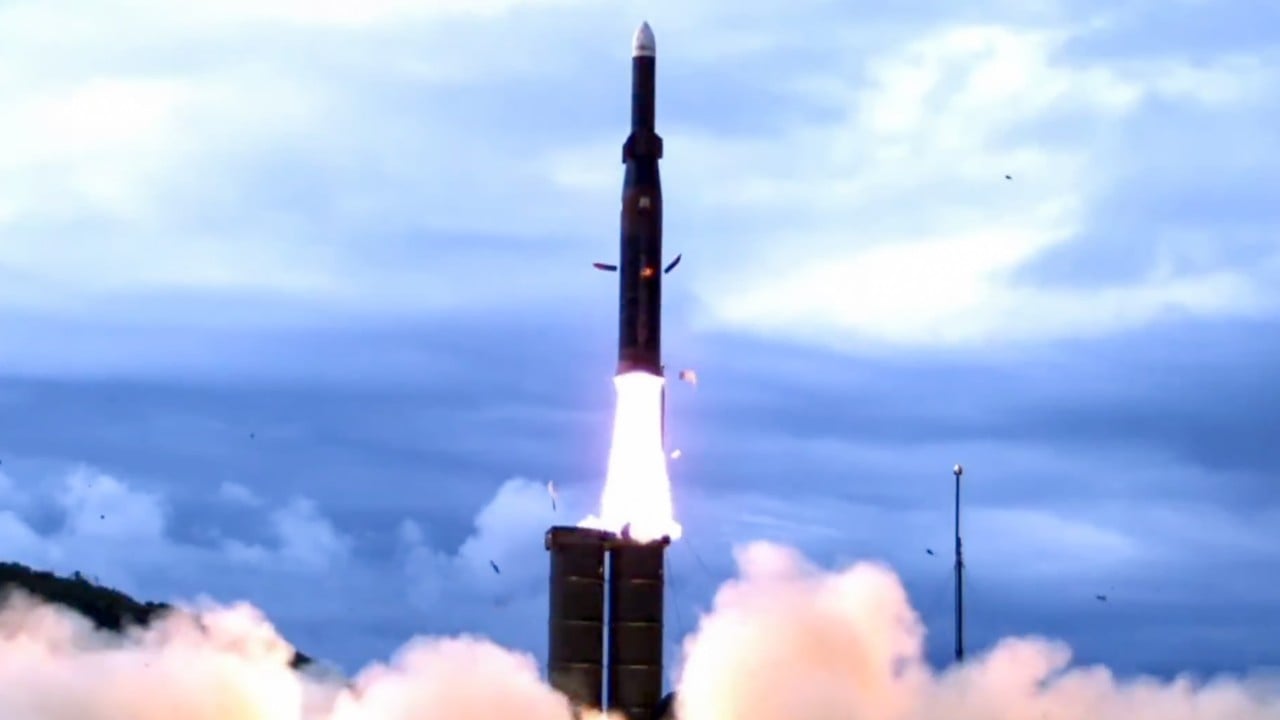
The latest supplementary cash injection targets specific gaps left behind after political wrangling over earlier special acts. We are looking at massive orders for maritime drones, coastal attack unmanned systems, and mid-level anti-tactical ballistic missile systems like the indigenous Strong Bow program.
Lieutenant General Huang Wen-chi of the Ministry of National Defense pointed out that drone units were formed prior to having all their gear. This funding finally matches operational units with actual hardware.
The Political Reality Behind the Budget
Money doesn't move itself through bureaucracy. The path to clearing NT$1 trillion was messy, fraught with domestic friction. Taiwan's Legislative Yuan, heavily influenced by opposition parties like the Kuomintang (KMT), has historically scrutinized and trimmed executive spending proposals.
Earlier special defense budgets faced severe cuts before eventually passing in reduced forms. That legislative pushback forced the administration to pivot, utilizing supplementary packages to rescue critical items—such as coastal surveillance drones and advanced air defense components—that initially got chopped.
When you look at defense spending through this lens, you see a government caught between two pressures: external threats that demand absolute urgency and an internal political landscape that insists on fiscal checks and balances.
What This Means for Regional Security
Hitting the NT$1 trillion milestone sends a clear signal to international partners. Critics in Washington have long argued that Taipei needed to take greater financial responsibility for its own survival. By pushing past 3 percent of GDP, Taiwan is answering those critics directly.
Yet, numbers on a spreadsheet don't win conflicts. The real test will be delivery speed and manufacturing capacity. Global supply chains for munitions are tight, and defense contractors face backlogs. Taiwan's domestic industrial base—including institutions like the National Chung-Shan Institute of Science and Technology—must scale up rapidly to manufacture thousands of loitering munitions and interceptors before time runs out.
Keep an eye on how smoothly these procurement contracts clear the legislature in the coming months. The era of cheap defense is over, and the real cost of deterrence is just beginning to show.