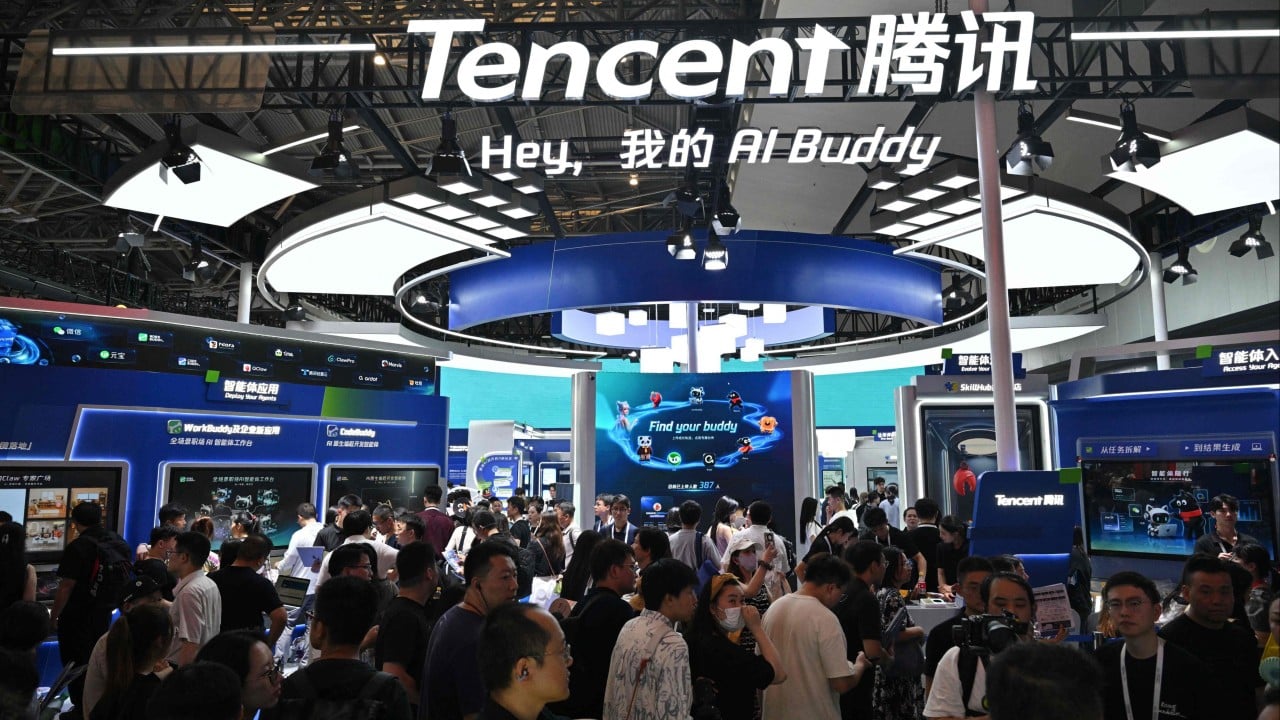
Everybody wants a piece of Southeast Asia's enterprise market right now. Tencent isn't hiding its ambitions anymore. The Chinese tech giant rolled out its desktop workstation and AI agent, WorkBuddy, into the region, picking local markets as the primary testing ground for its global software push.
Domestic competition back home is cutthroat. Margins are razor-thin, and growth requires fighting tooth and nail for every single corporate client. That reality explains why Tencent is pushing outward so aggressively. But taking an autonomous office assistant across borders isn't just about escaping a crowded home market. It is a direct challenge to established Western cloud giants and regional players who already hold deep enterprise trust. For a different look, see: this related article.
What WorkBuddy Actually Does
If you expect just another chatbot that spits out generic email templates, you'll miss the point of what Tencent built. WorkBuddy functions as a desktop-level AI agent designed to handle multi-step office workflows.
You give it a single natural language instruction—like pulling data from local folders, running basic spreadsheets, generating documents, or organizing daily reports—and it executes the steps autonomously. It reads authorized files on a local machine, breaks complex assignments into smaller chunks, and hands back complete deliverables rather than mere suggestions. Similar reporting regarding this has been shared by Mashable.
Even better for distributed teams, you can trigger and manage tasks remotely through apps store staff and office workers already use daily, such as Slack, Telegram, Discord, or regional equivalents like Feishu and DingTalk. That integration layer is smart. It removes friction by meeting users inside existing communication pipelines instead of forcing them to open a separate, dedicated software dashboard.
The Strategic Push Into Southeast Asia
Why start in Southeast Asia? The region is young, mobile-first, and hungry for digital efficiency. Countries across ASEAN are rapidly adopting cloud services and automation tools without the legacy infrastructure baggage dragging down many older Western institutions.
Tencent Cloud introduced WorkBuddy alongside Miora, an AI-native creative studio tool aimed at marketing and visual consistency, and TokenHub, a model-as-a-service gateway. Together, these offerings form a comprehensive toolkit designed to appeal to fast-growing regional enterprises that want enterprise-grade AI without building models from scratch.
Yet, stepping outside familiar territory brings sharp hurdles. Amazon Web Services, Microsoft Azure, and Google Cloud have spent years cementing relationships with regional corporations. Alibaba Cloud and Huawei are also elbowing for space in the exact same territory. Winning over local IT directors takes more than flashy feature lists. It requires localized compliance, ironclad data security guarantees, and reliable support ecosystems.
Overcoming Local Skepticism
Enterprise software buyers are naturally cautious. Handing an autonomous agent access to local file systems and sensitive internal documents sounds risky to a risk-averse chief information officer.
Tencent has to prove that tools like WorkBuddy maintain strict permission modes and local data management controls. If a company's proprietary data leaks or if an autonomous agent messes up a batch file rename across hundreds of financial spreadsheets, trust evaporates overnight.
Success in this market depends heavily on vertical integration and real-world proof. Early pilots in sectors like social welfare, retail, and digital marketing show promise, but scaling up requires convincing enterprise buyers that AI agents save actual labor hours rather than creating cleanup work.
What Comes Next for Office Automation
We are moving past the phase where companies buy AI just to say they did. The market now demands measurable productivity gains. Autonomous desktop agents represent the next logical step past simple conversational chat windows.
If Tencent's overseas playbook succeeds, expect other major tech firms to fast-track their own autonomous workspace agents into developing international markets. The winners won't necessarily be the companies with the most complex language models. They will be the ones that integrate cleanly into daily work routines and actually finish the job without human babysitting. Test the tool on a small batch of repetitive administrative tasks first before scaling it across entire departments.