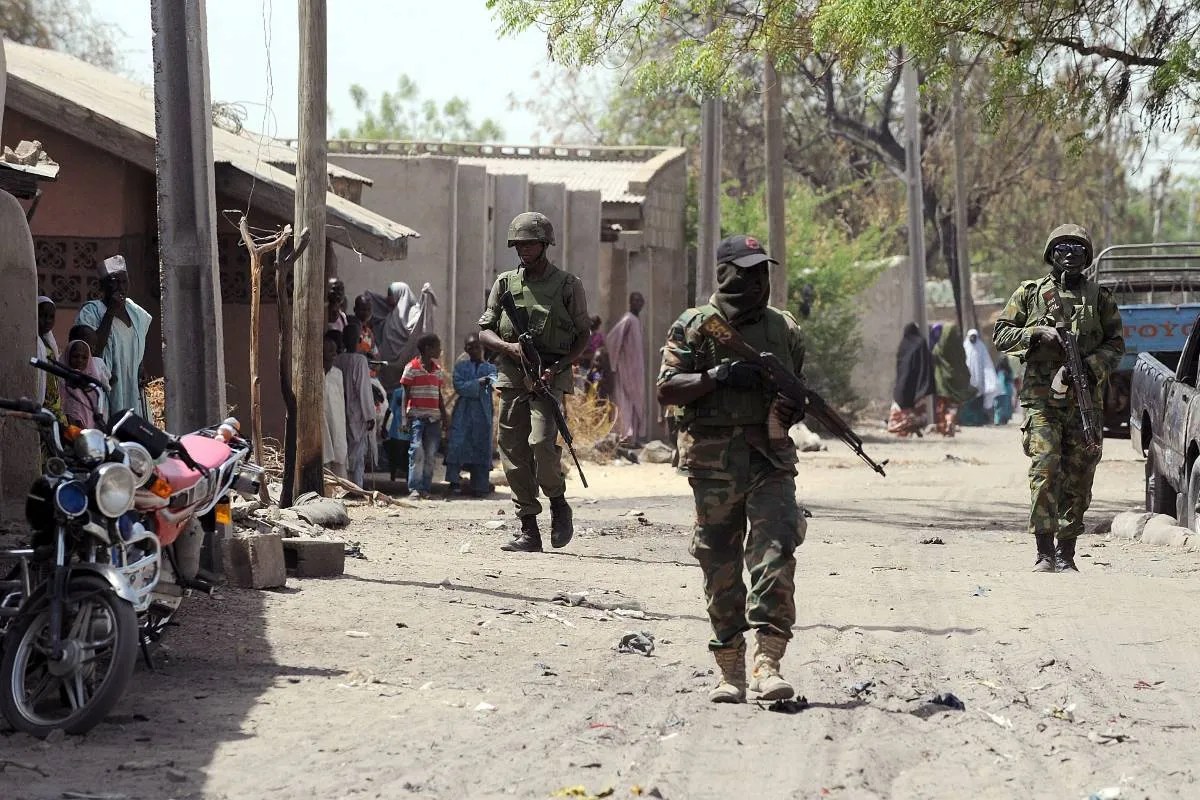
Darkness falls over the Mayo-Sava division, and sleep becomes a luxury most villagers can't afford. In a sudden overnight raid, suspected Boko Haram fighters tore through Kangaleri village in Cameroon's volatile Far North region, leaving eight dead and shattered families in their wake.
If you only follow mainstream international headlines, you'd think extremist violence in Central and West Africa is neatly contained or slowly fading away. It isn't. Raids like this one show how vulnerable remote border communities remain, caught in the crossfire of an insurgency that has metastasized far beyond its original epicenter in northeastern Nigeria.
The Anatomy of a Midnight Raid
Local reports confirm that the assault began around 11 p.m. Gunmen slipped across the landscape under the cover of darkness—a trademark tactical signature of the group. Six residents died instantly on the ground. Three others sustained severe wounds and were rushed for emergency medical care, where two more succumbed to their injuries.
Violence rarely happens in isolation in this region. On the exact same night, a parallel threat materialized in Tourou, a town situated in the Mokolo district near the Nigerian border. While attackers didn't claim lives there, they looted local shops, stripped livestock, and damaged the town's market. This dual-pronged strategy—terrorizing one settlement with lethal force while economically choking another—keeps local populations in a constant state of psychological siege.
Why Cameroon's Far North is a Prime Target
Geography is destiny, and for Cameroon's Far North, sharing a porous border with Nigeria's Borno state creates an ongoing security nightmare. The Mandara Mountains and vast scrublands provide ample cover for insurgent cells to cross international boundaries, strike civilian populations, and retreat before national security forces can mount an effective defense.
Boko Haram has targeted Cameroonian soil since 2014, adapting to counter-terrorism pressures by shifting away from holding territory toward asymmetric guerrilla tactics. Small villages lacking heavy defensive infrastructure bear the brunt of these incursions. When security patrols are spread thin across hundreds of kilometers of rugged terrain, isolated hamlets become easy targets for hit-and-run violence.
The Human Toll Behind the Statistics
We talk about numbers like "eight dead" as sterile metrics on a news ticker. Behind every statistic is an upended community. Families lose breadwinners, children lose parents, and entire agricultural cycles get disrupted because farmers are too terrified to tend their fields.
Human rights organizations and regional monitors have repeatedly pointed out that continuous low-intensity raids trigger internal displacement crises. Survivors often flee to overcrowded makeshift camps near larger towns like Kolofata or Mokolo, straining local resources and creating secondary humanitarian emergencies that rarely capture global attention.
What Real Security Requires Moving Forward
Stopping these cross-border atrocities requires much more than temporary military reinforcements after a tragedy occurs. Governments in the Lake Chad basin—including Cameroon, Nigeria, Chad, and Niger—face deep structural hurdles.
- Intelligence sharing: Cross-border communication channels must outpace insurgent mobility.
- Community policing: Local self-defense networks need proper integration and communication tools with official armed forces to provide early warnings.
- Economic resilience: Rebuilding markets and protecting agriculture stops the cycle of poverty that militant recruiters exploit.
Ignoring these borderlands won't make the crisis disappear. Until structural security and regional cooperation match the persistent threat of groups like Boko Haram, villages like Kangaleri will continue to pay the highest price.