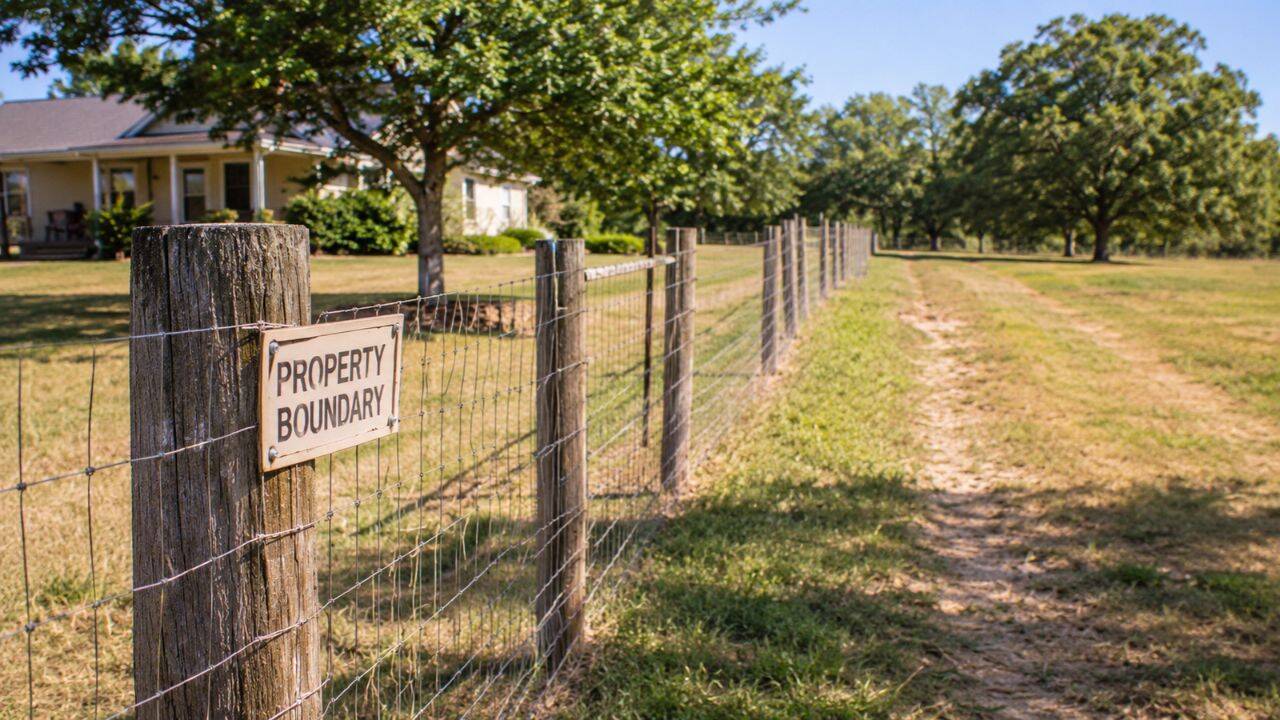
A neighbor puts up a fence on your land, blocks your access, and suddenly a simple boundary gripe turns into a seven-year court battle. That's basically what happened in Walker County, Texas, where a dispute over a fenced-off slice of a four-acre tract ended on November 12, 2026, with the Texas Tenth Court of Appeals affirming a permanent injunction to tear down the encroachments and keeping a $10,000 statutory damages award intact.
People read headlines like this and assume the $10,000 penalty was for building a crooked fence. Wrong. The fence got the lawsuit rolling in December 2019, after Mark Anthony Lebedzinski sent a demand letter over fencing blocking access to part of his four-acre property (including a narrow panhandle section) and a partially constructed porch roof extending onto his land. The $10,000 hit came later, tied to a 2021 warranty deed that tried to transfer three tracts—including land Lebedzinski owned and a dirt driveway crossing land belonging to him and another owner—to Russell's mother, Brenda Russell.
If you own rural or suburban land in Texas, this case is a wake-up call. Fences don't just mark grass; they trigger real legal traps around adverse possession, cloud on title, and strict evidentiary rules when litigation drags on.
What Actually Happened in the Walker County Fence Dispute
Let's strip away the noise and look at the timeline. Lebedzinski held a four-acre tract next to Shyla Desiree Russell's adjoining 0.5-acre parcel. When fencing cut off access to part of his land—described as roughly 0.4 acres in the initial complaint and tied to a 0.09-acre area in the evidence—he tried reasoning first and sent a demand letter before filing suit on December 4, 2019.
Then came the 2021 deed recording. Putting someone else's land into a recorded deed creates a cloud on title, meaning a public record now makes the true owner's title look messy or disputed even if the grantor doesn't own the land. Under Chapter 12 of the Texas Civil Practice and Remedies Code, filing or recording a fraudulent claim or lien against real property carries serious statutory bite: at least $10,000 or actual damages, whichever is greater, without needing separate proof of actual financial loss.
After a bench trial on August 28, 2025—which Russell didn't attend—the trial court ordered removal of the encroachments and awarded the $10,000 statutory/exemplary damages alongside $6,000 in attorney's fees and $450 in court costs. On appeal (Shyla Desiree Russell v. Mark Anthony Lebedzinski, Tenth Court of Appeals, Nov. 12, 2026), the court kept the removal injunction and the $10,000 statutory award, while knocking out the blanket declaration that the entire 2021 deed was void (since Russell actually owned her original 0.5-acre tract) and tossing the $6,450 in fees and costs due to missing proof and itemization.
Why Courts Order Fence Removal Instead of Just Paying Cash
Folks often ask why a judge forces someone to rip down a fence instead of just letting them pay market value for the sliver of land. Money doesn't fix being locked out of your own property.
When a boundary survey and testimony show a fence sits on your land and physically blocks access, monetary damages alone fall short. As the Texas Tenth Court of Appeals opinion on Justia reflects, injunctive relief makes sense when an ongoing physical barrier deprives the rightful owner of access and use.
I've seen property owners wait way too long hoping a neighbor will "do the right thing" once they show a survey line. That rarely works on its own. Once a fence stays up and goes unchallenged, it feeds two nasty legal arguments:
- Adverse possession claims: Under Texas Civil Practice and Remedies Code Chapter 16, someone can claim title through adverse possession if they meet strict statutory elements—including open, notorious, and hostile possession under a claim of right for the required period (such as the ten-year limitations period asserted in this case). Even when that defense fails because the claimant doesn't prove every element, fighting it adds years and thousands in legal bills.
- Informal boundary battles: Neighbors frequently treat an old fence as the "real" line for years, turning a casual habit into a full-blown court fight over surveys, driveways, and easements.
Surprising Details Most People Miss in Boundary Lawsuits
Winning on the merits doesn't mean winning every dollar you ask for. One of the sharpest takeaways from this appeal is how easily fee and cost awards get wiped out on review.
Even when you prevail on the main dispute, Texas courts scrutinize requests for attorney's fees and court costs. Here, the appeals court struck $6,000 in attorney's fees for lack of sufficient evidence showing they were reasonable and necessary, and struck $450 in court costs because an itemized record wasn't presented—even though Lebedzinski testified he paid the $450. That's a classic litigation trap: keep clean, itemized billing and cost records from day one.
Address change rules trip people up, too. Russell argued she lacked proper notice of the trial, yet the appeals court noted she had moved and didn't notify the court of her new address until after the trial. You can't skip updating your address with the court and then cry due process later.
Also worth noting: Texas fence disputes operate against a backdrop of broader state property rules explained in resources like Texas A&M AgriLife Extension's Landowner's Guide to Fence Law in Texas and state statutory guidance on Texas Civil Practice and Remedies Code Chapter 12. Depending on whether you're dealing with livestock, open-range rules, mineral rights, or recorded deeds, the exact legal lever changes fast.
Practical Next Steps If a Fence Blocks Your Land
Don't grab a chainsaw or tear down a neighbor's fence out of frustration. Self-help can backfire and create liability if your measurement or ownership assumption is off.
- Pull your deed and order a current boundary survey. Confirm the exact legal description, easements, and where the fence sits relative to the surveyed line.
- Check county deed records. Look for any recorded deeds, plats, or instruments that might cloud your title or reference shared driveways.
- Document access restrictions and send a written demand. Take date-stamped photos showing how the fence or structure blocks access, and have a Texas real estate attorney send a formal demand letter before filing suit.
- Track every legal expense with itemization. If litigation starts, make sure your counsel documents reasonableness and necessity for attorney's fees and maintains an itemized record of court costs.
- Keep your court address current. If you're ever a party to a lawsuit, file written notice of any address change immediately so you never miss a setting or deadline.