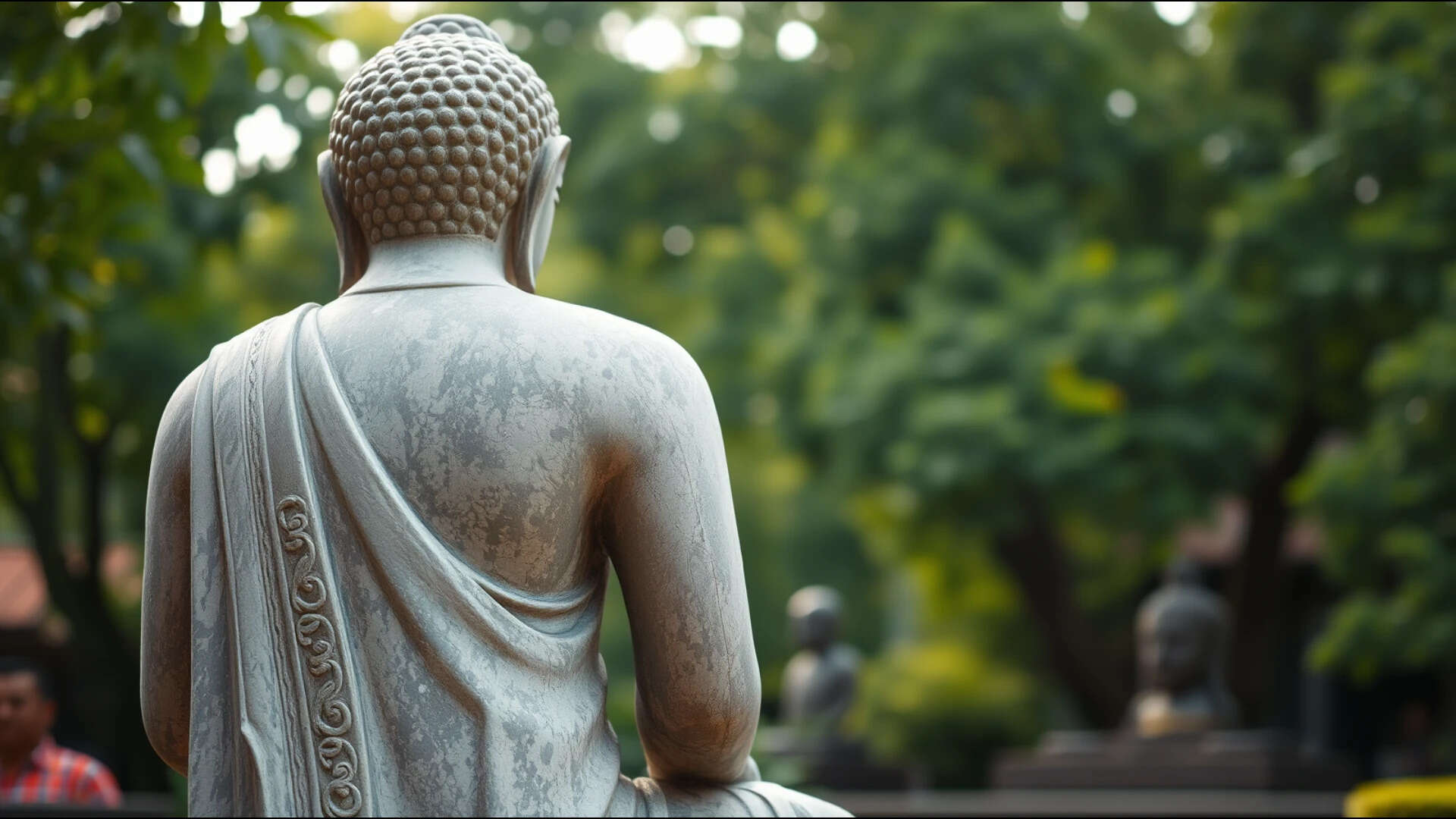
We live in an era obsessed with validation. If you do something good and don't film it for social media, did it even happen? That's the question modern culture forces us to ask every single day. But centuries ago, Thai culture answered this exact dilemma with a simple, brilliant proverb. They call it Pid Thong Lang Phra, which translates to paste gold leaf onto the back of a Buddha statue. It's a blunt reminder that the highest form of virtue is the one that gets absolutely zero recognition.
When you visit a temple in Thailand, you see devotees buying tiny squares of real gold leaf. They press these thin, glittering sheets onto bronze Buddha statues as an act of making merit. Naturally, most people crowd around the front. They paste the gold right on the chest, hands, or face where every visitor can see it. But the proverb pushes you to walk around to the dark, dusty back of the statue. Press your gold leaf there, where it faces the wall, completely hidden from the world.
The psychology behind the phrase paste gold leaf onto the back of a Buddha statue
Human nature craves applause. We like the pat on the back, the tax write-off, and the public thank-you note. There's a subtle selfishness in visible charity. When you broadcast your kindness, you're not just giving; you're trading. You give a donation, you buy a reputation.
The Thai proverb challenges this transaction. When you paste gold leaf onto the back of a Buddha statue, the offering doesn't lose its spiritual value just because it's out of sight. The statue is still gilded. The intent is still pure. The only thing missing is the audience. By removing the audience, you test your own true motives.
Think about your daily life. Do you hold the door open only when someone is looking? Do you clean up the shared office kitchen only when your boss might walk in? Most of us do. It's a hard habit to break. But true character is exactly what you do when you're completely certain no one will ever find out.
Moving beyond superficial gestures
Thai culture also uses this concept to critique its opposite. There's a contrasting idiom, pak chee roy na, which means sprinkling cilantro on top of a dish to make it look pretty right before serving, even if the food underneath tastes terrible.
We see this everywhere today. Corporations slap green logos on their products while dumping waste into rivers. Influencers record themselves handing cash to unhoused people for views. It's all cilantro. It's all front-facing gold leaf.
Pid Thong Lang Phra acts as the perfect antidote to this performative behavior. It honors the people who keep society moving without demanding a microphone. The late Thai King Bhumibol Adulyadej famously championed this philosophy throughout his reign, frequently reminding citizens that a country cannot be complete if everyone only wants to work on the front of the statue. Someone has to paint the back. Someone has to do the dirty, quiet, essential work.
Quiet leadership in practice
This isn't just about religious temples or abstract morals. It applies directly to modern leadership and career growth.
- The quiet fixer: Every office has one. They fix broken spreadsheets, mentor junior staff, and defuse client crises before they explode. They don't copy the CEO on every email.
- The uncredited supporter: They let their team take the spotlight. They know that true influence comes from building others up, not shouting about their own achievements.
People who operate this way build an ironclad sense of self-worth. They don't spiral when they don't get a shout-out on a corporate Zoom call. Their confidence comes from the work itself, not the applause.
Your next steps for practicing hidden kindness
If you want to integrate this mindset into your routine, don't overthink it. Start small and keep it strictly secret.
Leave a generous tip without making eye contact or waiting for a thank you. Fix a problem at work or home and let someone else take the credit for the smooth operation. Pay for the coffee of the person behind you in line and drive away before they realize what happened.
When you perform an act of anonymous goodness, you reclaim your autonomy. You prove to yourself that your morals aren't up for sale or open for public comment. Stop waiting for the world to notice your gold leaf. Walk around to the back of the statue, press it down firmly, and walk away.