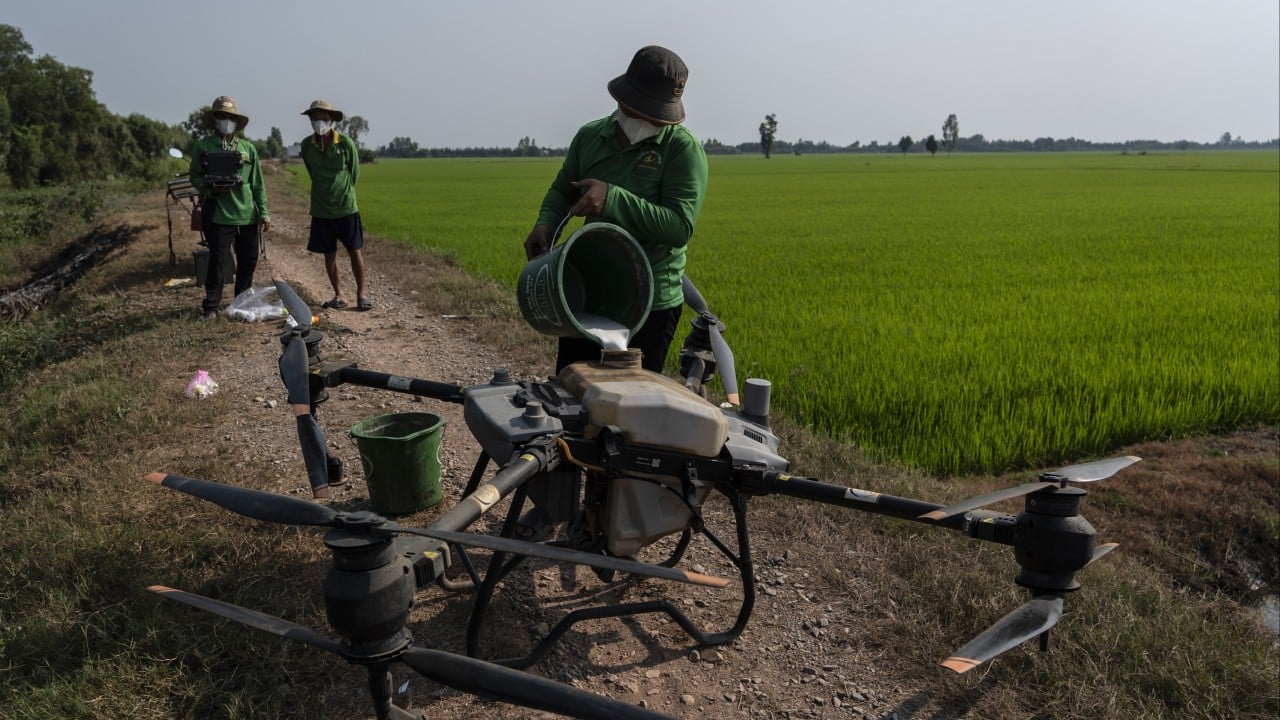
Walk through any agricultural hub in central Thailand, and you'll see them. Multi-rotor drones humming above vast rice paddies, spraying crops and mapping terrain with surgical precision. Nearly all of them carry hardware built in China. Giants like DJI have effectively captured the commercial skies across Southeast Asia, offering cheap, reliable machines that local farmers rely on daily.
Bangkok isn't trying to fight this hardware wave. You can't out-manufacture a supply chain that dominates the entire planet. Instead, Thai policymakers and tech firms are pivoting hard toward what goes inside those machines: home-grown artificial intelligence and custom software.
The Reality of Chinese Hardware Dominance
It's no secret that Chinese drone makers own the consumer and commercial hardware markets. Walk into any distribution center or agricultural cooperative in Thailand, and you're looking at hardware manufactured in Shenzhen. Over the past several years, brands like DJI have trained tens of thousands of local Thai operators, flooding the market with affordable, rugged quadcopters.
Trying to build a domestic hardware competitor from scratch would be an uphill battle full of wasted capital. Supply chains, component sourcing, and economies of scale heavily favor incumbents. Local Thai tech startups realized early on that competing with cheap Chinese manufacturing hardware is a losing game.
So, what’s the alternative? Control the brain, not just the body.
Shifting Focus to Software and AI
While the physical aircraft come assembled from abroad, the operational intelligence running them is rapidly shifting. Thai engineers, research labs, and private startups are designing specialized software layers tailored specifically to local topography, tropical crop layouts, and regional regulatory requirements.
Instead of relying entirely on off-the-shelf foreign algorithms that don't quite understand the nuances of Southeast Asian agriculture or localized surveillance needs, local developers are writing custom code. This includes advanced route-planning software, automated safety protocols, and computer vision systems designed to spot crop diseases unique to tropical climates.
By focusing on artificial intelligence integration, local firms can sit comfortably on top of imported hardware. You use the affordable Chinese drone chassis, but you run proprietary Thai software inside it.
Where the Money and Talent Are Flowing
Government agencies and private investors are pumping resources into domestic tech hubs to accelerate this transition. Events like regional tech expositions and specialized drone showcases in Bangkok highlight a massive shift in market interest. Stakeholders aren't just talking about flight times or battery capacity anymore. They want to talk about anti-drone countermeasures, AI-driven data analytics, and automated drone traffic management systems.
Universities are partnering with international labs to train native talent in machine learning and robotics. The goal is to build an independent ecosystem of software developers who can patch vulnerabilities, update flight algorithms locally, and ensure that data captured by these eyes in the sky stays within national borders.
The Real Bottleneck
Of course, writing good AI code is only half the battle. Thailand's tech sector still faces a severe shortage of specialized data scientists and robotics engineers. Many young tech professionals migrate toward fintech or e-commerce rather than deep-tech hardware-software integration.
Furthermore, regulatory frameworks move slower than technology. Civil aviation authorities are constantly scrambling to update airspace laws to accommodate autonomous swarms and delivery drones without choking off small business innovation.
If Bangkok plays its cards right, it won't matter who built the plastic shell of the drone. The software guiding it will be stamped "Made in Thailand." Stop looking at the hardware dominance as a defeat; look at where the real value is being captured.