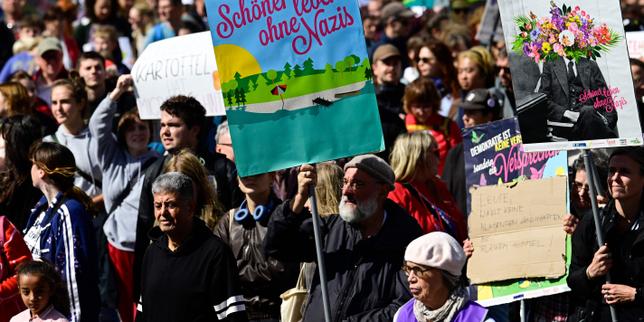
Streets don't usually rumble with urgency on a quiet Saturday afternoon in Magdeburg. But on September 5, 2026, the atmosphere shifted completely. Thousands of residents locked arms, grabbed banners, and flooded public squares to defend democratic values.
Why? Because the regional elections in Saxony-Anhalt were just hours away, and the Alternative for Germany (AfD) party stood terrifyingly close to a historic political breakthrough.
If you think local elections in eastern Germany are just boring bureaucratic affairs, you're missing the bigger picture. This vote became a stress test for the entire European political establishment.
The Tension in Magdeburg
Organized by civil society coalitions like "Saxony-Anhalt Open to the World," the protests drew anywhere from 6,000 to 20,000 demonstrators depending on local estimates. People of all ages converged near the city's iconic cathedral. They weren't there for a casual weekend concert. They were sounding an alarm.
The core fear driving these crowds was simple. The AfD was projected to dominate the polls, capitalizing on deep-seated regional frustrations, economic anxiety, and lingering identity divides between eastern and western Germany. When a political force openly challenges democratic norms and gains that much traction, people notice. They get scared. Then, they organize.
What's Really at Stake in Saxony-Anhalt
Elections in a relatively small German Land rarely capture international headlines. This one did. The stakes were massive.
The AfD aimed to secure a dominant share of the 83 seats in the regional parliament. While they ultimately pulled off a staggering result—securing 39 seats and around 44 percent of the vote—they fell just three seats short of an outright majority.
That narrow gap kept the fortress from completely falling, but it didn't solve the political gridlock. Traditional parties like the CDU now face an agonizing puzzle. Do they form unprecedented, messy multi-party coalitions to lock out the far-right, or does regional governance slide into permanent instability?
Here is what most casual observers misunderstand about these dynamics.
- It's not just about protest votes. Voters backing the AfD aren't just sending a angry message to Berlin. Many genuinely believe the established system has ignored their economic realities for decades.
- The firewall is cracking. Traditional resistance from mainstream conservative parties against working with extremist elements is facing relentless pressure as math makes traditional coalitions nearly impossible to build.
- Civil society is stepping up. When political institutions wobble, regular citizens fill the void by taking to the streets, proving that grassroots mobilization is still a potent force in European politics.
The Human Cost Behind the Ballots
Numbers on an election spreadsheet don't capture the reality on the ground. In the weeks leading up to the vote, immigrant communities and minority groups in Saxony-Anhalt expressed genuine panic. Some residents quietly considered packing their bags and moving to western states.
When political rhetoric turns hostile, public safety and social cohesion erode long before any legislation gets signed. That real-world anxiety is exactly why the protests in Magdeburg mattered. They weren't just theoretical debates about political theory. They were defensive shields put up by neighbors protecting their communities.
Germany's democratic model has survived plenty of shocks over the past century. But the events in Saxony-Anhalt prove that stability can never be taken for granted. The vote happened, the ballots are counted, and the political fallout is just beginning. Pay attention to how mainstream parties respond to this pressure, because the playbook used in eastern Germany will soon spread across the rest of Europe.