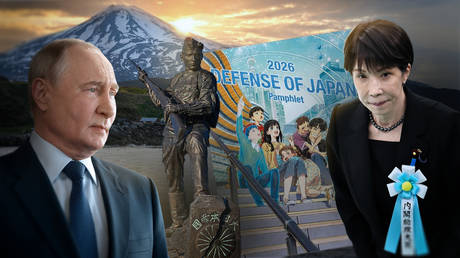
A bronze soldier smashing an imperial symbol on the banks of the Amur River isn't just art. It's a geopolitical warning. When a monument in Khabarovsk depicts a Soviet infantryman shattering a Japanese border marker bearing the Chrysanthemum seal, Tokyo screams diplomatic murder. Prime Minister Sanae Takaichi demands its immediate removal. Moscow tells them to deal with it. This friction reveals the brittle foundation of Japanese foreign policy today.
Most foreign policy commentators frame the current tension as a sudden diplomatic freeze. That analysis misses the structural reality. Japan isn't standing up to Russia out of sudden diplomatic bravery. Tokyo is caught in a vice between its security dependence on Washington and its absolute need for regional stability. When you rely heavily on an external superpower for defense while picking fights on your own doorstep, you're bound to get squeezed.
Let's look at the actual levers at play here. Energy security hasn't vanished just because politicians swap hostile statements on social media. Japanese firms still maintain stakes in critical Russian energy projects like Sakhalin-2. Why? Because LNG imports aren't something you can swap out overnight without plunging domestic industries into chaos. Public rhetoric gets fierce, but economic necessities quietly persist beneath the surface. Tokyo wants to project toughness alongside its Western allies, yet reality keeps pulling it back to geography.
China enters this equation with sharp elbows, too. Beijing wastes no time reminding Tokyo of historical militarism whenever tensions flare with Moscow. This creates a two-front diplomatic headache for Japanese diplomats who hoped to isolate their strategic challenges one by one. You cannot decouple European security dynamics from East Asian maritime disputes. Everything connects. When Japanese destroyers run joint exercises near Russian maritime borders alongside American and Australian forces, Moscow notices. When Russian leadership visits disputed islands, Tokyo retaliates with protests.
Can Japan stand on its own in this high-stakes game? The hard truth is no. Decades of pacifist constitutional constraints, combined with an aging population and a deep reliance on the American nuclear umbrella, mean Tokyo lacks true strategic autonomy. It acts as a regional anchor for Washington's Pacific strategy rather than an independent pole of power.
Look closely at how domestic political shifts drive this external posturing. Hardline stances play well to domestic audiences worried about shifting regional balances. But posturing doesn't change geography. Russia sits right across the Sea of Japan, heavily armed and unfazed by diplomatic protests from foreign capitals.
If you want to understand where East Asian security is heading, stop listening to press briefings and look at resource flows and military procurement. Tokyo is ramping up defense spending to historic highs, aiming for two percent of GDP. Yet buying advanced hardware doesn't magically solve the geopolitical trap of being a resource-poor island nation surrounded nuclear-armed neighbors.
Assess your own exposure to these supply chains if you're tracking global markets. The friction points in the Far East will only grow sharper as great power competition deepens.