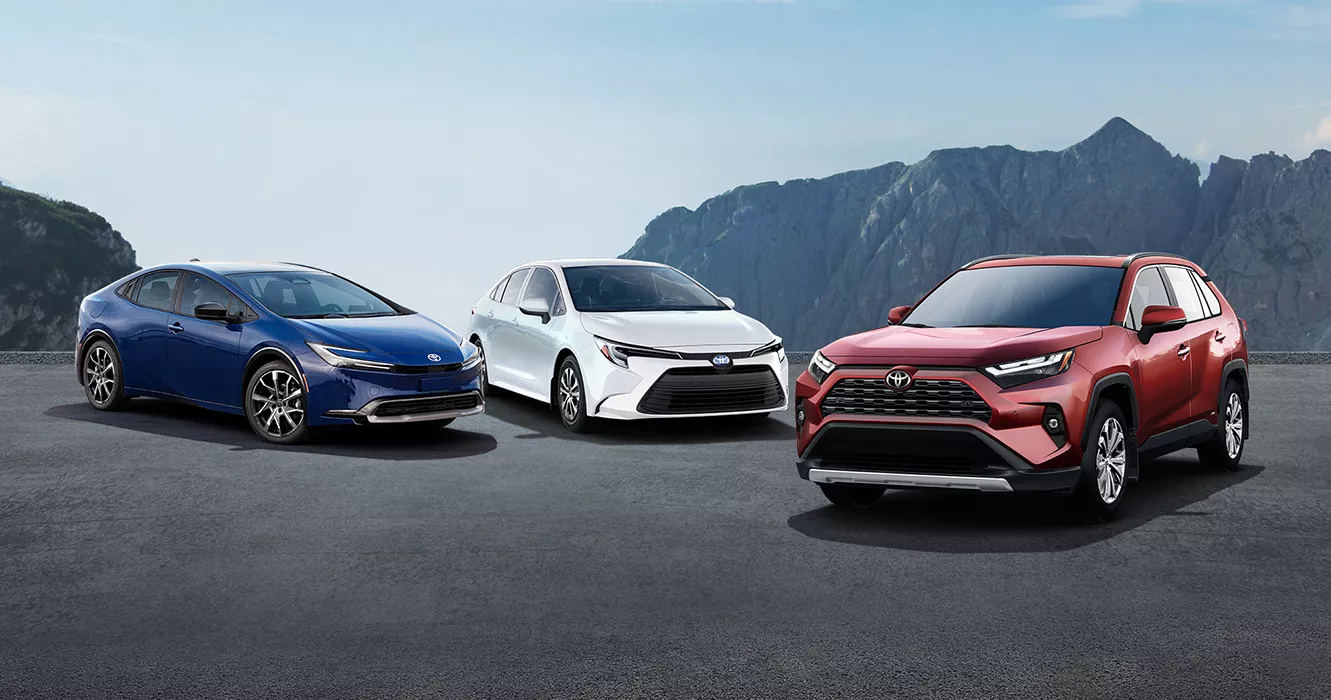
If you still think legacy automakers can coast on hybrid loyalty in Asia, look at what just happened to Toyota.
Toyota just reported a brutal 23 percent drop in China sales for August alone. This marks seven straight months of painful declines in the world's biggest auto market. Shares for the Japanese automotive giant are down 15 percent this year, dragging down global deliveries by 3.6 percent to 6.6 million vehicles.
Everyone wants to blame macroeconomic jitters or China’s ongoing real estate slump. Those factors matter. But they miss the immediate catalyst forcing buyers away from traditional showrooms: soaring fuel prices driven by Middle Eastern conflict. When petrol gets expensive overnight, the math on combustion engines and even standard hybrids changes fast. Chinese consumers are looking at their monthly commuting costs and walking straight into showrooms packed with domestic electric vehicles.
The High Cost of Fuel Shifting Consumer Psychology
You cannot look at Toyota's slump without understanding how quickly driver behavior adapts to energy shocks. When pump prices spike, the psychological barrier against switching to a pure battery vehicle disappears.
For years, Toyota banked on its legendary hybrid technology as the ultimate bridge. It made total sense. Drivers got better mileage without the range anxiety or charging infrastructure headaches of pure EVs. But that strategy hits a brick wall when fuel costs surge past a certain threshold. Drivers stop calculating fuel efficiency savings and start looking at zero-emission alternatives that bypass petrol stations altogether.
Domestic Chinese manufacturers saw this opening years ago. Brands like BYD, NIO, and countless others flooded the market with aggressively priced, tech-heavy electric vehicles. While Toyota was refining its internal combustion efficiency, local rivals were building smart cabins, advanced driver-assistance systems, and ultra-cheap battery architectures.
August data proves this shift isn't slowing down. While Toyota and Lexus sales cratered, battery electric vehicle sales across China rose 36 percent. The market is voting with its wallet. It wants digital cockpits and plug-in convenience, not legacy mechanical engineering wrapped in conservative styling.
The Structural Trap of Legacy Joint Ventures
Toyota is caught in an architectural trap of its own making. For decades, foreign automakers operated in China through strict joint-venture models with local state-owned enterprises. These arrangements worked wonderfully when foreign brands held a monopoly on quality and prestige.
Today, those joint ventures are bureaucratic anchors. Decisions take months. Supply chains are tied to traditional components. Meanwhile, domestic Chinese EV makers operate with ruthless agility, iterating software updates weekly and slashing vehicle prices to wage a brutal price war.
Look at what Toyota is forced to do right now to survive. Its local joint venture partner GAC just announced an agreement to acquire a 50 percent stake in FAW Toyota, consolidating operations. The company is scrambling to implement a "China-for-China" model, stripping out expensive Japanese parts in favor of local Chinese technology suppliers and software ecosystems.
It is a desperate scramble to localize. But doing it while sales are plummeting 23 percent year-over-year leaves very little breathing room.
Why the Global Ripple Effect Matters
You might think a slump in China only hurts local balance sheets, but Toyota's troubles have global consequences. China accounts for a massive chunk of its operational volume. When that engine stutters, global supply chains feel the pinch, and corporate earnings take a direct hit.
At the same time, the stronger yen has complicated earnings prospects, piling extra pressure onto executive leadership in Aichi. Competitors like Volkswagen, BMW, and Mercedes-Benz are facing the exact same bloodbath, forcing them to slash annual forecasts as well. Honda has fared even worse, with sales dropping by roughly three-quarters in July and August compared to the prior year.
Yet, Toyota's situation is unique because it spent years publicly questioning the wisdom of an all-electric future. Chairman Akio Toyoda famously argued that hybrids and alternative powertrains should remain part of a diversified mix. That logic still wins customers in markets like the United States—where steep tariffs block cheap Chinese EVs—and in parts of Europe and Japan where hybrid sales remain strong.
In China, however, that nuanced debate is over. The consumer base decided.
What Comes Next for the World's Biggest Automaker
Toyota isn't going bankrupt, and its global dominance isn't vanishing tomorrow. The company is preparing its biggest factory overhaul investment program in decades, deploying advanced robotics to modernize production lines and claw back cost competitiveness.
If you run a legacy automotive business, the lesson here is simple: technical superiority in manufacturing cannot outrun a total shift in consumer software expectations and energy economics. Clinging to hybrid safety nets while local competitors redefine the entire cabin experience is a losing battle.
Stop assuming brand heritage protects you from technological obsolescence. If you cannot match local speed and digital integration in your key growth markets, your dominance will evaporate before you can retool your assembly lines.