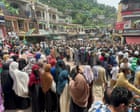
Unrest in Pakistan-administered Kashmir has finally bled into Britain's own backyard. When a British national was shot dead during a bloody security crackdown, it exposed a terrifying reality for dual nationals visiting the region. You travel with a British passport, assuming it offers a safety net. It doesn't.
Mohammad Akhtar didn't go to Kashmir to fight. The 50-year-old resident of Peterborough was simply standing near his home in Kotli on June 9 when chaos erupted. Protesters were clashing with Pakistani security forces over soaring living costs and electoral reforms. State forces opened fire on the crowds. A stray bullet tore through Akhtar's chest.
He died instantly. Yet, his family chose silence. They couldn't even file a local police report, paralyzed by the fear of state reprisals. They didn't dare go to British authorities for months. That single detail tells you everything you need to know about the atmosphere of fear gripping Pakistan-administered Kashmir right now.
The Anatomy of a Forgotten Crackdown
For months, the Joint Awami Action Committee (JAAC) has driven massive civil demonstrations across the Himalayan territory. Citizens want basic economic relief and fair elections. Islamabad responded not with dialogue, but with brute force. Pakistan’s defense minister, Khawaja Asif, went as far as labeling protesters as "enemies of Pakistan" and comparing them to regional rivals.
Rights groups estimate that security forces have killed at least 30 demonstrators. The government flatly denies it. But the body count keeps rising, and the violence is no longer contained to local residents.
Akhtar's death is a horrific headline, but it's not an isolated incident. Consider the case of Waqas Arif. The 38-year-old from Nottingham has sat in a Mirpur prison for over two months. He was swept up during a security raid on June 5. His family insists he had nothing to do with the protests. He hasn't seen a judge. He hasn't faced formal charges. British diplomats have struggled to establish direct contact with him behind bars.
When foreign nationals can be disappeared into regional prisons without due process, ordinary rule of law has completely collapsed.
Why the Foreign Office Response Falls Short
Families of victims often look to the Foreign, Commonwealth and Development Office (FCDO) for a lifeline. They expect swift rescues, public outcry, and diplomatic pressure. The reality on the ground is messier and much slower.
Former minister Hamish Falconer raised the deteriorating situation during meetings in Islamabad. His successor, Stephen Doughty, has kept lines of communication open with local counterparts. The UK government updated its official travel guidance, warning citizens against all non-essential travel to parts of the region.
Warnings don't bring people back from the dead. They don't spring innocent men from crowded prisons.
British citizens of Kashmiri heritage frequently maintain deep familial and property ties to the region. They travel back for weddings, funerals, or to visit aging parents. They view themselves through the lens of family, but local security apparatuses view them through the lens of suspicion. If you hold a foreign passport and happen to live in a neighborhood that stages anti-government protests, you become a liability.
The Broader Geopolitical Fallout
This regional powder keg extends far beyond local economic grievances. The disputed territory is claimed by both Pakistan and India, making every protest a flashpoint for international posturing. While Islamabad accuses demonstrators of threatening public order, New Delhi points to the unrest as proof of systemic administrative oppression and economic exploitation.
Meanwhile, ordinary people pay the ultimate price.
Protests staged by the British Kashmiri diaspora in cities like Bradford show that the anger is spilling overseas. Communities in the UK are watching their relatives face live ammunition and arbitrary detention. They feel abandoned by local police who refuse to log crimes and frustrated by international bodies moving too slowly to matter.
What You Need to Know Before Traveling
If you or your family members plan to visit regions experiencing civil unrest, throw out your old assumptions about consular protection.
- Consular limits: A British passport cannot shield you from a bullet or stop a midnight arrest if local security forces operate outside judicial oversight.
- Fear of retaliation: Local police departments often refuse to register complaints against state actors, leaving victims with zero domestic legal recourse.
- Communication blackouts: During intensive crackdowns, internet and mobile services frequently drop, making it nearly impossible for trapped travelers to call for help.
The killing of Mohammad Akhtar and the prolonged detention of Waqas Arif demand a sharper, more aggressive diplomatic response from London. Citizens abroad deserve absolute protection, not quiet behind-the-scenes negotiations that yield no results.
Check current FCDO travel advisories before booking any flights to volatile border regions. Keep emergency embassy contacts saved offline. If you find yourself caught in sudden civil unrest, stay away from windows, avoid crowds entirely, and make immediate contact with family members who can sound the alarm from abroad if communication lines go dark.
/media/movies/covers/2026/05/cats_aN0SAZJ.png)