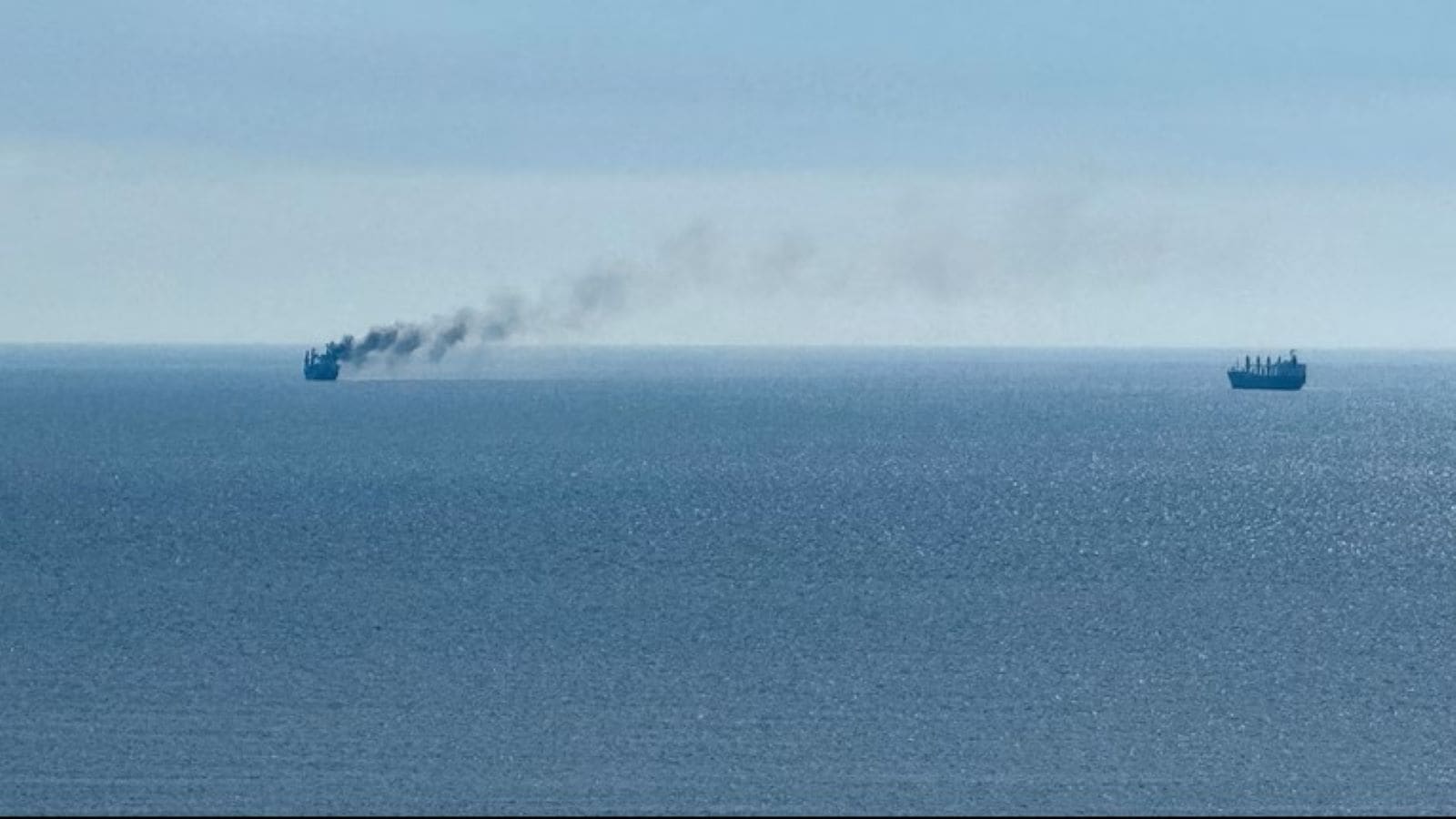
The Black Sea just became a lot more lethal for international mariners. On July 19, 2026, the general cargo vessel MV Golden Leo was struck by Russian cruise missiles while departing the Ukrainian port of Odesa. The attack left ten people dead, including four Indian seafarers and a 66-year-old Ukrainian port pilot. Another Indian crew member remains hospitalized in critical condition.
This isn't just another statistic in a long-running war. It marks the first time Indian sailors have been killed in the conflict between Russia and Ukraine. For India, a nation that provides a massive chunk of the global seafaring workforce, the tragedy hits incredibly close to home. It highlights a brutal reality: civilian crews are increasingly trapped in the crosshairs of geopolitical warfare.
The Strike on the Golden Leo
The MV Golden Leo, a Guinea-Bissau-flagged bulk carrier owned by Mumbai-based Ocean Grace Shipping Ltd, was carrying a cargo of corn when the strike occurred. According to the Ukrainian Air Force, Russian forces launched three Kh-59/Kh-69 cruise missiles at the vessel. One missile ripped into the starboard side of the superstructure, immediately igniting a massive fire on board.
At the time, the ship carried 17 crew members, primarily from India and Syria. Emergency units from the Ukrainian Navy and the Maritime Search and Rescue Service rushed to the scene. While they managed to evacuate eight crew members to a hospital in Odesa, the devastation was swift and severe.
Among the victims was 26-year-old Akhil Joyan from Kerala’s Kasaragod district. He was the only son of his parents and had just had his wedding fixed during a visit home last month. He had spent six years building a career in the merchant navy, only to lose his life on an unarmed grain ship.
New Delhi Walks a Diplomatic Tightrope
Following the incident, India’s Ministry of External Affairs (MEA) issued a sharp condemnation. The ministry stated that targeting commercial shipping and endangering innocent civilian crew members is deplorable and must be avoided.
However, if you look closely at the official statement, India deliberately avoided naming Russia.
This careful phrasing reflects New Delhi’s complex diplomatic balancing act. India has maintained deep economic and strategic ties with Moscow throughout the war, relying heavily on Russian oil and military hardware. Yet, as global logistics routes become more volatile, India is finding it harder to shield its citizens from the fallout. The tragedy occurred just as India has been dealing with seafarer casualties in West Asia due to US and Iranian strikes in the Strait of Hormuz, making this a highly sensitive time for the country's maritime security strategy.
Ukraine, on the other hand, didn't hold back. The Ukrainian Navy called the strike a blatant act of terror against peaceful navigation and a direct violation of international humanitarian law. Acting Foreign Minister Andrii Sybiha pointed out that the vessel posed zero military threat and was actively serving global food security.
The Crumbling Safety of the Black Sea Corridor
For a brief period, international agreements allowed grain ships to navigate the Black Sea with relative safety. That safety net has completely evaporated. The attack on the Golden Leo is part of a massive escalation by Russian forces targeting Ukraine’s deepwater ports and maritime infrastructure.
According to the Ukrainian Sea Ports Authority, Russian forces targeted 23 port facilities and 17 civilian vessels in the first two weeks of July 2026 alone. This aggressive campaign has severely choked Ukraine’s export capacity. The country, which typically accounts for 6% of global wheat exports and 11% of global corn exports, has seen its Black Sea export capacity slashed by nearly a third.
The risks are shifting insurance dynamics and forcing ship owners to reconsider whether entering the Black Sea is worth the gamble. Many are starting to refuse orders to Ukrainian ports altogether.
What This Means for Global Shipping
The immediate takeaway for global supply chains is simple: shipping costs and insurance premiums for Black Sea routes are bound to skyrocket. When civilian mariners from neutral countries start dying, the maritime industry takes note.
If you are operating or managing logistics that touch the Black Sea or any contested waters, you need to take immediate steps:
- Re-evaluate Risk Premium Clauses: Ensure your charter parties and crew contracts clearly outline war risk premiums and give crews the explicit right to refuse sailing into high-risk zones without retaliation.
- Demand International Monitoring: Support calls by entities like the International Maritime Organization (IMO) to deploy independent monitoring missions to document acts of maritime aggression and establish clearer accountability protocols.
- Diversify Trade Routes: If you are relying on agricultural exports out of Eastern Europe, aggressively shift your logistics focus toward alternative overland European rail routes or Danube river ports, even if they come with lower capacities and higher upfront operational friction.
The tragedy off the coast of Odesa proves that the buffer zone between civilian commerce and active combat has vanished. Waiting for geopolitics to settle down before adjusting your supply chain security is a losing strategy. It's time to adapt to a far more dangerous maritime landscape.