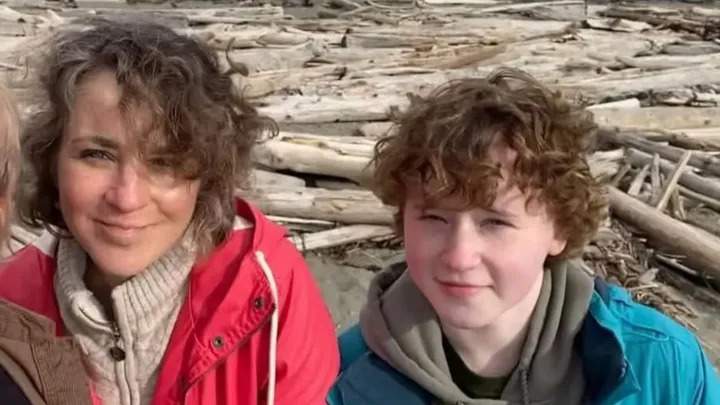
Living on the edge of the Canadian wilderness means sharing your backyard with some of the most powerful apex predators on the planet. Most of the time, we coexist in an uneasy, unspoken truce. But every so often, that fragile boundary shatters in the worst possible way.
The recent tragedy in Bella Coola, British Columbia, has shaken communities across the Pacific Northwest and cast a harsh spotlight on the raw, unpredictable reality of human-wildlife encounters.
The Unfolding Tragedy in the Snooka West Trail Area
Authorities and conservation officers confirmed a nightmare scenario along the Snooka West Trail area in Bella Coola. According to the BC Conservation Officer Service, the remains of one victim were discovered on a Monday during initial search efforts. By Tuesday afternoon, a joint sweep by the RCMP and conservation teams led to the heartbreaking recovery of a second set of remains.
A family-led GoFundMe campaign subsequently identified the victims as Jenny Balcarras and her 20-year-old daughter, Selah Reed.
Balcarras had recently relocated to the remote Bella Coola Valley to carve out a fresh start and begin a new chapter of her life. Her daughter Selah was just stepping into adulthood, carrying the boundless optimism of a twenty-year-old with her whole future ahead of her. Instead, the family is now facing an unthinkable double loss, left to navigate both overwhelming grief and the crushing financial realities of unexpected funeral services for two family members.
The Search for Answers and Wildlife Management Protocols
In the wake of the discovery, the BC Conservation Officer Service launched an intensive and dangerous operation to locate any bears tied to the incident. Inspector Jeff Tyre and his team on the ground have stressed that public safety remains the top priority, urging locals and visitors to steer clear of the Snooka West Trail area while investigations continue.
Wildlife officials face a difficult calculus in situations like this. Investigators have not yet confirmed whether a single bear or multiple animals were involved in the attack. Under standard provincial protocols, any bear determined to be implicated in a fatal attack is put down to eliminate further risk to human life. Traps set overnight yielded no immediate captures, but search efforts remain active.
Fatal grizzly bear attacks are exceedingly rare, which makes incidents of this scale rattle communities to their core. When apex predators and humans occupy the same rural and remote ecosystems, tension is inevitable. But understanding the dynamics of bear behavior, habitat overlap, and seasonal foraging patterns is crucial for anyone living, working, or recreating in bear country.
Realities of Coexisting in British Columbia Wilderness
British Columbia holds a massive portion of North America's grizzly population. As rural development expands and outdoor recreation surges, human footprints increasingly overlap with established wildlife corridors.
Bears aren't malicious hunters stalking humans for sport, but they are opportunistic eaters driven by survival instincts. Seasonal food sources, territorial instincts, or an accidental close encounter can trigger a defensive reaction with devastating consequences. When you step into remote trails like those in Bella Coola, you are entering a domain where humans are visitors, not masters.
The community of Bella Coola is grieving deeply for Jenny and Selah. As investigators piece together the timeline of what happened on the Snooka West Trail, the rest of us are left staring at a stark reminder of nature's indifference and the high stakes of sharing space with wild bears.