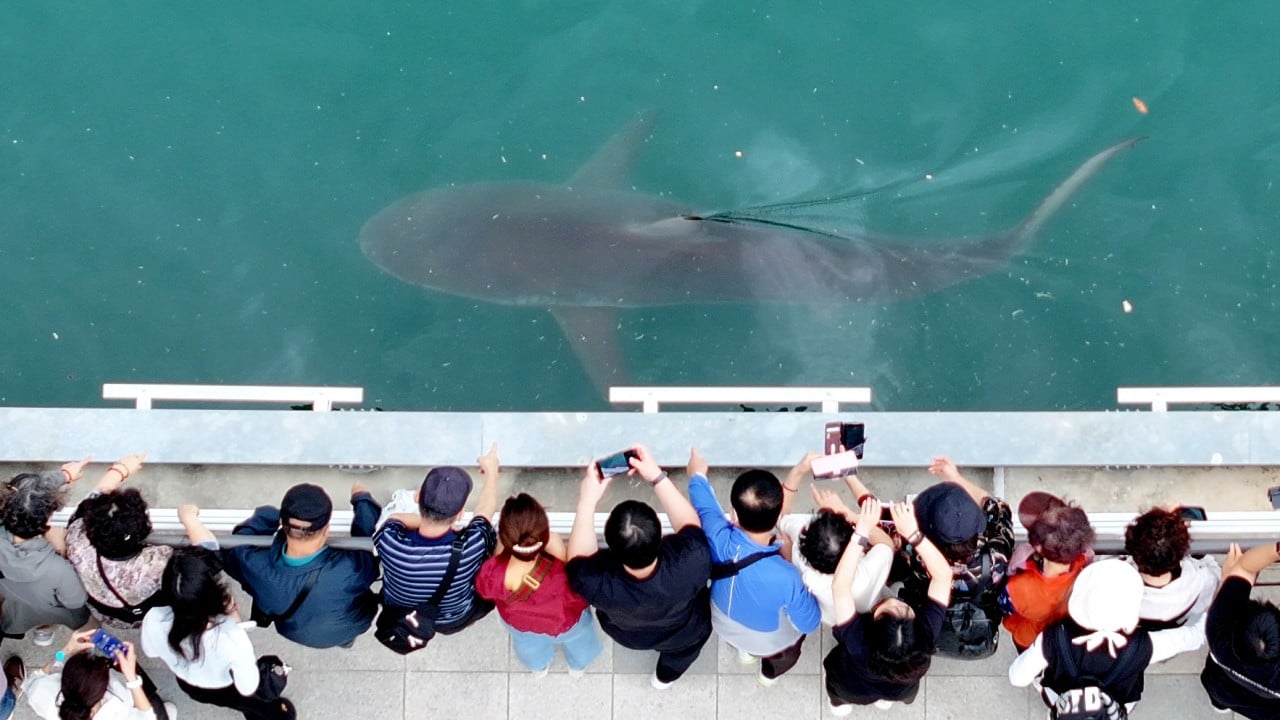
A three-meter shark got lost in a Busan canal and accidentally created a retail phenomenon.
You wouldn't expect a stranded apex predator to turn into an economic stimulus package. Yet, that is precisely what happened in South Korea's bustling coastal hub. Since mid-September, over a million people have flocked to a local waterfront park just to catch a glimpse of a single marine visitor. If you found value in this piece, you should read: this related article.
Internet culture moves fast, but physical tourism moves faster when curiosity takes over. The animal, quickly nicknamed "Bukangi" after the local park where it found itself cornered, transformed from a routine wildlife rescue operation into a full-blown national sensation.
Local businesses near the canal watched their daily ledgers transform overnight. CU convenience stores operating in the immediate area reported a staggering 76.7 percent spike in sales during the initial week of the shark's arrival. Nationwide, themed merchandise saw an immediate lift, with sales of items like the popular Jaws Bar ice lolly climbing 26.5 percent as people leaned entirely into the dark comedy of the situation. For another angle on this development, see the latest coverage from TIME.
Why Did Everyone Fall for Bukangi?
Wildlife wandering into urban zones isn't entirely new. Think back to the viral mandarin duck that settled in New York's Central Park in 2018, or the beluga whale that briefly entertained Londoners in the River Thames. But Busan’s reaction took the trend to an entirely different scale.
City officials didn't just manage the crowd; they leaned into the absurdity. After a city Instagram poll showed 91 percent of respondents backing the idea, Busan authorities officially appointed the stranded dusky shark as an honorary publicity ambassador. A local mascot named Boogi was even designated to accept the certificate on the animal's behalf.
Mayor Jeon Jae-soo pointed out that Bukangi organically wove itself into the daily narrative of the city. When thousands of citizens started sending in opinions and tracking every failed rescue attempt, the local government stopped fighting public sentiment and started capitalizing on it.
The Bigger Environmental Picture Beneath the Hype
While the memes and merchandise are fun, there's a serious data point hidden behind the viral attention. Marine experts and South Korea's National Institute of Fisheries Science noted a sharp uptick in large shark sightings off the country's east coast.
Records show 46 large sharks spotted in the first half of the year alone. That figure sits nearly four times higher than the numbers recorded during the same period the previous year. Marine biologists point to rising sea temperatures and shifts in local fish populations—the primary prey for these predators—as the driving factors pushing sharks closer to the shore and, occasionally, into narrow urban waterways.
As coastal waters warm globally, urban wildlife encounters will only increase. Most cities treat these occurrences as dry operational hazards requiring immediate, quiet removal. Busan accidentally wrote a masterclass in modern destination marketing by letting the public watch, care, and spend.
Bukangi may eventually find its way back to the open ocean, but the economic bump and the strange legacy of South Korea's favorite urban shark are already locked in. Don't underestimate the power of a lost fish to wake up a local economy.