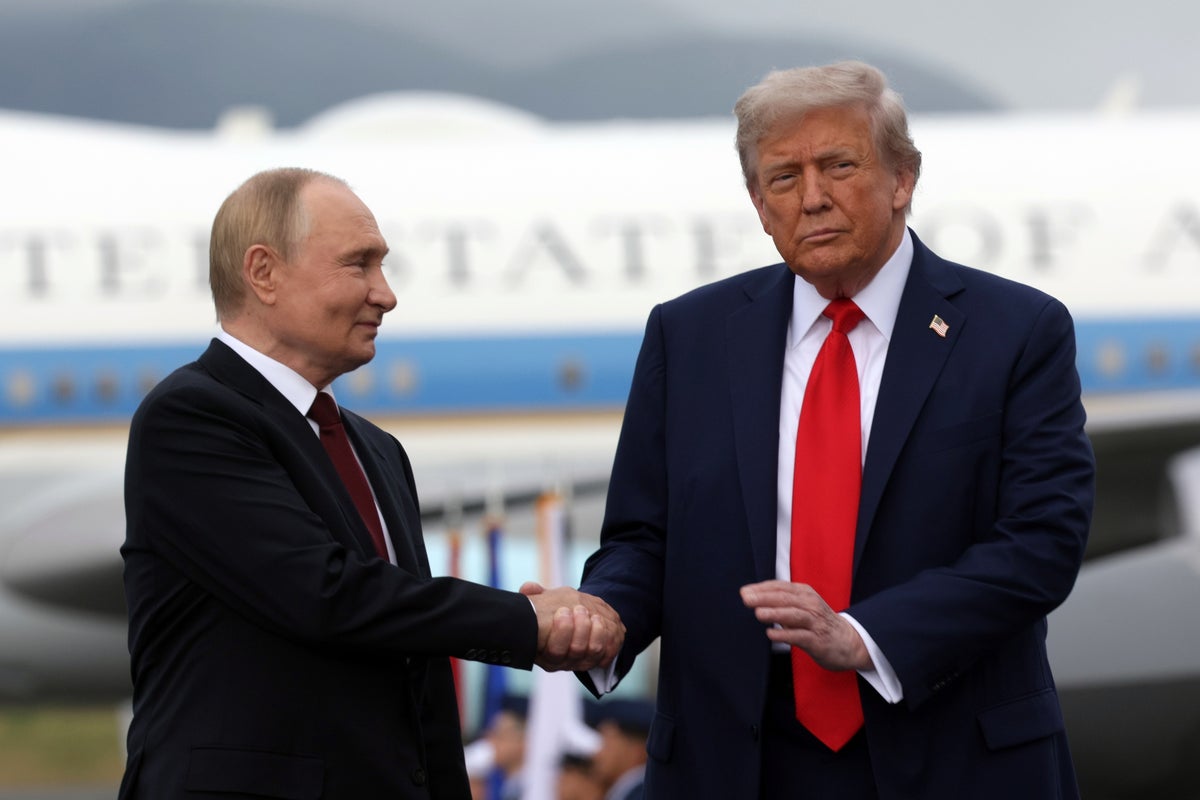
Donald Trump spent years insisting that Russian interference in American politics was a complete hoax invented by his political opponents. Yet his own administration's declassified documents tell a radically different story.
When the White House released a massive cache of intelligence files detailing foreign threats to American voting systems, officials framed the disclosure as proof that election infrastructure remains dangerously insecure. But if you actually sit down and read through the intelligence assessments, you quickly spot a striking contradiction that the political spin completely glosses over.
The declassified reports explicitly confirm what U.S. intelligence agencies concluded years ago. Russian President Vladimir Putin authorized targeted intelligence operations designed to undermine Joe Biden, boost Donald Trump's candidacy, and sow division across the American electorate during the 2020 presidential election.
That realization hits hard. For nearly a decade, Trump publicly brushed off findings of Kremlin meddling as partisan theater. Seeing those exact findings printed on official government memos released by his own team creates an undeniable historical record.
Here is what the declassified paperwork actually reveals, why the messaging around these files is so confusing, and what all of this means for election integrity right now.
The Intelligence Findings on Russian Interference in 2020
The core document sitting at the center of this debate is a National Intelligence Council assessment that evaluated foreign threats to the 2020 U.S. federal elections. Intelligence analysts across multiple agencies examined raw data, covert communications, and cyber activity to build a clearer picture of what foreign capitals were trying to pull off while Americans were casting their ballots.
The findings regarding Moscow were clear.
Russian state actors didn't just sit on the sidelines watching American politics unfold. Putin authorized influence operations specifically aimed at tilting the race toward Trump. Russian operatives pushed messaging through covert media channels, amplified conspiracy theories about mail-in voting, and aggressively attacked Joe Biden's family.
Moscow wanted to weaken public trust in the Democratic nominee. They wanted to boost the incumbent.
Trump has repeatedly rejected that premise. He labeled intelligence assessments pointing to Russian support as fake news and politically motivated attacks. Having his administration unveil these exact memos confirms that career intelligence professionals consistently saw Russian meddling as a real, active threat.
It's a bizarre moment in political history. A president releasing documents to prove foreign threats exist, while those very documents affirm a threat he spent years trying to downplay.
Distinguishing Influence Operations From Infrastructure Attacks
To understand these documents without getting lost in the spin, you have to separate two very different concepts: influence and infrastructure.
- Influence operations focus on minds. They involve propaganda, fake social media personas, leaked documents, and targeted media campaigns designed to alter how citizens vote.
- Infrastructure attacks focus on machines. They involve hacking into voter registration databases, altering vote totals on digital tallies, or disrupting polling place hardware.
The declassified assessments show that Russia engaged heavily in influence operations. They ran covert accounts. They amplified societal divisions. They tried hard to nudge voters toward Trump.
What they didn't do was change actual votes.
The National Intelligence Council explicitly noted that no foreign adversary, including Russia, altered technical voting mechanisms, manipulated ballot counts, or changed voter registration rolls in a way that affected the election outcome. That is a critical distinction that often gets lost in screaming headlines.
How China, Iran, and Other Adversaries Played Into 2020
Russia wasn't the only country poking around American election systems leading up to 2020. The declassified files detail exploratory actions and influence efforts from several foreign governments, each pursuing its own geopolitical interests.
Beijing took a very different approach than Moscow. Intelligence reports show that Chinese operatives collected extensive U.S. voter data, obtaining information on roughly 200 million voter records between 2020 and 2024. They used this data primarily for political analysis, identity matching, and monitoring public opinion.
Internal agency memos show analysts debated how aggressively to portray China's actions. Some intelligence officials argued China preferred a Trump defeat because of escalating trade tensions, while others noted Beijing hesitated to run aggressive covert operations out of fear of getting caught. Then-Director of National Intelligence John Ratcliffe even filed a rare dissenting memo arguing analysts were understating China's willingness to interfere.
Iran took direct action, too. In October 2020, Iranian actors sent spoofed emails to voters in battleground states like Florida and Alaska, posing as a far-right group to intimidate voters and damage confidence in election security.
Even smaller foreign governments were watching closely. The CIA noted Venezuela's government examined methods for digital election manipulation inside its own borders, though intelligence analysts confirmed Venezuela lacked the technical capacity to tamper with voting systems inside the United States.
Every major adversary was testing boundaries. None of them managed to alter a single cast ballot.
Why Vulnerabilities Don't Mean Stolen Elections
A huge chunk of the declassified cache focuses on system vulnerabilities. A January 2020 report from the National Intelligence Council noted that four major nation-states—Russia, China, Iran, and North Korea—had the raw technical capability to target election infrastructure.
Centralized databases were highlighted as primary targets. Voter registration lists, electronic pollbooks, and official state reporting websites are connected to networks, making them naturally more exposed to cyber probing than offline voting machines.
Pointing out that a lock can be picked isn't the same as proving a burglary happened.
American elections are wildly decentralized. Thousands of independent local jurisdictions run their own voting setups using a patchwork of hardware, software, and paper audit trails. That decentralization acts as a massive natural firewall. Hacking a state system or a local database is difficult enough, but pulling off a coordinated cyber strike that flips nationwide results without triggering paper audits is nearly impossible.
More than 98 percent of votes cast in federal elections leave a physical paper trail. When hand audits occur, officials compare paper ballots against digital tallies. If a machine were compromised by foreign malware, the paper audit would immediately catch the discrepancy.
That is why intelligence agencies stood by their conclusion. Vulnerabilities exist in any complex digital network, but those vulnerabilities were not successfully exploited to alter the 2020 election results.
The Political Strategy Behind Declassifying the Files
If these documents confirm previous intelligence findings and offer no fresh evidence of flipped votes, why release them now?
The timing isn't accidental. It serves a very clear political agenda.
By releasing hundreds of pages of heavily redacted, dense technical memos, the White House can point to alarming words like "capability," "vulnerability," and "foreign targeting" to rebuild public skepticism around the 2020 results. Most voters won't sit down to read a 50-page intelligence summary. They will simply hear that declassified CIA and FBI reports mention foreign hacking capabilities and assume the worst.
This document release directly fuels the push for federal voting legislation, specifically the SAVE America Act. Proponents of the bill use the intelligence disclosures to advocate for strict national voter ID requirements, proof-of-citizenship mandates for voter registration, and tighter restrictions on mail-in ballots.
It's a clever move. It takes old intelligence warnings, repackages them as fresh revelations, and uses them as leverage to push controversial election policy.
Critics naturally hit back. Former intelligence officials and congressional leaders point out that many of the appointees who oversaw these 2020 assessments were appointed by Trump himself. The consensus among those officials remained steady then, and the newly unsealed documents don't alter that core reality.
What You Should Take Away From the Declassified Documents
Cutting through the noise requires focusing on hard facts rather than political spin. The declassified files paint a clear picture if you know how to read them.
- Russian assistance was real. Moscow ran active intelligence operations designed to damage Joe Biden and help Donald Trump in 2020. Trump's long-standing claims that Russian preference was a fiction are directly contradicted by the official records his administration released.
- Adversaries target databases, not ballot boxes. Foreign powers spend time scraping public voter lists, targeting pollbooks, and running influence campaigns on social media. They are looking to manipulate public opinion and create chaos, not hack individual voting booths on election night.
- The 2020 vote count remains solid. Nothing in the declassified intelligence shows that foreign actors altered vote tallies or successfully changed election outcomes.
- Paper audits matter. The single most effective defense against foreign cyber interference is paper. Paper ballots and post-election hand counts ensure that even if an adversary gains network access, they cannot secretly alter the final count without getting caught.
Practical Steps to Protect Yourself From Foreign Influence
Foreign interference isn't slowing down. It is evolving. Foreign adversaries realize that hacking public perception is far easier and cheaper than hacking election hardware.
Instead of worrying about vote-counting algorithms, pay attention to how foreign disinformation targets your daily feed.
- Verify sensational claims before sharing. If a dramatic story about election fraud or a political candidate appears out of nowhere on social media, trace it back to a reputable news source before passing it along.
- Check local election officials for logistics. Don't rely on viral posts or unknown online groups for information about polling places, mail ballot rules, or voter registration deadlines. Go straight to your county clerk or state secretary of state office.
- Support paper ballot audits. Encourage local election boards to maintain mandatory, statistically sound post-election paper audits. Paper remains the gold standard for verifying election security and silencing bad-faith conspiracy theories.
- Separate cyber capability from actual compromise. When politicians or media figures claim election systems are vulnerable, ask whether those vulnerabilities were ever actually exploited. Capability means someone has the tools; compromise means they actually pulled off the job.
Understanding the difference between propaganda and real hardware tampering is the best way to keep yourself informed and protect democratic institutions from foreign interference.