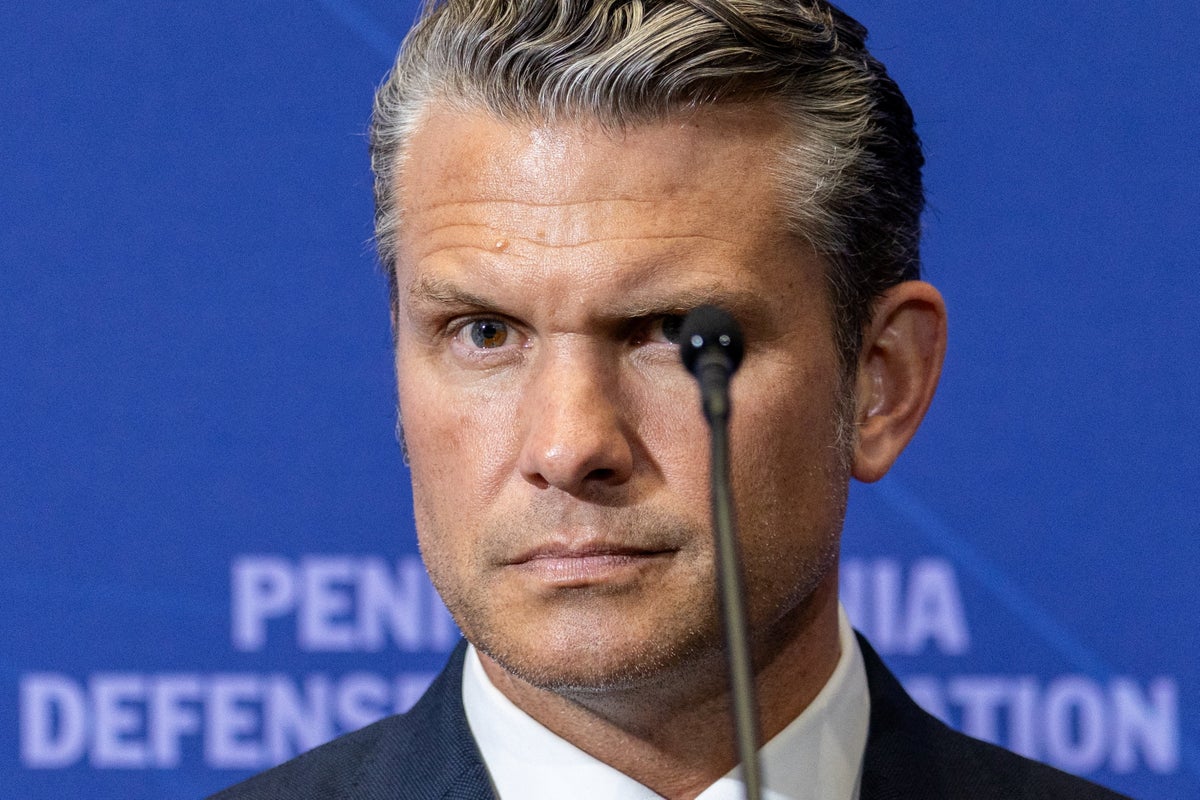
Donald Trump recently stood in front of a microphone and did what he does best: shook up the political world with a casual, almost joking remark about a deeply serious issue. He openly admitted that his Defense Secretary, Pete Hegseth, used to lobby him constantly to pardon soldiers who "killed a lot of people".
Trump laughed it off. He even joked that if any of these pardoned men act out, he is going to blame Pete.
But behind the laughter lies a massive, uncomfortable shift in how the United States views military justice. This is not just a story about a television host turned Pentagon chief getting his way. It is a fundamental rewriting of the rules of engagement, and it has sent shockwaves through the military community.
Let's look at what actually happened, who these soldiers are, and why this philosophy is actively reshaping the American military.
The Joke That Explained an Entire Military Strategy
During a public address, Trump went off-script to praise Hegseth, whom he affectionately called his "Secretary of War". He recalled Hegseth’s days as a Fox News host, when his entire focus seemed to be securing freedom for service members accused of brutal battlefield crimes.
According to Trump, Hegseth’s pitch was simple and direct: "Sir, would you give a pardon to 19 soldiers?"
When Trump asked why he should do such a thing, Hegseth’s response, as recounted by the president, was blunt: "Well, they killed a lot of people. They were trained to kill, and that's what they did".
It’s a chilling line if you value the traditional laws of war. To Trump and Hegseth, it is just common sense. They believe the military justice system has been crippled by political correctness and hyper-legalistic rules that punish warriors for doing what they were trained to do: eliminate the enemy.
You have to look at the actual cases Hegseth championed to understand the weight of this ideology. These were not minor administrative infractions. They were serious accusations of war crimes.
The Three Men Behind the Controversy
To understand how we got here, we have to look back at 2019. Long before Hegseth was running the Pentagon, he was a loud, influential voice on Fox & Friends. He used his platform to bypass traditional military channels and speak directly to Trump.
His advocacy centered heavily on three specific military members whose cases had deeply divided the armed forces.
Lieutenant Clint Lorance
Lorance was serving a 19-year sentence after being convicted of second-degree murder. In 2012, while deployed in Afghanistan, he ordered his platoon to open fire on three unarmed men riding a motorcycle. Two of them died.
Members of Lorance’s own platoon testified against him, stating the men on the motorcycle posed no immediate threat. Hegseth argued that Lorance was a victim of a system that failed to support soldiers making split-second decisions in hostile territory. Trump pardoned him in November 2019.
Major Mathew Golsteyn
Golsteyn, a highly decorated Army Green Beret, faced murder charges for the 2010 killing of an unarmed Afghan man who was suspected of being a Taliban bomb-maker. Golsteyn actually admitted to the killing during a CIA polygraph test, explaining that he shot the man, buried the body, and later dug it up to burn it.
While military prosecutors prepared their case, Hegseth took Golsteyn’s story to the airwaves. Trump intervened before the trial could even begin, granting Golsteyn a full pardon.
Chief Petty Officer Edward Gallagher
Perhaps the most infamous case belongs to Navy SEAL Eddie Gallagher. His own team members described him as "toxic" and "freaking evil," claiming he shot at unarmed civilians, including an elderly man and a young girl.
Gallagher was ultimately court-martialed for stabbing a captured, wounded teenage ISIS fighter to death with a hunting knife. He then took a photo holding the dead fighter's head by the hair, texting it to friends with the caption: "got him with my hunting knife".
A military jury acquitted Gallagher of murder but convicted him of posing with the corpse, resulting in a demotion. Trump stepped in, reversed the demotion, restored Gallagher's rank, and allowed him to retire with his full pension.
Why This War on Legality Matters
This is not just about correcting perceived injustices. It represents a fundamental clash between two completely different worldviews.
On one side is the traditional military establishment. Leaders argue that strict adherence to the Uniform Code of Military Justice (UCMJ) is what separates the United States military from the terrorists and militias it fights. Without clear rules of engagement and the moral courage to police our own, the chain of command falls apart. When a president bypasses the military justice system to pardon men accused by their own comrades, it signals to the rank-and-file that the rules do not actually matter.
On the other side is the doctrine of maximum lethality. Hegseth has popularized the phrase "maximum lethality, not tepid legality". The core argument is simple: war is inherently violent and ugly. If you train young men and women to go into hostile territory and kill the enemy, you cannot turn around and put them in a civilian-style courtroom because they made a messy call in a split second.
The Danger of Eroding the Chain of Command
What happens when soldiers believe they have a permanent "get out of jail free" card from the commander-in-chief?
Military experts warn that this destroys the moral authority of commanders on the ground. If a platoon leader tells a soldier to hold their fire, but that soldier believes they can pull the trigger anyway because the political leadership will protect them, discipline vanishes.
The testimony of Eddie Gallagher’s fellow SEALs is a stark warning of what happens when a unit loses faith in its leadership. They had to actively work to protect civilians from their own platoon leader. It is a terrifying dynamic that endangers American lives, destroys international alliances, and hands our adversaries an easy propaganda victory.
Your Next Steps: How to Stay Informed
The debate over the laws of war and presidential pardon power is far from over. If you want to understand how this will impact future deployments and foreign policy, keep these actions in mind:
- Watch the Pentagon's policies closely: Look for changes in how the military investigates civilian casualties and battlefield misconduct.
- Monitor congressional hearings: Pay attention to how the Senate and House Armed Services Committees handle oversight of military justice.
- Read firsthand veteran accounts: Seek out articles, books, and interviews from military veterans who have served under these rules of engagement to get a realistic perspective on what battlefield decisions actually entail.