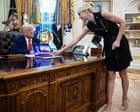
Donald Trump just handed out thousands of dollars in cash holiday gifts to his closest staffers, and financial disclosures made it public. Executive assistant Natalie Harp, communications adviser Margo Martin, and deputy director of Oval Office operations Chamberlain Harris each received $45,000. Director of Oval Office operations Walt Nauta pulled in a $20,000 present.
People are talking. Critics are raising eyebrows. Supporters call it business as usual. You might also find this similar story useful: Inside The Frankfort Courtroom Hearing Where A Mother Was Ordered Held For First Degree Murder.
If you look past the initial sticker shock, what does this situation actually reveal about how power operates inside the modern White House? Let's break down the details.
The Financial Disclosures and the Pay Breakdown
These numbers didn't leak from a disgruntled insider. They came straight from the annual financial disclosure forms published by the administration. As reported in recent coverage by The Guardian, the results are widespread.
When you compare these cash holiday gifts to the staffers' official salaries, the scale becomes crystal clear. Harp, Martin, and Harris each pull down a $150,000 annual government salary. Nauta makes $175,000 a year. A $45,000 bonus represents nearly a third of a yearly salary for these aides. That is a massive chunk of change.
A White House official defended the payouts to the Associated Press. They noted that Trump has a longstanding practice of handing out Christmas bonuses to people in his orbit. This habit goes back decades through his time in the private sector and previous terms in office. The administration insists these cash handouts had nothing to do with official government duties. According to legal and ethical standards cited by the White House, the money is entirely permissible.
Ethics watchdogs aren't entirely convinced it's that simple. Giving massive cash sums to government employees outside of standard civil service procedures creates a unique set of questions about loyalty, influence, and transparency.
Who Are the Recipients?
The names on the disclosure forms aren't random bureaucrats. They are some of the most visible and trusted figures in Trump's inner circle.
Natalie Harp sits right at the center of the storm. Known widely as the "human printer," Harp is rarely more than a few feet away from Trump. She famously carries a portable printer so she can instantly hand him printed copies of positive media coverage and social media posts. Trump prefers physical paper over screens. Harp makes sure he gets it.
Margo Martin has been loyal for years. She worked as a white house press assistant during the first term, moved down to Palm Beach to manage media operations at Mar-a-Lago after the 2020 election defeat, and walked right back through the West Wing doors following the 2024 victory.
Chamberlain Harris recently landed an appointment to the US Commission of Fine Arts. That agency happens to oversee the president's ambitious White House ballroom project.
Walt Nauta brings a different kind of history. He served as Trump's personal valet and was previously charged alongside the former president in the federal classified documents case before those charges were dismissed.
These aren't distant office workers. They form the core infrastructure of Trump's daily operational and media life.
The Broader Context of White House Perks
Cash gifts to public servants spark immediate controversy because they blur the line between personal patronage and public administration. Historically, presidents and high-ranking officials give small tokens, holiday cards, or branded trinkets. Writing five-figure checks directly to executive assistants and operations directors pushes past traditional boundaries.
The defense relies on the private sector argument. Billionaires often distribute hefty bonuses to loyal staff from their personal fortunes. But when those staffers work inside the federal government, the dynamic shifts. The public pays their salaries, but the boss pays the bonus.
Scrutiny on Natalie Harp has intensified over the last few weeks for multiple reasons, ranging from security clearance questions to political friction with congressional Democrats. Adding a $45,000 holiday payout to the mix only pours more fuel onto an already blazing fire.
Expect this debate to linger. Transparency laws forced these numbers into the open, but they also guarantee that every financial interaction between powerful politicians and their closest loyalists faces a magnifying glass.
Watch how future disclosures handle these private transfers. The line between personal generosity and political patronage gets thinner every single day.