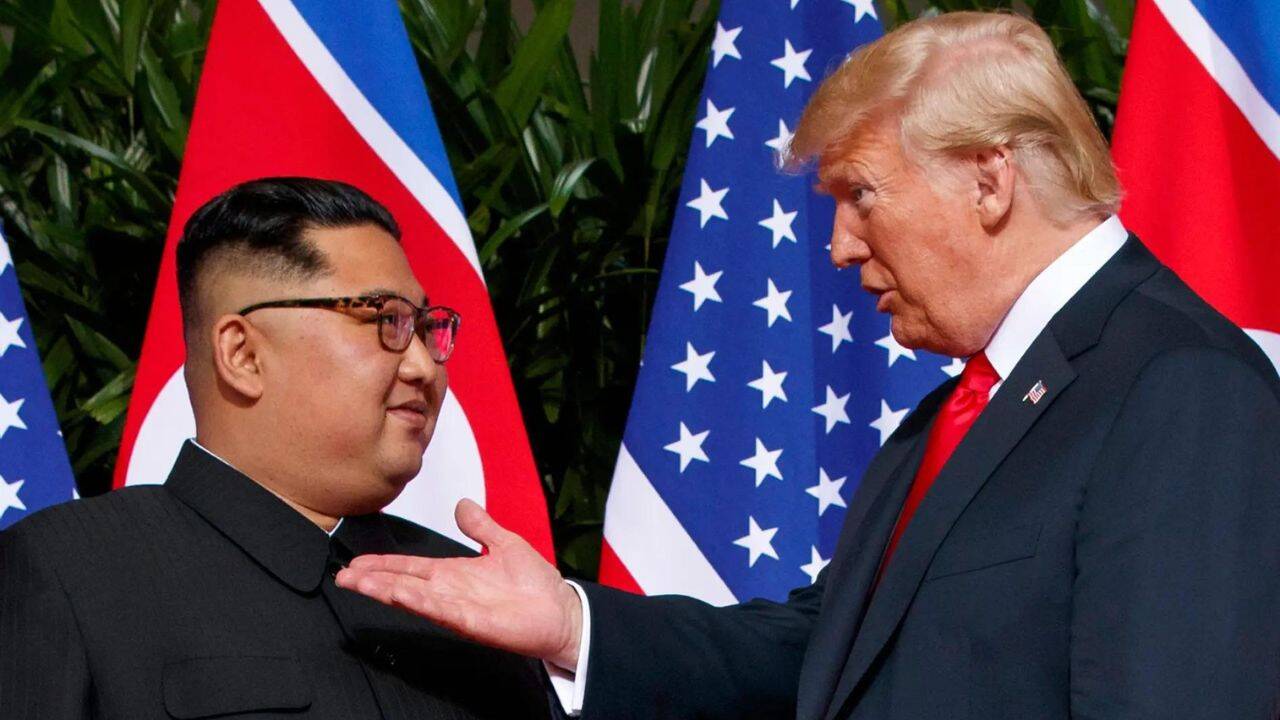
Donald Trump isn't one to back down from his unconventional foreign policy stances. He’s doing it again. By openly praising Kim Jong Un for showing him "great respect," the former president is signaling that he still views personal rapport as the most valuable currency in international diplomacy.
You’ve likely seen the headlines. Trump claims that while previous administrations struggled to deal with the North Korean leader, he managed to establish a unique, working relationship. He’s doubling down on this narrative, even using it to justify scaling back joint military exercises with South Korea.
Whether you agree with his approach or find it alarming, it’s impossible to ignore the pattern. Trump is betting that his personal connection with the North Korean dictator provides more security than traditional military posturing. He’s not just talking; he’s acting on that belief.
The logic behind the rhetoric
Why does he focus so heavily on "respect"? In Trump’s view of the world, strength and personal dignity are everything. He genuinely believes that North Korea’s hostility toward previous presidents stemmed from a lack of mutual understanding. By framing Kim as a leader who respects him, he paints a picture of a successful negotiator who can get what others can’t.
He’s explicitly contrasted his style with the Obama and Biden eras, arguing that his approach makes the US safer. It’s a classic move. He takes a long-standing diplomatic stalemate and presents it as a simple personality issue that only he could solve.
He’s also made it clear that he views the status quo—specifically large-scale military exercises with South Korea—as an unnecessary provocation. By labeling these drills as costly and inappropriate, he’s trying to shift the conversation away from traditional containment strategies. Instead, he’s pushing for a more direct, transactional model.
Beyond the headlines
There’s more going on here than just soundbites. Trump’s push to scale back military exercises is a tangible policy shift. He’s essentially telling the national security establishment that the old rules don’t apply.
When he says that Kim is "unthreatening" under his watch, he’s defining the success of his policy not by total denuclearization, but by the absence of overt conflict. It’s a lower bar, sure. But for his base, it’s a tangible win. He’s prioritizing immediate peace-keeping over long-term geopolitical goals that many Americans feel haven't delivered results in decades.
It’s worth looking at the specifics of how he manages this narrative. He doesn’t just talk about Kim in a vacuum. He attaches these comments to his broader critique of the military-industrial complex and the "cost" of global engagement.
The risks of personality-driven diplomacy
Critics will tell you that Trump’s approach is reckless. Relying on the whims of a dictator is, by definition, unstable. If the personal relationship sours, what happens to the policy? You’re left with very little in terms of formal structure or reliable alliances.
There’s also the matter of our allies. South Korea and Japan rely heavily on the certainty of US military commitments. Every time an American leader suggests that these alliances are merely "costly exercises," it creates a massive vacuum of trust. If you’re a South Korean official, you’re likely watching these statements with extreme anxiety.
Trump doesn't seem bothered by that anxiety. He views it as leverage. He assumes that if the allies are nervous, they’ll be more willing to pay their "fair share" for defense. It’s a high-stakes gamble that hinges entirely on the belief that Kim Jong Un is a rational actor who responds to, and respects, the right kind of person.
Looking ahead
We aren't going to see a change in this rhetoric. It’s core to the Trump brand. He’s framed himself as the man who speaks directly to the people other leaders fear or avoid.
If you want to understand where this is heading, stop looking for nuanced policy papers. Look for the next photo-op or social media post. That’s where the real diplomacy is happening.
The takeaway here isn't whether Kim Jong Un actually respects Trump. It’s about how Trump uses that perception to dismantle the traditional foreign policy playbook. He is betting that the American public is tired of conventional international relations and ready for something that feels more like a deal between two men in a room.
Watch the military exercise budget. Watch the statements coming out of Seoul. If those indicators start shifting, you’ll know his personal strategy is moving from rhetoric into hard reality. Don't expect a sudden pivot to traditional containment; it’s just not how he operates.