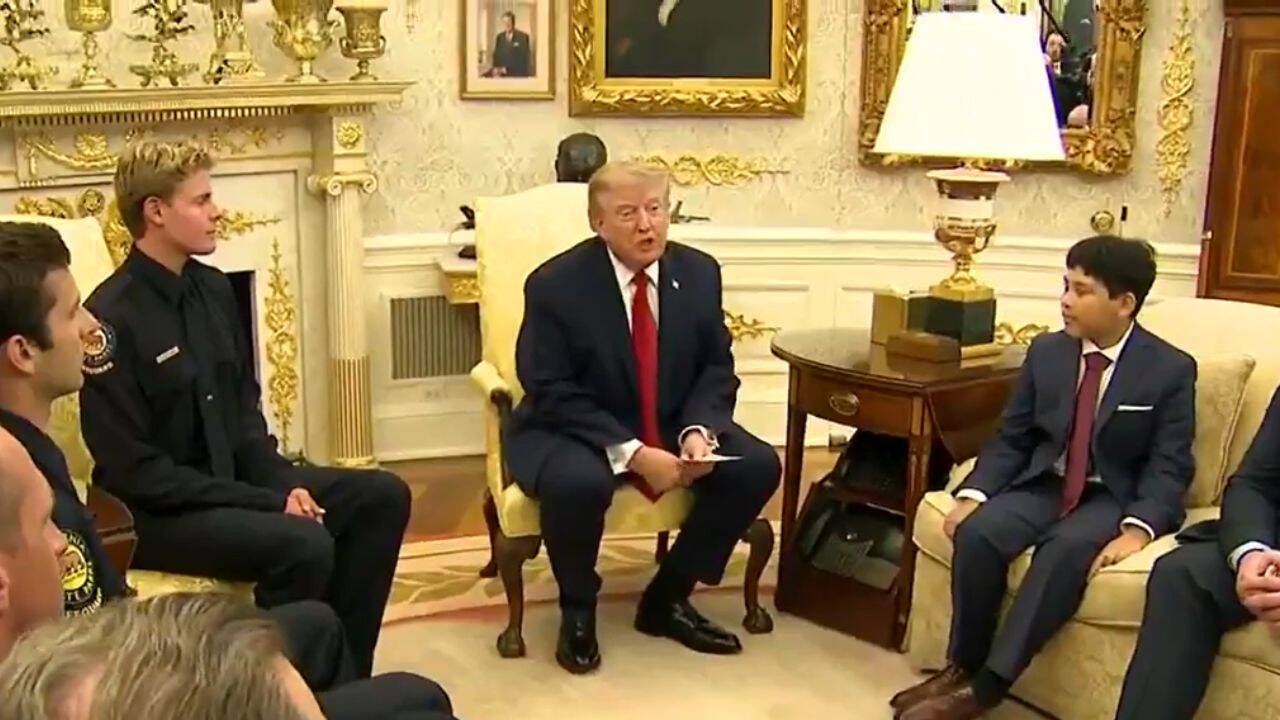
When a ten-year-old survivor meets a leader at the White House, you expect a scripted moment of gratitude. You expect a polished "thank you" or a stiff photo op. What you don't expect is a blunt, unfiltered assessment of personal risk. Yet, that is exactly what happened when Donald Trump hosted Nathaniel Rai and his rescuer, Ryder Williams.
The interaction was simple but jarring. Referring to Williams, the sixteen-year-old lifeguard who pulled young Rai from the treacherous California surf, the former president leaned in and offered a candid admission: "I don't know if I'd do it. I wouldn't, probably."
This wasn't just a random quip. It hit a nerve because it forced a question most of us avoid: What is the real cost of heroism, and are we honest about who is actually capable of paying it?
The anatomy of a rescue
To understand why this conversation matters, you have to look at what actually happened on that California beach. Ryder Williams wasn't just "there." He was a trained professional in a high-stakes environment. When he saw Nathaniel Rai struggling in the surf at Seabright State Beach, he didn't have time to consider his own mortality. He acted on instinct and rigorous training.
Ryder later explained his process with clinical clarity. He radioed for help, ditched his gear, and hit the water. He didn't have a backup plan for when he realized he was physically overwhelmed by the waves. He just held on. That kind of action is rare. It’s not just bravery; it’s a total commitment to a task that ignores self-preservation.
Why the comment stung
Many people reacted to Trump’s words as if they were a failure of leadership. They wanted a platitude. They wanted the president to say, "Of course, I would risk everything." But consider this: honesty is a rarity in politics. Whether you like his policies or not, Trump’s admission is a refreshingly accurate take on the human condition.
Most people—politicians included—are not heroes in the sense that a lifeguard is. A hero in this context is someone who overrides the body's natural "fight or flight" mechanism to save a stranger. Most of us, if we are being entirely honest, would hesitate. We would calculate the risk. We would ask if we are strong enough to make it back to the shore.
Trump was doing something that makes people uncomfortable. He was highlighting the massive gap between the average citizen and a trained first responder.
The lifeguard debate
The incident highlights a strange inconsistency in how we view these roles. Even as Ryder was being celebrated, California lawmakers were busy debating whether lifeguards should officially be classified as "first responders."
It sounds like semantics. It isn't.
If you don't call them first responders, you don't provide them with the same legal protections, benefits, or training standards as police or firefighters. It’s a systemic oversight that’s been ignored for years. Experts note that being a first responder requires a specific, intense regimen of training, which is why politicians are nervous about the logistics of changing the designation. Who pays for the training? Who defines the standards?
Yet, when you look at a sixteen-year-old like Ryder, the debate feels absurdly detached from reality. He acted as a first responder when it counted. He saved a life. The label doesn't change the fact that he did the work.
Moving beyond the headline
If you’re looking for a lesson here, it’s not about the politics of the White House or the shock value of a comment. It’s about the reality of preparedness.
- Training matters more than intent: You can have the best intentions in the world, but when you are in the middle of a literal crisis, you fall back on your training. Ryder didn't "try" to save the boy; he executed a protocol he had practiced until it became muscle memory.
- Recognize the difference between roles: Not every job is built for heroic intervention. We need to stop expecting everyone to be everything. We need to support those whose specific roles are designed to handle life-or-death crises.
- Support local infrastructure: If you want safer beaches and better outcomes, don't wait for a viral video to start a conversation about funding for lifeguard programs. Engage with your local state parks and municipal boards before the emergency happens.
We live in a culture that loves to demand "heroic" behavior from everyone, but we don't always do the work to support those who make heroism their daily job. Don't worry about whether a president would risk his life in the ocean. Worry about whether your community supports the lifeguards who actually do.
If you want to make a difference, focus on the boring parts: training, funding, and recognition. The heroics take care of themselves when the system is actually built to support them. Stop overthinking the headlines and start looking at the systems that keep us safe.