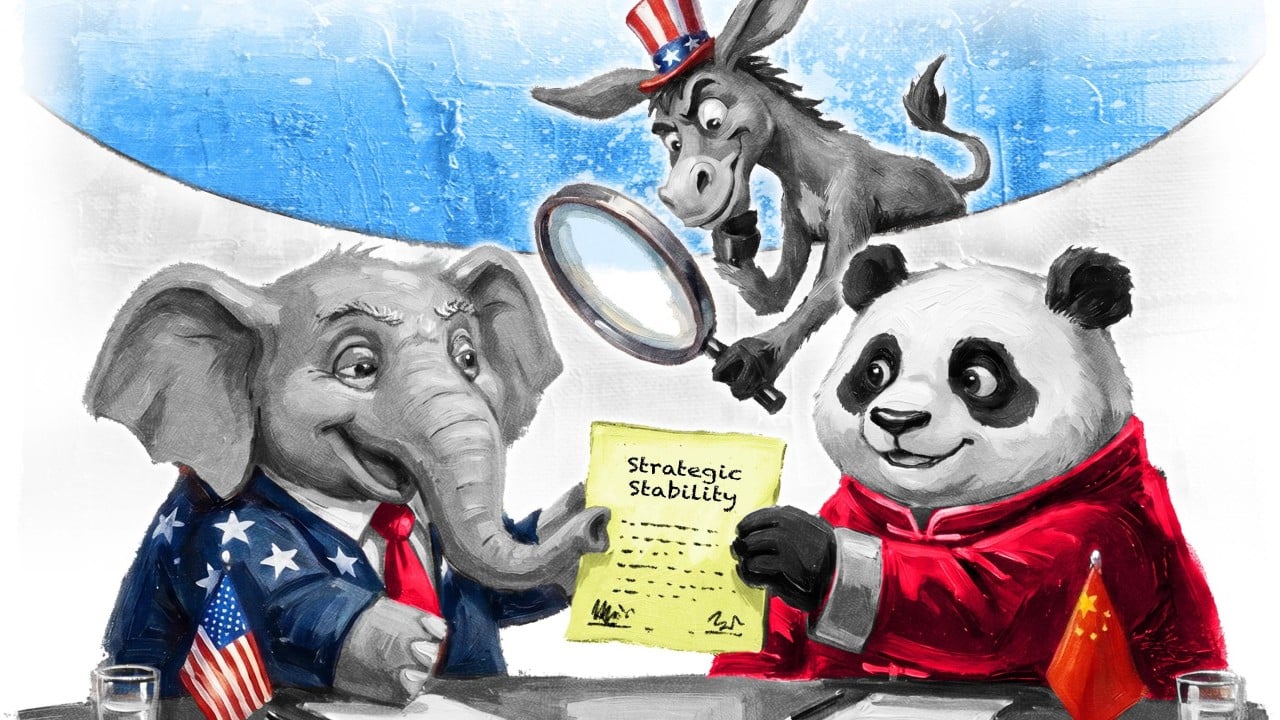
Whenever the American electorate heads to the polls for midterm elections, foreign policy analysts default to apocalyptic predictions. If the sitting president’s party takes a beating, the narrative goes, international agreements shatter, domestic dysfunction paralyses foreign relations, and carefully negotiated balances of power collapse into chaos.
Right now, as the 2026 U.S. midterm elections approach on November 3, that familiar alarmism is targeting the fragile arrangement between Washington and Beijing. The core question being asked in diplomatic circles is straight to the point: Will the "strategic stability" established during Donald Trump’s second-term summits with Xi Jinping collapse if Democrats take control of Congress?
The short answer is no.
The idea that U.S.-China stability hinges on a single party retaining Congressional majorities misinterprets how Washington's power mechanics actually function. It also fundamentally misunderstands Beijing’s current strategic priorities.
Strategic stability between the world’s two largest economies isn't built on a foundation of warm friendship or partisan alignment. It's built on mutual economic vulnerability, structural constraints, and executive power over foreign affairs that Congress cannot easily touch.
Executive Authority Remains Intact Regardless of Congress
Let's get clear on how American foreign policy operates when the Capitol changes hands.
If voters deliver the House or Senate to the opposition this November, legislative friction in Washington will spike. We'll see endless committee hearings, aggressive budget battles, and sub-committees issuing subpoenas regarding trade enforcement and technology exports.
However, the U.S. Constitution leaves executive diplomacy firmly in the hands of the White House.
A divided Congress cannot force a president to abandon personal summits, revoke leader-to-leader communications, or tear up executive understandings. Following the high-stakes meetings between Trump and Xi earlier in 2026—including the September state summit in Washington and the upcoming gathering at the APEC Summit in Shenzhen—the core parameters of the bilateral relationship have been established directly between the principals.
  [ Principal-to-Principal Framework (Trump-Xi) ]
                       │
       ┌───────────────┴───────────────┐
       ▼                               ▼
 U.S. Executive Action       China Centralized Rule
 (Tariffs, Export Directives) (State-Led Trade & Ops)
       │                               │
       └───────────────┬───────────────┘
                       ▼
       [ Congressional Oversights & Subpoenas ]
     (Noise & Friction, but NOT Executive Veto)
The transactional, "principal-to-principal" framework used by Trump bypasses standard bureaucratic channels and Congressional negotiation. A Democratic-controlled House might issue scathing reports about tariff adjustments or demand tighter oversight of critical component exports, but they don't possess the executive levers to rewrite bilateral diplomacy. Trump retains full authority to enforce, relax, or leverage tariffs at will.
Bipartisan Hawkishness Means the Guardrails Aren't Changing
Another flaw in the panic over a potential midterm shift is the assumption that Democrats would push for a wildly different stance on China.
In 2026, anti-China consensus is arguably the only issue with genuine bipartisan support in Washington.
Democrats aren't looking to soften the administration's posture toward Beijing. If anything, key figures in the Democratic caucus have criticized the administration for being too lenient during summit negotiations, pointing out that farm purchase targets under recent trade agreements haven't been met and structural economic reform remains incomplete.
If Congress flips:
- Tech Restrictions: Legislation restricting the export of advanced semiconductors, AI compute infrastructure, and sub-systems will remain aggressively supported by both parties.
- Supply Chains: Incentives to pull critical supply lines out of China will continue unchanged.
- Defense Spending: Authorization bills for Indo-Pacific military readiness will pass with overwhelming, cross-party majorities.
A shift in legislative power won't signal a return to 1990s-style engagement, nor will it provoke an sudden military escalation. It simply means the pressure on Beijing becomes more institutionalized rather than strictly executive-driven.
Why Beijing Prefers Predictable Rivalry Over Chaos
Analysts in Beijing are pragmatists. Chinese foreign policy planners don't bank on U.S. election outcomes to determine their long-term national security strategy.
China is navigating its own domestic economic priorities, including property sector rebalancing, industrial overcapacity management, and preparing for the upcoming 2027 Party Congress. The last thing President Xi Jinping needs right now is an unpredictable, escalating crisis in the Taiwan Strait or South China Sea.
Beijing views "strategic stability" not as a set of ironclad promises, but as managed friction. They know that a post-midterm White House under domestic political pressure might deploy sharper rhetoric on trade. But they also know that an American president limited by a divided Congress has fewer domestic policy options and may actually be more motivated to keep international affairs stable to protect domestic economic performance.
  [ Strategic Stability Dynamics ]
  - U.S. Side: Bipartisan consensus on competition + Executive freedom over trade
  - China Side: Focus on domestic economy + Long-term strategic patience
  - Shared Reality: Deceleration without resolution, managed competition over conflict
The Real Risk: Bureaucratic Friction, Not Bilateral Collapse
If the midterms won't blow up strategic stability, what does change?
The real danger isn't an immediate rupture in relations. It's the slow grind of administrative noise.
When Congress changes hands, executive agencies get bogged down answering Congressional inquiries, defending oversight requests, and fighting over budget allocations. Working-level diplomatic exchanges between U.S. and Chinese officials—the essential, unglamorous meetings that handle trade technicalities, flight routes, and maritime safety protocols—can get delayed or politically sidelined.
That friction makes resolving minor disputes harder, but it doesn't cause a systemic breakdown. The baseline stability negotiated at the top level holds because neither power benefits from burning the bridge down.
Immediate Steps for Businesses Navigating U.S.-China Dynamics
If you're managing global operations, managing supply chains, or making capital allocations, don't let sensational midterm headlines dictate your strategy.
Focus on these practical realities:
- Map Your Exposure to Executive Orders vs. Legislation: Understand which parts of your cross-border business are affected by executive trade actions versus statutory restrictions passed by Congress. Executive actions can shift quickly, while statutory rules move slowly but stay permanent.
- Ignore Election Rhetoric, Watch Regulatory Filings: Campaign trail speeches are designed to rally voter turnout. Real policy changes show up in the Federal Register, Bureau of Industry and Security (BIS) update lists, and Commerce Department rulemakings.
- Plan for Baseline Tariffs to Stay: Regardless of who holds Congress after November, tariffs on Chinese imports and reciprocal curbs on tech exports are not going away. Build your multi-year financial models around persistent structural friction rather than expecting a return to pre-2018 trade norms.
Strategic stability between major powers isn't fragile enough to shatter over a midterm vote. It's a calculated, cold-eyed posture maintained by two rivals who recognize that controlled competition is far less costly than unchecked conflict.


