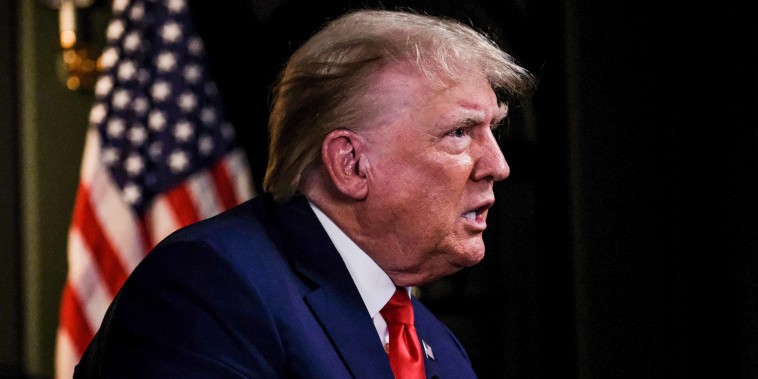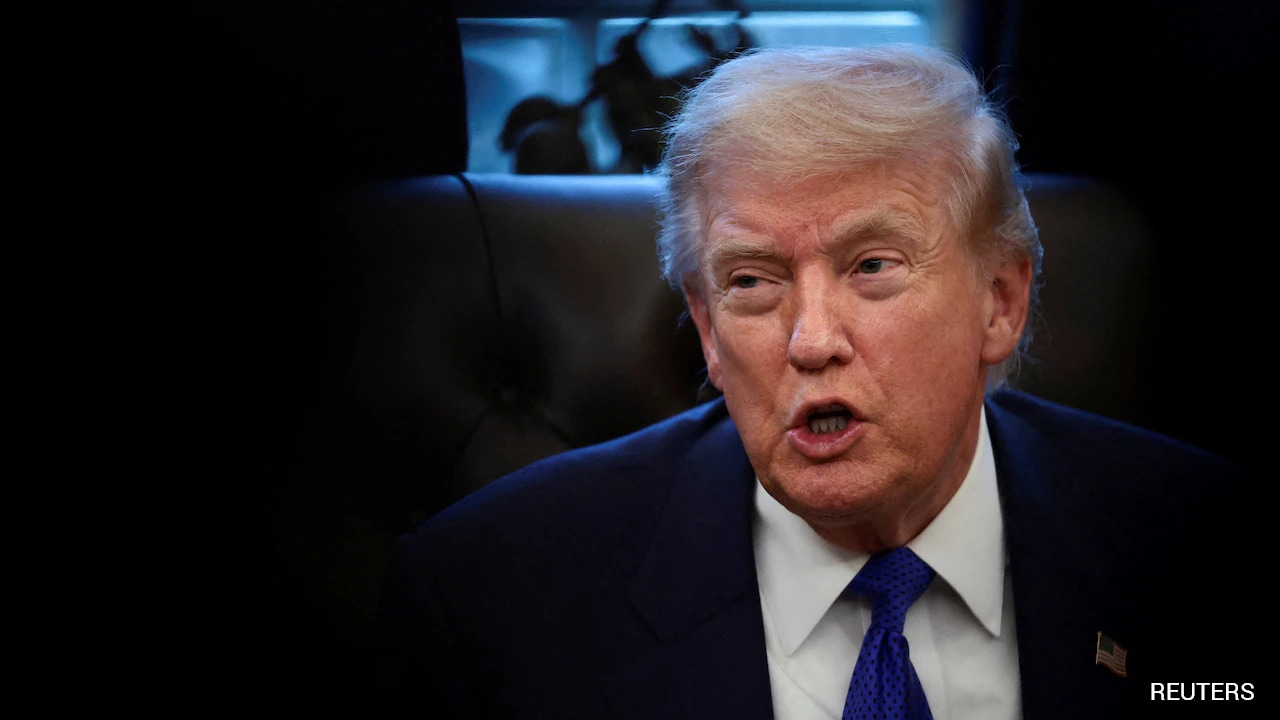
Donald Trump just changed the playbook on Tehran. Instead of launching another wave of heavy military strikes or chasing a comprehensive diplomatic grand bargain, the White House is stepping back and letting economic gravity do the heavy lifting.
If you look past the standard political posturing, the administration's current strategy boils down to waiting out an opponent trapped in a severe financial corner. Trump recently told reporters that Washington is basically "low-keying it" when it comes to talks with Iran.
You aren't going to see rushed summits or desperate concessions from the Oval Office. Washington is betting that hyperinflation, empty state coffers, and a crippled domestic economy will force Tehran's hand much faster than any naval deployment ever could.
The Economic Squeeze Replaces the Air War
For months, the conflict between Washington, Israel, and Iran has rattled global energy markets, sending oil prices spiking past one hundred dollars a barrel after the blockade of the Strait of Hormuz. But those numbers have cooled down closer to seventy-five dollars, relieving immediate pressure on American consumers ahead of domestic political cycles.
With active military strikes paused, the focus has shifted entirely to the home front inside Iran.
- Skyrocketing Inflation: Consumer prices inside the country are completely out of control.
- Empty Coffers: The regime is struggling to fund basic operations, let alone pay military personnel adequately.
- Naval Blockade: Strict maritime enforcement continues to choke off vital shipping lanes tied to the government.
Tehran thought it could weather the storm by laying down aggressive new conditions through regional mediators like Oman. They miscalculated Washington's patience. Trump isn't screaming for immediate resolution or panicking over stalled back-channel talks. He is watching the inflation charts climb and treating the situation like a patient game of chess.
Internal Power Struggles in Tehran
The real story isn't just about what Washington is doing. It's about the deep fractures inside Iran's leadership structure.
On one side, President Masoud Pezeshkian's camp knows the country cannot survive prolonged economic collapse without reaching some sort of pragmatic arrangement to reopen the vital shipping route. On the other side, hardline factions led by figures like Revolutionary Guard commander Ahmad Vahidi are digging their heels in, flatly rejecting foreign concessions.
While these two internal factions battle for the ear of Supreme Leader Mojtaba Khamenei, ordinary citizens pay the ultimate price for government stubbornness. The pause in fighting strips away the distraction of active warfare, forcing the regime to stare directly at its own financial ruin.
What Happens When the Strait Reopens
Rumors out of Washington suggest the administration's primary objective has narrowed down significantly. If the vital trade corridor reopens, the White House might just declare victory and move on, even if a permanent deal addressing the broader nuclear program remains entirely out of reach.
That pragmatic shift reveals a lot about modern foreign policy strategy. Idealistic long-term blueprints take a backseat to immediate geopolitical relief and stabilizing global commerce.
You don't need a complex peace treaty when market forces and domestic pressure are doing the dirty work for you. Tehran is running out of money, running out of time, and discovering that a low-key approach from Washington is much harder to fight than a barrage of missiles.
Watch the economic data coming out of the region over the coming weeks. That tells you everything you need to know about who is actually winning this standoff.