Donald Trump just dropped another headline-grabbing claim about ending the war in Eastern Europe. After meeting with Russian special envoy Kirill Dmitriev at the White House, Trump told reporters that a broad peace deal between Moscow and Kyiv is close.
"It's going to be a big agreement, and it's going to involve more than Ukraine," Trump claimed, teasing that the scope might expand to European security as a whole. "It's going to be a big, beautiful agreement, and everyone's going to be thrilled." For an alternative view, see: this related article.
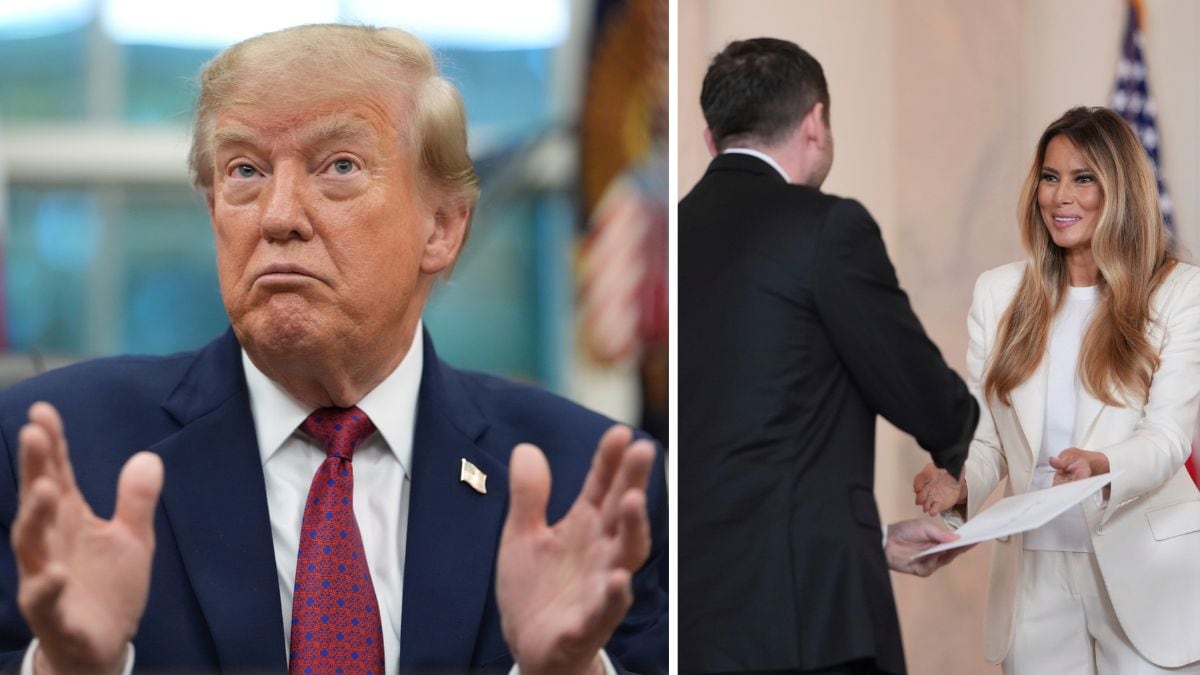
If you've followed this war long enough, you know grand declarations from politicians are cheap. But something unusual unfolded in Washington: both Russian and Ukrainian delegates stood under the same roof at the White House. And they weren't praising Donald Trump. They were publicly thanking First Lady Melania Trump.
Here is what actually happened behind the headlines, why a localized six-day truce in a flooded river town matters, and whether a sweeping peace deal is realistic or just classic political theatre. Similar analysis regarding this has been published by Al Jazeera.
The Oleshky Truce and How Melania Trump Got Involved
Before looking at sweeping European peace deals, look at the micro-level breakthrough that brought both sides to the table.
Between October 27 and November 1, 2026, a six-day localized ceasefire took effect in Oleshky, a Russian-occupied town in southern Ukraine's Kherson region. Oleshky has been trapped in humanitarian misery for years, crippled further by heavy fighting and regional flooding.
First Lady Melania Trump initiated direct communications between Ukrainian Human Rights Ombudsman Dmytro Lubinets and Russian Commissioner Yana Lantratova following a side event at the UN General Assembly in September. Working alongside her senior adviser Marc Beckman, she opened a line of humanitarian dialogue that bypassed standard diplomatic channels.
The localized truce produced tangible results:
- Demining teams cleared primary access roads into the combat area.
- Emergency medical units and clean water convoys entered the occupied district.
- Nearly 800 civilians were safely evacuated out of Oleshky into Ukrainian-controlled territory via Chernihiv.
At the White House gathering on November 5, Russian envoy Kirill Dmitriev stated that Vladimir Putin personally instructed Russian military staff to coordinate the mechanics and asked him to convey gratitude to the First Lady. On the Ukrainian side, Davyd Arakhamia, parliamentary leader of President Volodymyr Zelenskyy's party, openly praised her work.
"Definitely we would like to ask you to keep going and to find new missions and to de-escalate more as much as possible," Arakhamia told her.
When officials from Kyiv and Moscow publicly thank the exact same person in Washington during an active conflict, people take notice.
Humanitarian Soft Power Versus Geopolitical Reality
It's tempting to look at a successful humanitarian bridge and assume full-scale peace is next. But confusing humanitarian concessions with hard geopolitical compliance is a dangerous mistake.
Melania Trump carved out a role centered purely on vulnerable populations—reuniting displaced children and evacuating trapped civilians. That soft-power lane works because neither side loses face by showing mercy to women and children.
Political peace, however, requires answers to brutal core questions:
- Territorial borders: Will Ukraine accept Russian control over occupied zones in Kherson, Zaporizhzhia, or Donbas? Zelenskyy has repeatedly insisted territorial integrity isn't negotiable.
- Security guarantees: How does Ukraine prevent another invasion five years down the road without formal NATO alignment or robust Western defense pacts?
- European buy-in: Major European nations aren't onboard with a quick-fix deal dictated by Washington. The UK has already split from Washington's stance by excluding Putin from international leadership summits.
As Zelenskyy noted shortly after the Oleshky evacuation, the pause proved Putin can stop the shooting when he wants to—but stopping artillery for six days to let starving civilians out is vastly different from signing away land or sovereignty.
The Abu Dhabi Talks and What Comes Next
Trump's "big, beautiful agreement" line builds expectations right ahead of a key diplomatic meeting. A US delegation is scheduled to mediate official talks between Russian and Ukrainian envoys in Abu Dhabi on November 10–11.
The administration is attempting a two-track strategy. On track one, Melania Trump uses humanitarian momentum to prove that low-level agreements are possible. On track two, presidential envoys like Steve Witkoff push high-stakes negotiations across international capitals.
Yet significant friction remains between Washington and Kyiv. Ukrainian leaders continue pointing out that critical military hardware and satellite communication speeds remain restricted by US policy, applying leverage to force Kyiv toward the negotiating table.
Tracking Real Progress Beyond the Rhetoric
When headlines declare a peace deal is "close," cut through the political noise by watching three specific indicators:
- Expansion of humanitarian corridors: See if the Oleshky model expands to other front-line towns like Zaporizhzhia or Kharkiv sectors. If local ceasefires fail to replicate, the Oleshky event was a single anomaly rather than a new standard.
- Agendas at the Abu Dhabi summit: Watch whether negotiations tackle core sticking points—like troop drawdowns, border lines, and energy infrastructure protection—or stick to superficial ceasefires.
- European coordination: Pay close attention to reactions from London, Paris, and Berlin. Any deal negotiated over the heads of European allies will fall apart during implementation.
Local truces save real lives, and the relief in Oleshky was a genuine victory for the families who escaped. But turning a localized humanitarian corridor into a lasting, continent-wide peace agreement takes far more than confident press statements in the Rose Garden.