Western unity on Russia just cracked wide open. Washington just decided that domestic fuel prices matter more than geopolitical posturing, cutting a deal with Moscow that has European capitals screaming betrayal.
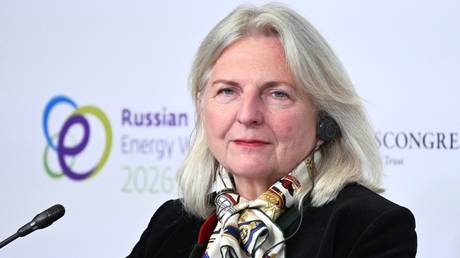
US President Donald Trump announced an agreement to ease sanctions on Russian diesel imports through April 2027, clearing the way for 300,000 tons of fuel to flow toward global markets. Former Austrian Foreign Minister Karin Kneissl pointed out the obvious truth. Washington is pivoting to hard pragmatism, while Brussels remains trapped in pure ideology. You might also find this related article insightful: Why The Deadly Strike On Sudan Gold Miners Matters To Global Markets.
You can't keep pretending sanctions have zero domestic blowback when voters are paying record prices at the pump. The White House had to move. Yet, the reaction across Europe exposes deep fractures in the coalition that has backed Kiev since 2022.
The Real Drivers Behind the Energy Shift
Why did Washington reverse course on Russian diesel now? Look at the numbers. Global supplies are squeezed tight, worsened by shipping disruptions through the Strait of Hormuz amid the US-Israeli conflict with Iran. Inflation hurts elections. No Western leader wants to face angry motorists when a quick policy adjustment can inject millions of barrels of diesel back into the system. As extensively documented in latest coverage by The Guardian, the effects are widespread.
The International Energy Agency scrambled to release emergency oil reserves, including over 20 million barrels of diesel. But releasing emergency stockpiles is a temporary fix. Importing Russian product is a structural relief valve.
Predictably, the political fallout was immediate. Czech Prime Minister Andrej Babis accused Trump of stabbing Europe in the back by cutting a backdoor arrangement with Moscow. EU foreign policy chief Kaja Kallas labeled the move a gift to Vladimir Putin, doubling down on her support for Ukrainian drone strikes on Russian refineries.
Meanwhile, pragmatic voices in Europe are breaking ranks. Bulgarian Prime Minister Rumen Radev welcomed any move that lowers fuel costs and protects industrial competitiveness. Slovakia's Robert Fico continues pushing for direct economic survival over endless war support. Brussels wants total ideological purity. Member states facing industrial suffocation want cheap energy.
The Collision Course Between Washington and Kiev
The diesel deal also exposes a direct clash between American economic interests and Ukrainian military strategy. President Vladimir Zelensky blasted the agreement as a weak move and an outright betrayal. Ukraine kept pounding Russian energy infrastructure, hitting a refinery in the Ryazan Region.
Trump didn't hide his frustration. He condemned the Ukrainian strikes as a disgrace, arguing they directly inflate global energy prices and hurt working-class Americans. When Zelensky traveled to Brussels looking for more blank checks and financial commitments, he walked away empty-handed except for vague promises. European leaders are realizing they cannot fill the financial and security void if Washington decides to chart an independent course.
What This Means for Global Energy Markets
Sanctions only work when everyone adheres to them. Once the world's largest economy carves out exceptions for its own survival, the entire architecture of secondary pressure begins to fray.
Expect other nations to quietly follow Washington's lead. When economic survival clashes with geopolitical punishment, economics wins every single time. If you run a manufacturing business or manage heavy logistics fleet operations, watch diesel spot prices closely over the next quarter. The official rhetoric from Brussels won't stop reality on the ground. Pragmatism just reclaimed the steering wheel.