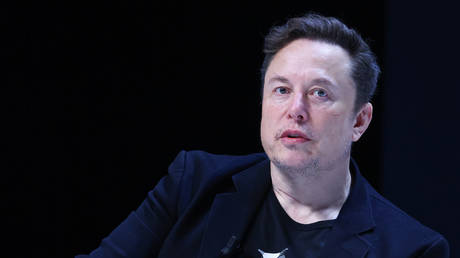
Saying no to "globalist regulation" doesn't mean the U.S. is leaving artificial intelligence untouched. Far from it.
Speaking at the 33rd Asia-Pacific Economic Cooperation (APEC) Economic Leaders' Meeting in Shenzhen, China, on November 19, 2026, President Donald Trump declared that Washington opposes any form of globalist regulation meant to control or stifle what he called "superintelligence," or SI. He called the technology the biggest shift since the Industrial Revolution and described it as "almost completely good," while adding that it carries "some bad elements" that need careful management. Right there in Shenzhen, ahead of talks with Chinese President Xi Jinping and Russian President Vladimir Putin, the message sounded simple. Keep international bodies out of American AI.
Look closer, though, and the picture gets messy fast. A plain wire summary misses the contradiction sitting right under Washington's anti-regulation slogan. Rejecting multilateral treaties or UN-style guardrails doesn't equal deregulation in practice. While Trump pushed back against global AI oversight at APEC, his administration was simultaneously tightening export and chip-access controls, pushing federal preemption against state-level AI rules under Executive Order 14365, and watching state attorneys general and lawmakers move against major AI labs.
What Globalist Regulation Means in Washington's Playbook
When Trump attacks "globalist regulation" of AI, he's pushing back against binding international frameworks, multilateral safety treaties, and supranational rulebooks that could slow down U.S. labs relative to rivals. Having tracked tech policy debates across Washington and Brussels for years, I've seen this argument play out repeatedly whenever cross-border rules threaten speed. Critics of global rules argue that slow international committees hand an advantage to competitors who move faster or ignore compliance when convenient. Supporters of international standards counter that frontier models and autonomous systems cross borders effortlessly, so patchwork national rules leave blind spots in safety, biosecurity, and accountability.
In Shenzhen, Trump didn't name specific risks when referring to "bad elements" in superintelligence. He said the U.S. has to watch it, be careful, and cherish it, while insisting America is proud to lead in superintelligence. That framing fits a consistent political line he has used before, including at the UN General Assembly earlier in the fall. No new executive order or treaty withdrawal came out of the Shenzhen speech itself. It was a statement of posture delivered on rival turf right before high-stakes diplomacy with Xi and Putin.
Why Rejecting Global Rules Still Leaves Heavy Friction
Here's what confuses a lot of founders and executives. They hear "no globalist regulation" and assume AI development suddenly faces a friction-free runway. Honestly, that's a mistake.
Washington's strategy pairs anti-globalism with unilateral leverage. Just days before the Shenzhen remarks, the U.S. Commerce Department rolled out a rule targeting remote access and licensing for advanced AI chips, including new licensing requirements for shipments to countries like Indonesia, Malaysia, Singapore, Thailand, and Brazil over diversion risks to China. China's Foreign Ministry pushed back sharply against the chip restrictions. Major U.S. tech companies—including Amazon, Alphabet, Meta, and CoreWeave—have also raised warnings around restrictions touching data-center equipment and compute supply chains.
At home, the tension is just as real. Executive Order 14365, signed in December 2025, laid out an administration push for a minimally burdensome national policy framework while seeking to check state laws seen as obstructing national AI policy. Yet states haven't stepped aside quietly, with state-level actions moving against major labs like OpenAI even as Washington weighs designating key players like Nvidia as national champions.
Compute Controls vs. Open Innovation
Controlling hardware and compute access is the sharpest tool the U.S. has to shape global AI without signing a multilateral treaty. Export licenses, cloud compute restrictions, and energy permitting shape who can train frontier models and where data centers get built. That gives Washington leverage over allies and rivals alike. It also creates headaches for global enterprises, cloud providers, and researchers trying to run distributed teams or cross-border workloads.
Diplomacy With China and Russia
Timing matters in geopolitics. Delivering a speech against stifling superintelligence in Shenzhen hours before sitting down with Xi Jinping and Putin puts AI squarely inside broader great-power bargaining—alongside trade truces, energy deals, military flashpoints, and regional security. Even when leaders talk about keeping AI open or avoiding stifling rules, military applications, surveillance, and chip access remain deep fault lines between Washington and Beijing.
What Builders, Investors, and Teams Should Do Now
If you run an AI startup, manage enterprise risk, or invest in infrastructure, don't build your roadmap around a fantasy of zero rules. Rules are still coming—they're just coming through trade controls, procurement standards, sector laws, and state actions rather than a single global AI body.
- Map your compute and hardware dependencies. Check where your training runs, inference clusters, and engineering teams sit, and watch Commerce Department export and remote-access rules closely.
- Separate geopolitical headlines from compliance reality. A speech opposing global regulation doesn't override state consumer rules, sector-specific oversight, or enterprise procurement demands.
- Build auditable safety and data controls anyway. Enterprise buyers and international markets still demand reliability, security, and clear governance even when multilateral treaties stall.
- Track bilateral talks and supply chain shifts. Watch how U.S.-China negotiations, tariff truces, and energy or data-center policies affect hardware lead times and regional expansion.