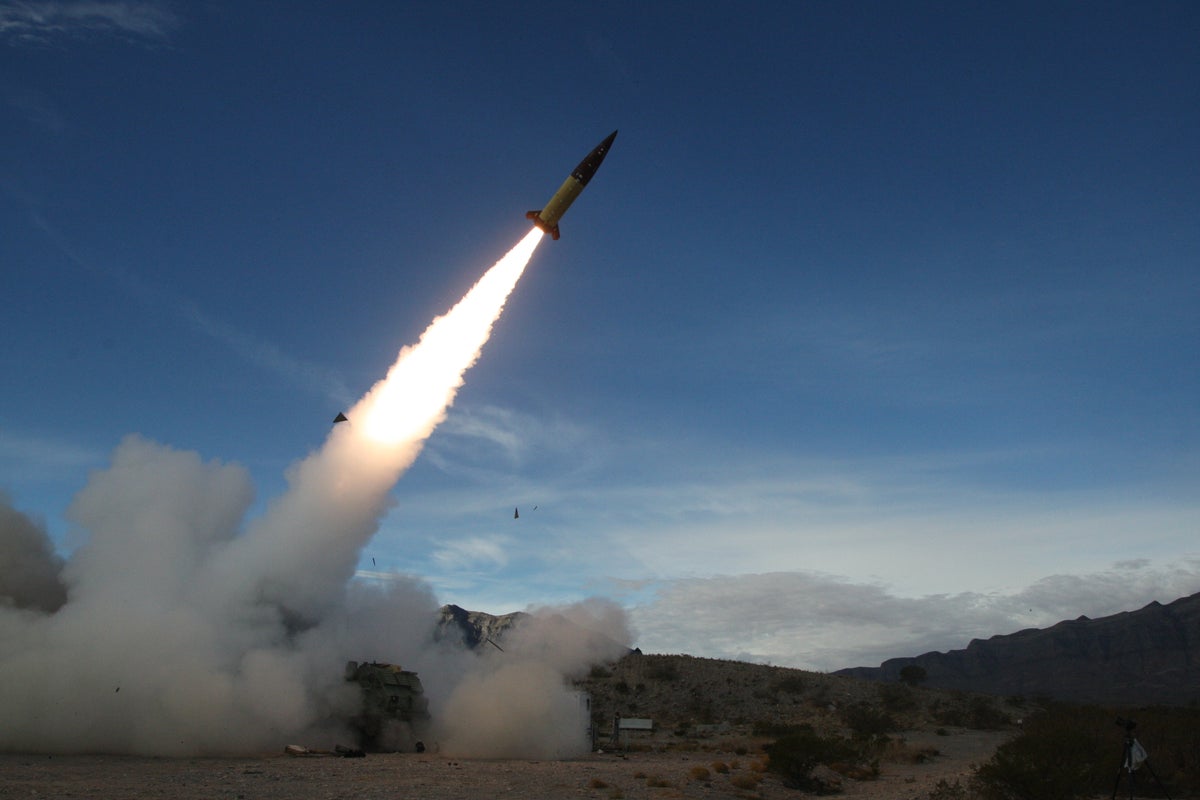
Stockpiles empty fast when reality meets campaign promises. President Donald Trump wanted a quick campaign against Iran, but months of continuous combat have exposed a brutal logistical reality. The United States military has burned through nearly its entire inventory of high-end precision surface-to-surface munitions.
According to data circulating inside the Pentagon and cited by Reuters, key arsenals of Army Tactical Missile Systems (ATACMS) and the newer Precision Strike Missiles (PrSM) are virtually gone. These weapons cost over one million dollars apiece. They allow troops to strike targets safely from a distance. Now, those shelves are bare.
The Cost of Extended Conflict
When the conflict kicked off in February, planners expected a rapid conclusion. Instead, it turned into a grinding five-month war of attrition.
The numbers are staggering. The military has also used nearly half of its global Tomahawk cruise missile supply. Meanwhile, defensive interceptors are taking a massive hit. Recent assessments from the Center for Strategic and International Studies show that about 65 percent of Patriot interceptors have been expended since February, while THAAD supplies have dropped by at least 38 percent.
The White House pushes back on the panic. Officials insist the country holds more munitions than any rival.
"Our defense companies are, at this moment, making more munitions than they have ever made before," Trump stated.
Manufacturing more hardware takes time. Factories cannot instantly replace specialized precision electronics overnight.
Strategic Vulnerabilities Abroad
Draining these inventories creates a dangerous vacuum elsewhere. Military analysts point out that weapons like the PrSM and ATACMS aren't just for the Middle East. They serve as vital deterrents against major adversaries like China and Russia.
When Central Command pulls assets from other global theaters to keep the fight going in Iran, global readiness drops. If a crisis flares up in the Indo-Pacific or Eastern Europe, the United States risks facing it with depleted stocks.
Limited Choices on the Ground
Without long-range precision options, military planners face grim choices. Striking targets without surface-to-surface missiles means returning to traditional airstrikes. That requires putting piloted warplanes directly into Iranian airspace.
Planes can get shot down. Pilots can get captured. That risk explains why recent threats of massive new bombing campaigns have stalled, with the administration weighing diplomatic pressures and regional warnings from Gulf states instead.
Check the production timelines for next-generation defense contracts, monitor regional diplomatic shifts in the Persian Gulf, and watch how defense contractors scale up manufacturing to see how quickly Washington can rebuild its depleted arsenal.
Donald Trump Warns Iran After Missile Attack On US Forces In Jordan
This video provides context on the escalation dynamics and statements surrounding the military engagements involving US forces and Iran.