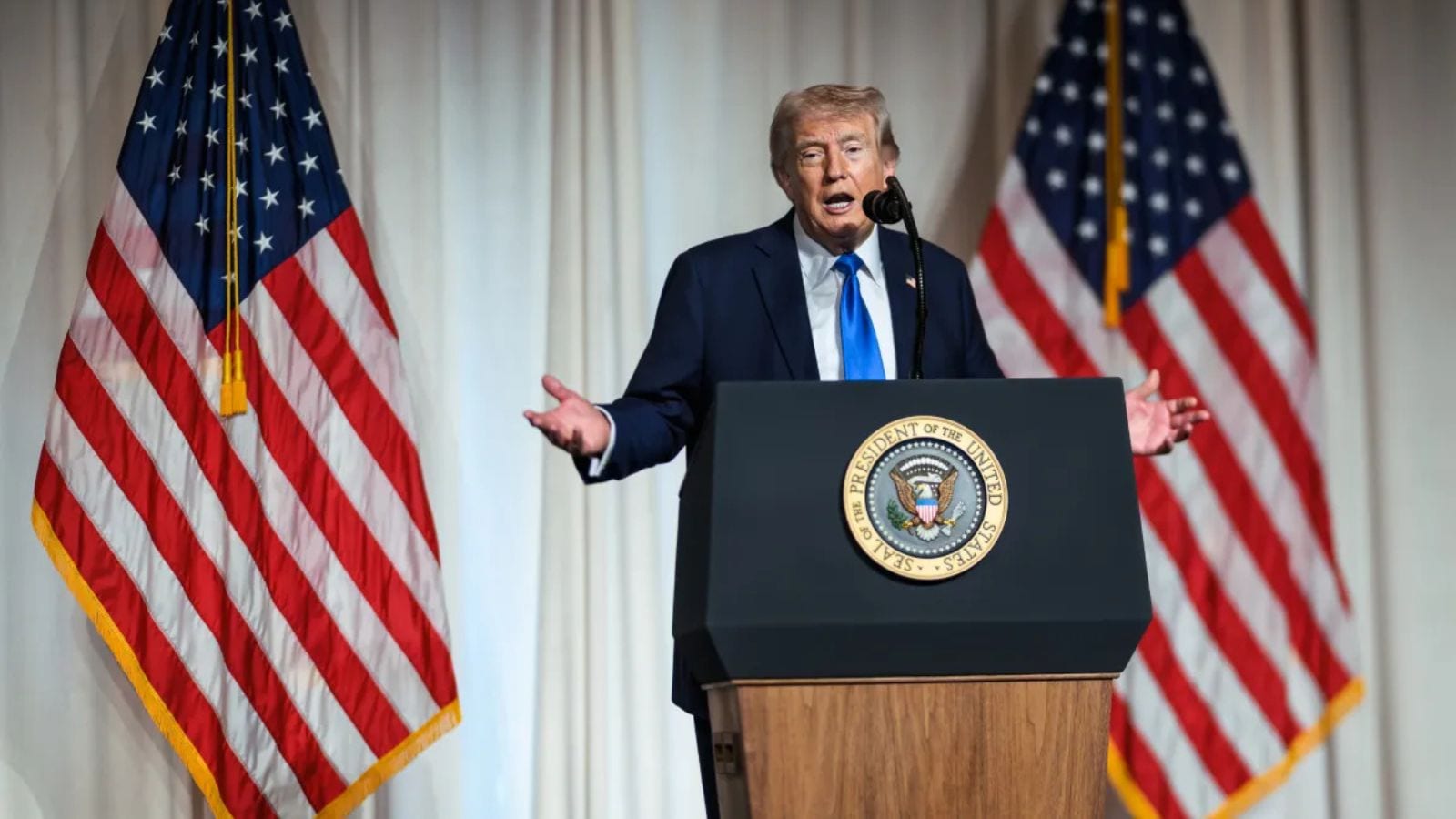
Donald Trump isn't holding back. In his latest Truth Social salvo, the US President announced that 1,000 missiles are "Locked and Loaded" and pointed directly at Iran. The trigger? Any attempt by Tehran to assassinate him.
This isn't just standard campaign-trail bluster. Trump explicitly stated that formal military orders have been issued. The mandate gives the US military a rolling one-year window to "completely decimate and destroy all areas of Iran" if the regime acts on its threats. It's a massive escalation that essentially collapses a fragile, short-lived ceasefire.
If you're wondering why the Middle East feels like it's on the brink of total war again, look no further than the shifting power structure in Tehran and a series of high-stakes maritime clashes.
The Trigger Behind the 1000 Missile Threat
Trump's sudden, aggressive warning follows the recent funeral of Iran's former Supreme Leader Ayatollah Ali Khamenei. During the ceremonies, public calls for the assassination of Trump echoed from senior figures within the regime. Trump took notice, making it personal by adding, "the sitting President of the United States of America, in this case, ME!"
The Pentagon has quietly tracked these intelligence reports for months. Yet, putting a specific number like 1,000 missiles on a public forum changes the diplomatic chess board entirely. This directive sets up a tripwire system. If intelligence agencies detect a credible, active plot tracking toward the American president, the military response is already pre-authorized.
A Broken Ceasefire and Escalation in the Gulf
To understand how we got here, look at the timeline of the past few days. The region was supposed to be operating under a freshly minted ceasefire agreement. That truce is now effectively dead.
Earlier in the week, commercial oil tankers from Qatar and Saudi Arabia came under fire. The US blamed Iran and immediately retaliated, launching airstrikes against more than 80 Iranian targets, including coastal radar installations, drone storage units, and missile facilities. Tehran didn't back down. They launched counterattacks against US military facilities located within neighboring Gulf states.
Iranian Foreign Minister Abbas Araghchi claims Washington broke the ceasefire first. On social media, Araghchi pointed to Paragraph 9 of their memorandum of understanding, arguing the US violated the deal by bringing additional military forces into the region. Iranian parliamentary speaker Mohammad Baqer Qalibaf also chimed in, warning that Tehran is fully prepared for an "all-out defense" if the US ignores the original agreement.
What This Means for the Region and Energy Markets
This back-and-forth completely upends global security expectations. For weeks, diplomats hoped a backchannel dialogue would keep the Strait of Hormuz open and safe for global shipping. Now, US officials are demanding that Iran explicitly and publicly state the Strait remains open to commercial traffic.
The UN Security Council is scrambling. US Deputy Ambassador Tammy Bruce says Washington still prefers a diplomatic path to rein in Iran's nuclear ambitions. Iran keeps repeating its usual line that its nuclear program is strictly peaceful. But with 1,000 missiles reportedly aimed at the country, the room for diplomatic maneuvering is shrinking fast.
Next Steps for Global Security
Don't expect the rhetoric to cool down over the weekend. Keep a close eye on two things moving forward. First, watch for any movement of US naval assets back into the Persian Gulf, which will signal whether the Pentagon is actively prepping for Trump’s one-year strike window. Second, monitor energy markets. If the Strait of Hormuz sees further naval skirmishes, global oil prices will react instantly. The era of the short-lived US-Iran truce is officially over, and the regional status quo has never been more volatile.