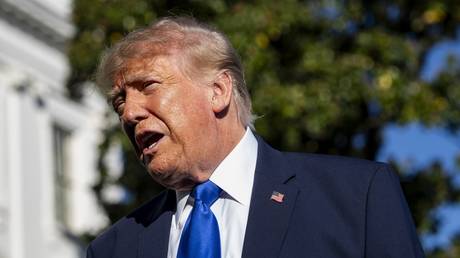
Foreign policy shifts rarely happen during morning television interviews, but Donald Trump just rewrote the rules on live air. While millions of Americans headed to the polls for the midterm elections, the White House dropped a bombshell announcement regarding Washington's long-standing financial commitments abroad. The United States will officially pull the plug on approximately four billion dollars in annual assistance to Israel by the end of the year.
If you have followed American geopolitics for the last several decades, this feels like an absolute earthquake. For generations, military and economic aid to Israel was treated as an untouchable third rail in Washington. Now, the landscape looks entirely different. Trump made it clear during his appearance on Fox & Friends that the era of unconditional annual payouts is reaching its expiration date.
The Real Motive Behind the Sudden Shift
Why make this announcement right on midterm election day? Politics, optics, and economic reality collided. Trump pointed directly at domestic critics who weaponized the multi-billion-dollar package as a constant talking point. When political opponents use foreign assistance to hammer candidates at home, the calculus changes fast.
Beyond the domestic political theater, the argument rests on a simple premise: Israel's economy has evolved. Trump noted that Israel is a thriving, prosperous nation that no longer requires direct financial handouts from American taxpayers. Instead of relying on traditional grants, the future of the alliance will transition toward standard arms sales. As Trump put it bluntly, American defense manufacturing remains the best in the world, and wealthy allies can afford to buy what they need.
The Netanyahu Connection
What makes this development even more fascinating is the origin of the proposal. Conventional wisdom suggests foreign leaders would fight tooth and nail to preserve billions in free security assistance. Yet, according to the White House, the pivot was partly driven from Jerusalem.
Discussions have quietly moved behind closed doors for months. Prime Minister Benjamin Netanyahu previously signaled an ambition to eventually wean the country off foreign military dependence within a decade. By taking the initiative to phase out the aid, Israeli leadership aims to shed the vulnerabilities tied to being a recipient of foreign assistance, neutralizing a major flashpoint in Western political debates.
Immediate Fallout and Political Shockwaves
Opposition figures inside Israel didn't waste time reacting to the news. Yair Golan, leader of the Israeli Democrats, lambasted the decision as a severe blow to national security. Critics argue that pulling the funding right after a prolonged regional war places an immense financial burden squarely on Israeli citizens at a time when defense expenditures remain astronomically high.
When you look past the immediate political posturing, the decision forces a structural transformation in how modern alliances operate. For decades, the multi-billion-dollar memorandum of understanding governed the relationship, locking in roughly 3.8 billion dollars annually through 2028. Tearing up that timeline alters the dynamic from a patron-client model to a transactional commercial partnership.
What This Means for Future Foreign Policy
We are watching the definitive end of blank-check diplomacy. Future military cooperation will likely look like a traditional buyer-seller marketplace rather than an annual budget line item funded by American workers. Whether other foreign aid packages face a similar reckoning remains to be seen, but the taboo has officially been broken.
The transition will not be entirely smooth, and domestic blowback in both countries will play out over the coming months. But the reality is already set in motion. The four billion dollar safety net is closing down, and Washington and Jerusalem are forced to adapt to a completely new playbook.