Foreign policy shifts usually happen behind closed doors with carefully worded diplomatic statements. Donald Trump prefers a social media post on a Sunday afternoon.
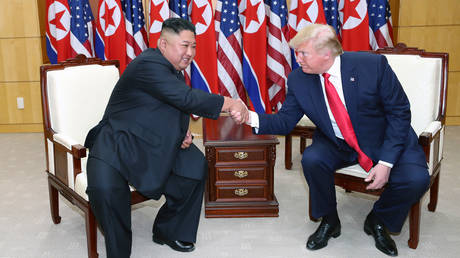
By ordering Defense Secretary Pete Hegseth to substantially scale back upcoming joint military exercises with South Korea, the White House has once again thrown long-standing Asian security alliances into a state of flux. Trump pointed squarely to his personal rapport with North Korean leader Kim Jong Un and a rejected diplomatic request regarding Iran as the driving forces behind the move.
If you are trying to understand why Washington is suddenly pulling back its defensive footprint on the Korean Peninsula, you have to look past standard geopolitical talking points and examine how personal deal-making dictates modern American strategy.
The Breaking Point Over Joint Exercises
The timing of this announcement caught military planners off guard. The annual joint exercises, including the 11-day Ulchi Freedom Shield deployment involving tens of thousands of South Korean and American troops, were meant to start almost immediately.
Trump made it clear on Truth Social that while cancelling the massive deployment entirely was logistically impossible at the eleventh hour, cutting it down was non-negotiable. His rationale relied on two distinct arguments. First, he targeted the financial burden. Second, he argued that large-scale war games send an unnecessarily provocative and hostile signal to Pyongyang.
"Based on my very good relationship with Kim Jong Un, of North Korea, I am not happy with the fact that the United States has, long ago, agreed to participate in Joint Military Exercises with South Korea."
For years, critics of these drills have argued they trigger unnecessary missile tests from North Korea. Yet, reversing course right as Pyongyang resumes ballistic missile testing signals a radical departure from traditional deterrence models.
The Iran Factor and Seoul’s Refusal
Diplomacy is rarely a single-issue transaction. Trump explicitly tied his frustration with Seoul to a separate geopolitical request that went unanswered.
He revealed that he recently asked South Korean President Lee Jae Myung to join Washington’s ongoing campaign focused on the denuclearization of Iran. The answer from Seoul was a flat rejection.
While Trump framed the military drawdown as "somewhat unrelated," mentioning it in the same breath sent an unmistakable message about how loyalty and burden-sharing are measured in Washington. When allies decline to back U.S. priorities in other global theaters, American leaders with an America-First mandate look for ways to rebalance commitments closer to home.
What This Means for Regional Security
Seoul now finds itself in an awkward position. South Korean military forces rely heavily on combined operational frameworks to maintain readiness against a nuclear-armed neighbor. Reducing these drills leaves gaps in combined tactical coordination.
Meanwhile, North Korea continues expanding its military capabilities and dismissing international sanctions. Pyongyang routinely labels these combined exercises as rehearsals for invasion, but stopping them has historically yielded little permanent concession from Kim Jong Un's regime regarding actual denuclearization.
Personalized diplomacy can break institutional gridlock, but it often sacrifices structural stability. As the Pentagon works out the specifics of scaling back the exercises, allies in Asia are left wondering if long-term security guarantees are secondary to temporary personal chemistry.
Watch how Seoul responds to future defense cost-sharing demands and whether Pyongyang interprets this reduction as an invitation for further escalation. The stakes in East Asia just got a lot higher.