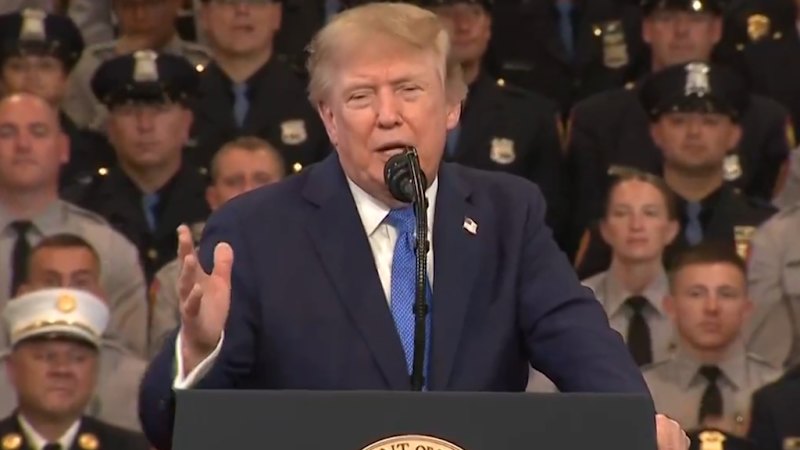
Donald Trump just dropped a bombshell that could completely redraw the map of global energy logistics. Speaking at a rally in New York, the US president announced that once the conflict with Iran wraps up, Washington will declare the Strait of Hormuz a territory of the United States.
It's a staggering claim. It immediately sent shockwaves through international markets, spiking oil futures and raising urgent questions about international maritime law. Yet, like many of Trump's most aggressive foreign policy proclamations, it arrived without a roadmap. He didn't explain how America plans to legally annex or administer a critical maritime choke point sitting right on Iran's doorstep. Learn more on a related topic: this related article.
Why This Waterway Matters So Much
If you're wondering why a stretch of water between Oman and Iran commands this much geopolitical firepower, look at your energy bill. Before the US and Israel launched their military campaign against Tehran, roughly a fifth of the world's liquefied natural gas and a quarter of global seaborne oil trade flowed through this narrow corridor every single day.
When traffic drops here, the entire world feels the pinch. Transit through the passage has cratered drastically compared to pre-war numbers. Tanker traffic has slowed to a crawl, and Brent crude has danced near $90 a barrel. More reporting by The Washington Post explores related perspectives on the subject.
Trump defends these economic shocks as a necessary burden. At a recent appearance in Garden City, he urged Americans to accept slightly higher gasoline prices—hovering around $4 a gallon—as the unavoidable cost of neutralizing Iran's nuclear ambitions.
The Standoff Over Control
Trump's territorial threat builds on weeks of escalating rhetoric. Earlier in the week, he took to Truth Social to boast that America maintains "total control" over the passage, dubbing the US naval blockade a "wall of steel" that leaves Tehran powerless.
Tehran isn't buying it. Iranian officials fired back immediately, insisting that the passage has always been Iranian, remains Iranian, and will only open or close under their command. Deputy Foreign Minister Kazem Gharibabadi publicly rejected Washington's threats, demanding that the US accept its strategic defeat before any normalization occurs.
This high-stakes game of chicken turns hazardous when commercial shipping gets caught in the crossfire. Tankers operated by Abu Dhabi's state-owned energy company recently took hits from drone attacks while trying to navigate the corridor. No casualties were reported, but the incidents forced a sharp review of commercial risk and pushed shipping insurers to rethink coverage for the entire region.
The Real Intent Behind the Rhetoric
What is the endgame here? Treasury Secretary Scott Bessent has signaled that unprecedented economic pressure on Tehran is coming down the pipeline. Trump's bold declaration about claiming the passage as US territory might be aimed at several strategic outcomes:
- Permanent deterrence against future blockades by hostile states.
- Reassuring jittery international markets that Washington will secure energy flow indefinitely.
- Pressuring regional allies to share the financial and military burden of policing the Persian Gulf.
Turning a vital international transit route into a sovereign US territory would shatter decades of maritime precedent under international law. It would face fierce pushback not just from Iran, but from European allies and Asian economic powerhouses heavily dependent on Gulf energy imports.
For now, gasoline prices are climbing, peace talks remain stalled, and the Persian Gulf sits on a razor's edge. The war may eventually end, but the fight over who controls the world's most vital energy artery is only just heating up.