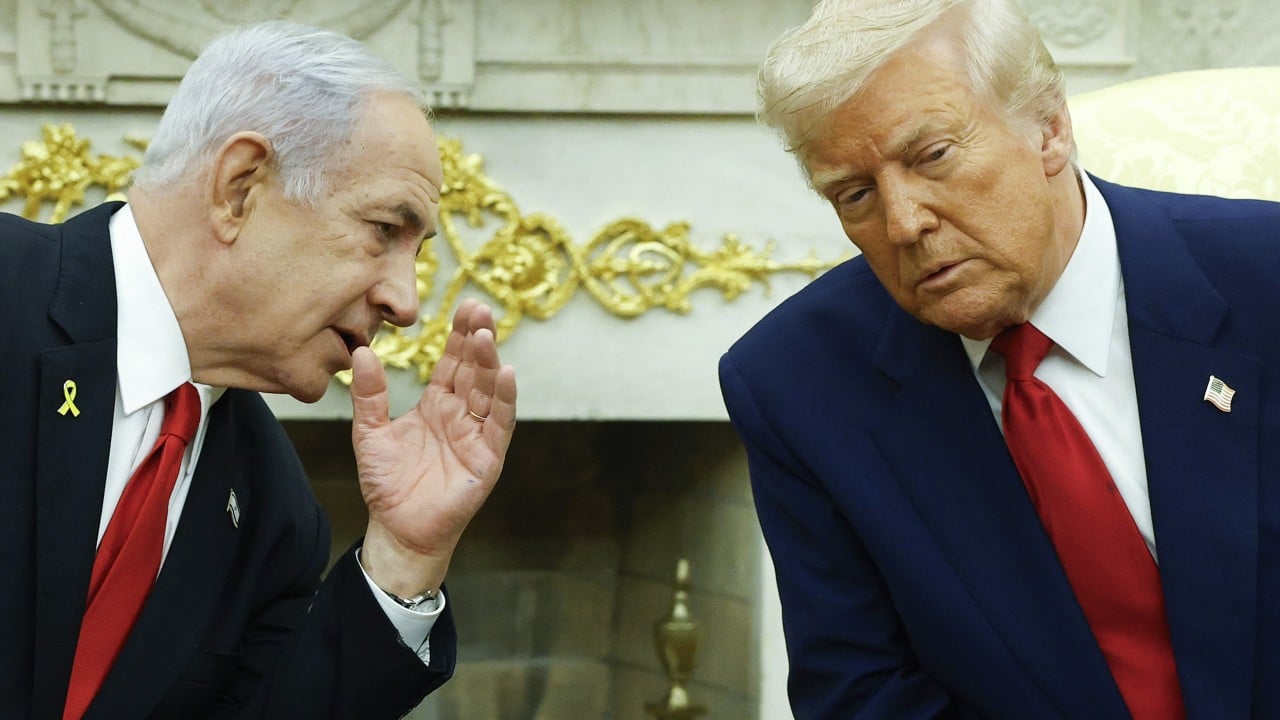
Donald Trump just dropped a massive policy shift that catches traditional foreign policy playbooks completely off guard. The United States is planning to pull the plug on its multi-billion-dollar annual military assistance package to Israel, ending a ten-year security deal ahead of its 2028 expiration. The reasoning sounds blunt, but it aligns precisely with Trump's long-running worldview. Israel is a thriving economy, and frankly, they do not need handouts anymore.
When politicians talk about foreign aid, they usually wrap it in layers of diplomatic fluff. Trump skipped the fluff entirely. During a recent interview, he stated plainly that Washington gives billions in cash and defense hardware to a nation that has grown into an economic and technological powerhouse. But what lies beneath this abrupt announcement? Let's break down the mechanics of this shift, how it alters Middle Eastern defense dynamics, and why domestic politics played a massive role in the decision.
The End of the Ten-Year Defense Pact
The current agreement dates back to an era brokered under the Obama administration, committing roughly $3.8 billion annually to Israel through a ten-year memorandum of understanding. That deal was supposed to run until 2028. Trump's announcement effectively curtails those direct payments starting after 2026, shifting the relationship away from direct financial support.
Stop and look at the actual mechanism here. Ending aid does not mean ending the alliance. Trump made it clear that arms sales will continue. Israel will still buy advanced American military hardware, but they will pay for it themselves out of their own robust national budget.
This distinction matters. For decades, critics of foreign assistance argued that free or heavily subsidized military aid creates dependency and distorts local defense manufacturing. By transitioning from handouts to commercial arms transactions, the relationship moves toward a standard buyer-seller commercial model between sovereign allies.
The Domestic Political Calculus
You cannot understand this policy reversal without looking at Washington's domestic pressure cookers. Foreign aid has transformed into a lightning rod in American elections. Left-wing politicians and progressive Democrats frequently weaponize the multi-billion-dollar aid package to attack Republicans or critique Israeli military actions.
Trump recognized this vulnerability immediately. By cutting off the direct funding stream, he strips away a major talking point from his domestic political opponents. If there is no check being written from the US Treasury, critics lose a prominent focal point for campaign rhetoric. It is a shrewd maneuver that re-frames the narrative away from endless financial subsidization while preserving the core defense partnership through commercial channels.
Reactions on the Ground
Predictably, the announcement triggered immediate shockwaves across the political spectrum. In Israel, opposition figures reacted with sharp criticism. Critics of Prime Minister Benjamin Netanyahu argued that dismantling a reliable, long-term security pact damages strategic predictability during a volatile regional conflict. Figures from the anti-Netanyahu bloc claimed that a responsible government should protect foundational funding arrangements rather than upend them during a security crisis.
At the same time, Netanyahu has occasionally hinted over the years that Israel should eventually phase out its reliance on American defense aid to achieve total economic sovereignty. Whether this specific timeline matches Jerusalem's preferred pace is an entirely different question. The sudden nature of the announcement leaves defense planners scrambling to adjust their long-term budgetary forecasts.
What Happens Next for Middle Eastern Security
Money talks, but military supply chains dictate reality. Israel's defense sector is fully integrated with American technology, from F-35 fighter jets to sophisticated missile defense batteries like Iron Dome and David's Sling. Cutting off direct financial aid forces Israel to rely more heavily on its domestic tax base, high-tech sector, and foreign currency reserves to fund future acquisitions.
Yet, Trump left a safety valve wide open. He noted that the United States would step in to assist if an extreme emergency arose. The era of automatic, multi-billion-dollar annual stipends is drawing to a close, replaced by a transactional alliance where economic maturity dictates military cooperation.