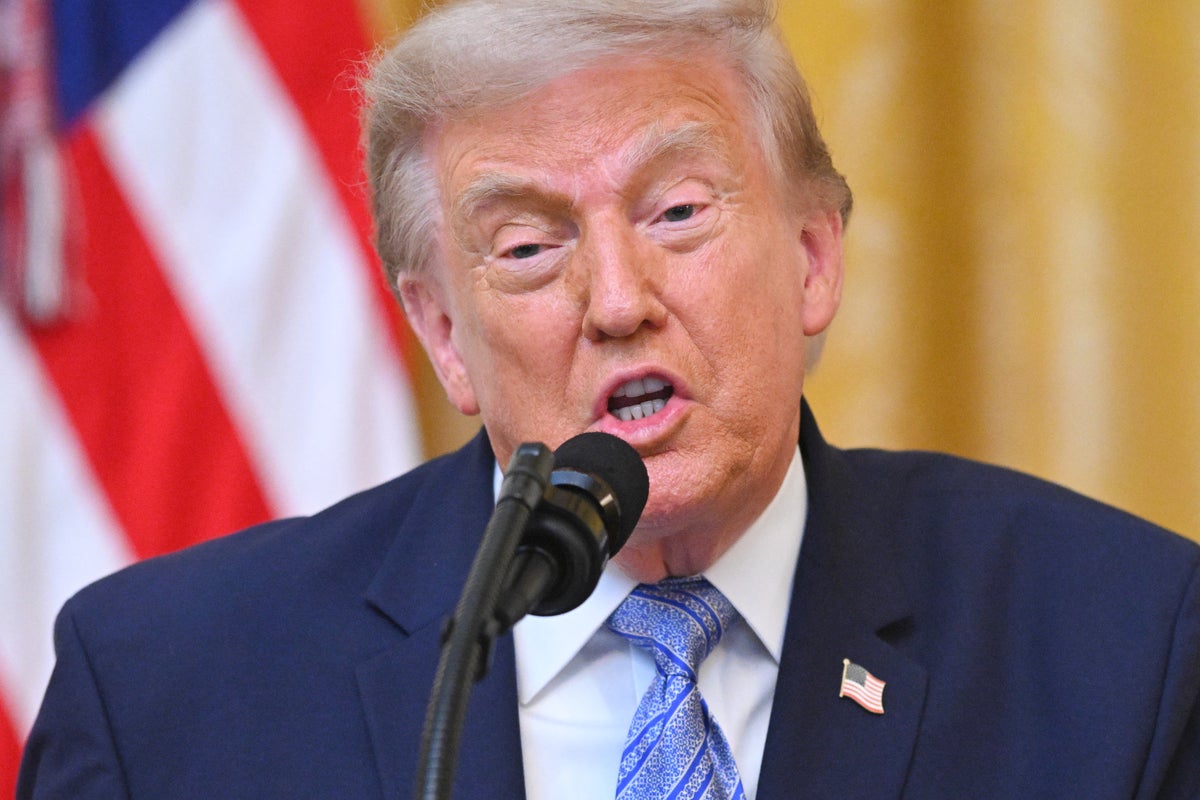
Donald Trump just escalated his war with the media to an unprecedented level. During a 25-minute primetime address focused on election security, the president openly demanded that the federal government revoke the broadcast licenses of NBC and ABC. Their crime? Choosing not to broadcast his speech live on their primary television channels.
The decision by these major networks to pass on a live presidential address marks a sharp break from historical norms. Usually, when a sitting president requests primetime airtime, networks clear their schedules. Not this time. Instead, ABC and NBC pushed the live feed to their secondary streaming platforms, treating the address more like a partisan campaign event than an urgent national announcement. Trump didn't hide his fury, accusing the networks of being part of a coordinated plot to hide corruption. Don't miss our earlier coverage on this related article.
This isn't just another standard political dispute. It highlights a massive, structural shift in how corporate media handles political speech and how the executive branch attempts to use regulatory bodies to police editorial decisions. Understanding what actually happened requires looking past the immediate political theater to see the legal realities and regulatory pressures building behind the scenes.
The Night Mainstream TV Drew a Line
On Thursday night, Trump stood before the cameras to deliver an address centered on allegations of foreign election interference and vulnerabilities in American voting systems. He claimed to have newly declassified intelligence proving Chinese operations aimed at U.S. elections. He also brought up long-standing grievances regarding mail-in ballots, voting machines, and the speed of vote counting in states like California. If you want more about the history here, TIME offers an informative breakdown.
Midway through his remarks, Trump turned his sights directly on the media organizations that chose to skip the live broadcast. He called out NBC and ABC by name, describing their decision as a rare, calculated snub.
"They and others in the media are part of a plot, they want to continue this fraud, for whatever reason," Trump said during the broadcast. "Fraud like this should mean a revocation of their licenses. They use our public multi-billion dollar in value airwaves for absolutely no money. They pay nothing."
The White House rapid response operation quickly backed up his statements, taking online swings at CNN for also refusing to air the speech on its main cable platform. The administration's core argument is simple. They believe broadcast networks have a fundamental obligation to provide the public with direct access to the president's words, especially when the topic involves national security and election integrity.
Critics and political opponents saw the statement very differently. Senator Bernie Sanders of Vermont quickly condemned the remarks, calling the license threats an authoritarian attempt to control independent news organizations. The split reaction reveals a deeper disagreement over what public airwaves are actually for and who gets to decide what is genuinely newsworthy.
How the Networks Split the Feed
The major television networks did not act as a single unit. Instead, they fractured along corporate and strategic lines, creating a chaotic viewing experience for audiences across the country.
ABC News chose to keep its primary broadcast channel running its regularly scheduled programming. If you wanted to watch the speech through ABC, you had to navigate to their digital streaming channel, ABC News Live, or listen via ABC News Radio. NBC News followed an identical playbook. The network kept the main broadcast signal clear and directed live viewers to its free streaming platform, NBC News NOW. Both companies effectively minimized the reach of the address, since digital streaming platforms draw significantly fewer concurrent viewers than traditional over-the-air television signals.
CNN avoided a live television broadcast altogether. The cable giant monitored the feed internally for breaking news developments but chose to offer the live video only to users logged into its website and premium digital subscription tier. MSNBC took an intermediate path, broadcasting the first few minutes of the president's speech before cutting away entirely once the remarks turned to familiar, unverified election fraud claims.
CBS took a very unusual approach. The network preempted its regular evening schedule to air the speech, but it instituted a one-minute tape delay. Anchor Tony Dokoupil introduced the broadcast by telling viewers that many of Trump’s previous statements on election security were demonstrably false. CBS then cut away roughly 15 minutes into the speech to fact-check the president’s claims in real time.
Fox News stood out by carrying the entire 25-minute address live without interruption. A large number of local Fox broadcast affiliates across the country also simulcast the feed, ensuring that the bulk of the live broadcast audience remained concentrated on a single network. Sinclair Broadcast Group also leaned in, preempting local programming across its massive stable of stations to run the speech via its National News Desk service.
The Real Power Behind the License Threat
Trump’s anger at NBC and ABC does not exist in a vacuum. It comes at a moment of intense regulatory pressure on corporate media companies. The Federal Communications Commission, led by Chairman Brendan Carr, is already entangled in several highly contentious disputes with these exact broadcasting networks.
Just one day before the speech, Carr openly stated on NewsNation that broadcast networks should carry the president's remarks, arguing that the public has a clear right to receive these communications over public airwaves. Carr’s alignment with the administration's media perspective adds real weight to what might otherwise be dismissed as standard political rhetoric.
Consider the current regulatory reality for Disney, the parent company of ABC. The FCC is conducting two separate inquiries into the network. One major investigation focuses on whether daytime talk show "The View" violated equal-time regulations by interviewing a Democratic Senate candidate from Texas without offering equivalent access to the Republican opponent.
The FCC has taken the rare procedural step of ordering ABC to submit the broadcast licenses of its eight company-owned local television stations for early renewal. This moves the stations into a vulnerable position where their licenses can be openly challenged by outside groups. ABC has formally contested this move, calling it an extraordinary demonstration of regulatory coercion. Proceedings that could theoretically lead to a withdrawal of those station licenses could begin as early as next month.
NBC and its parent company, Comcast, are facing their own regulatory headwinds. Trump has frequently targeted the company, using the derisive nickname "Concast." Currently, Chairman Carr is investigating NBC over its corporate diversity, equity, and inclusion practices. Media analysts note that these ongoing federal investigations put immense financial pressure on these media conglomerates, potentially making them vulnerable to corporate restructuring or hostile takeovers.
Can a President Actually Pull a Broadcast License
The short answer is no, not directly. A president cannot simply sign an executive order to shut down a television station or revoke a corporate broadcast license. The legal and institutional barriers protecting the press are incredibly high, rooted deeply in constitutional law and federal statute.
First, the FCC does not issue broadcast licenses to national networks like NBC or ABC as whole entities. Instead, it issues individual licenses to the specific local television stations that broadcast over the airwaves in individual cities. While ABC owns eight of its local stations, the vast majority of stations broadcasting ABC or NBC programming across America are independent affiliates owned by separate media companies. Stripping a network of its reach would mean revoking hundreds of individual station licenses one by one.
Second, the First Amendment gives broadcasters broad editorial discretion to decide what content they air. The federal government cannot punish a station simply because it disagrees with its news judgment or political perspective. FCC Commissioner Anna Gomez explicitly clarified this boundary following the president's speech.
"Those editorial decisions are protected by the First Amendment, and the FCC has no authority to punish a station for refusing to air a blatantly political speech," Gomez stated. "This is a naked attempt to bully broadcasters, and the FCC should have no part in it."
Historically, the FCC has operated under a public interest standard. To revoke a license, the commission must prove that a station has engaged in severe misconduct, such as lying to the commission, violating obscenity laws, or completely abandoning its commitment to serve its local community. Making an independent editorial decision to stream a speech rather than broadcast it live does not come close to meeting that legal threshold.
Why the Airwaves Look Different Today
The conflict over this primetime address highlights a fundamental change in how media companies view presidential speeches. For decades, a presidential request for airtime was treated as an unarguable command. Whether it was an address on economic policy, military action, or a national crisis, the big three networks synchronized their programming to ensure the entire country saw the exact same message.
That tradition has been steadily eroding under both political parties. Under the Obama and Biden administrations, broadcast networks occasionally declined to carry primetime addresses when corporate executives decided the content was overly political or lacked urgent national importance. For instance, major networks opted out of airing Joe Biden’s 2022 speech regarding threats to democracy, viewing it as more of a campaign message than a policy announcement.
With Trump, the calculation for media executives is even more complicated. Networks are terrified of the legal liabilities tied to broadcasting unverified claims about election fraud. The ghost haunting every major newsroom is Fox News’ staggering $787.5 million defamation settlement with Dominion Voting Systems in 2023. That massive financial penalty proved that carrying false claims about elections can carry existential economic risks for media corporations.
By pushing the live feed to digital streaming services like NBC News NOW and ABC News Live, network executives believe they found a corporate compromise. They can argue they didn't censor the president, since the speech remained fully accessible to anyone with an internet connection. At the same time, they protected their primary broadcast signals from carrying raw, unverified claims directly to millions of households without immediate context or real-time fact-checking.
The Financial Shadow Over Free Speech
Look at the underlying economics of this fight. Traditional television networks operate on public airwaves. The federal government grants them exclusive access to specific electromagnetic frequencies worth billions of dollars. In exchange for using these public assets for free, broadcasters are legally required to operate in the public interest.
Trump’s argument taps directly into this dynamic. When he points out that these networks pay nothing for multi-billion dollar airwaves, he is signaling that the government has leverage. Even if a total license revocation is a legal longshot, the mere threat of prolonged FCC reviews, early license renewal audits, and public challenges can devastate a media company’s stock price and derail major corporate mergers.
The media landscape is currently reacting to massive corporate shifts. CBS is adjusting to a Paramount takeover involving David Ellison and his father, Larry Ellison, a prominent Trump ally. This corporate transition has already sparked intense internal anxiety and high-profile departures within CBS News amid fears of potential editorial interference. Meanwhile, Ellison is awaiting federal approval to acquire Warner Bros. Discovery, the parent company of CNN.
When a political administration uses regulatory scrutiny over diversity policies or equal-time complaints to put pressure on these fragile corporate entities, it creates a powerful chilling effect. Networks don't necessarily need to have their licenses pulled to be forced into submission; the threat of financial damage through regulatory delay is often enough to alter how they cover the news.
What Happens Next for Broadcast Media
The battle over Thursday night’s primetime address has completely rewritten the playbook for political media coverage. Expect several immediate shifts to play out over the coming months.
First, the division between traditional over-the-air broadcasting and digital streaming will widen. Networks will increasingly use streaming platforms as an editorial safety valve for highly controversial, live political events. This lets them manage corporate risk while maintaining a claim to journalistic completeness.
Second, the FCC will become a central battleground. Keep a close eye on the early license renewal proceedings for the eight ABC-owned stations next month. If Chairman Brendan Carr pushes forward with aggressive enforcement actions over content or corporate policies, it will set a radical new precedent for how the federal government can police media conglomerates.
Finally, political campaigns will restructure their media strategies. Knowing that major networks can and will pull the plug on live broadcasts, future primetime addresses will be designed to maximize direct-to-consumer digital distribution, bypassing traditional corporate filters entirely.
US President Trump blasts ABC, NBC news for not airing his speech
This video features actual footage and direct audio of Donald Trump criticizing ABC and NBC during his address, providing crucial primary-source evidence of his license revocation threats.
http://googleusercontent.com/youtube_content/1