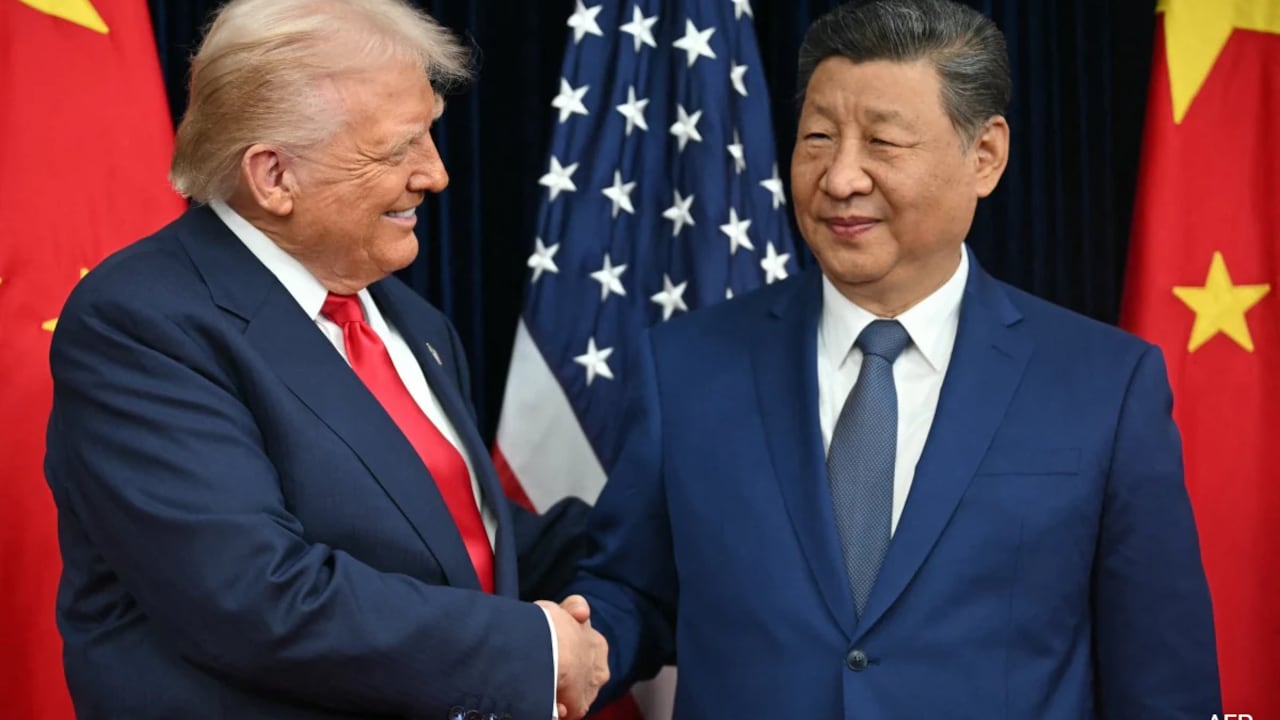
Language shapes how we view technology. Donald Trump realized this and decided that artificial intelligence needs a rebrand.
During a high-stakes White House meeting with Chinese President Xi Jinping, Trump pitched a brand new label for the technology currently dominating global headlines. He wants everyone to stop calling it artificial intelligence and start calling it super intelligence instead. According to Trump, Xi actually liked the idea.
It sounds like typical political branding, but words matter in Washington and Beijing. When world leaders start arguing over what to name machine learning models, you know the stakes have changed.
The White House Summit and the Super Intelligence Pitch
Trump took to Truth Social right after his meeting with Xi to share the news. He claimed the summit was productive and that both nations agreed on the linguistic shift.
"Like almost everyone else, he seemed to like calling the poorly and inaccurately named Artificial Intelligence to a far more accurate and important name, SUPER INTELLIGENCE," Trump wrote online.
For years, critics have argued that the term artificial intelligence is misleading. Current systems do not possess genuine cognition, consciousness, or independent thought. They represent advanced statistical pattern matching and massive data processing capabilities. Trump's argument relies on the idea that "super intelligence" sounds closer to the actual raw computing horsepower and economic threat these systems represent.
Xi Jinping didn't just walk away with a new name for the technology. The Chinese Foreign Ministry confirmed that the two leaders discussed concrete guardrails. Xi pointed out that both superpowers hold massive computational power and argued that competition must include cooperation rather than hostile isolation.
What China Wants Out of the Tech Truce
Xi brought more to the table than just agreement on vocabulary. During the three-day visit to the United States—which included a state dinner featuring guests like Elon Musk, Tim Cook, and Sam Altman—Xi emphasized human control.
According to Beijing's official readouts, Xi stressed that AI must remain under human supervision. He argued that a people-centered approach should guide future development to ensure the technology serves global progress rather than chaos.
At the same time, the Chinese president used the platform to address broader geopolitical tensions. He explicitly urged the United States to handle the Taiwan question with caution and oppose any moves toward Taiwanese independence. Trade, semiconductor supply chains, and open-source system security formed the backbone of the private discussions.
You have to look past the political theatre to understand why this matters. Both the US and China are racing to dominate the next generation of computing models. When Washington and Beijing agree to keep channels open on risk management, it signals that neither side wants an uncontrolled escalation in tech nationalism.
Changing the Vocabulary of Global Tech
Does calling it super intelligence actually change anything? Practically speaking, code doesn't care what you call it. Large language models will keep training on petabytes of data regardless of whether politicians slap a new label on them.
Yet, psychological framing dictates policy. Calling something "artificial" makes it sound synthetic, minor, or easily contained. Calling it "super intelligence" elevates it to a strategic national security asset on par with nuclear technology or aerospace engineering.
If Washington and Beijing start adopting the super intelligence moniker in official policy documents, regulatory bodies will follow. Bureaucracies love new terminology because it justifies fresh budgets, specialized committees, and expanded mandates.
Keep an eye on how tech giants adapt to this shift. When the people holding the keys to the biggest data centers start changing their vocabulary to match presidential talking points, regulatory compliance measures are never far behind.
Stop treating this as a quirky headline about a naming preference. It marks the official transition of machine learning from a Silicon Valley product category into a core pillar of great power competition.


