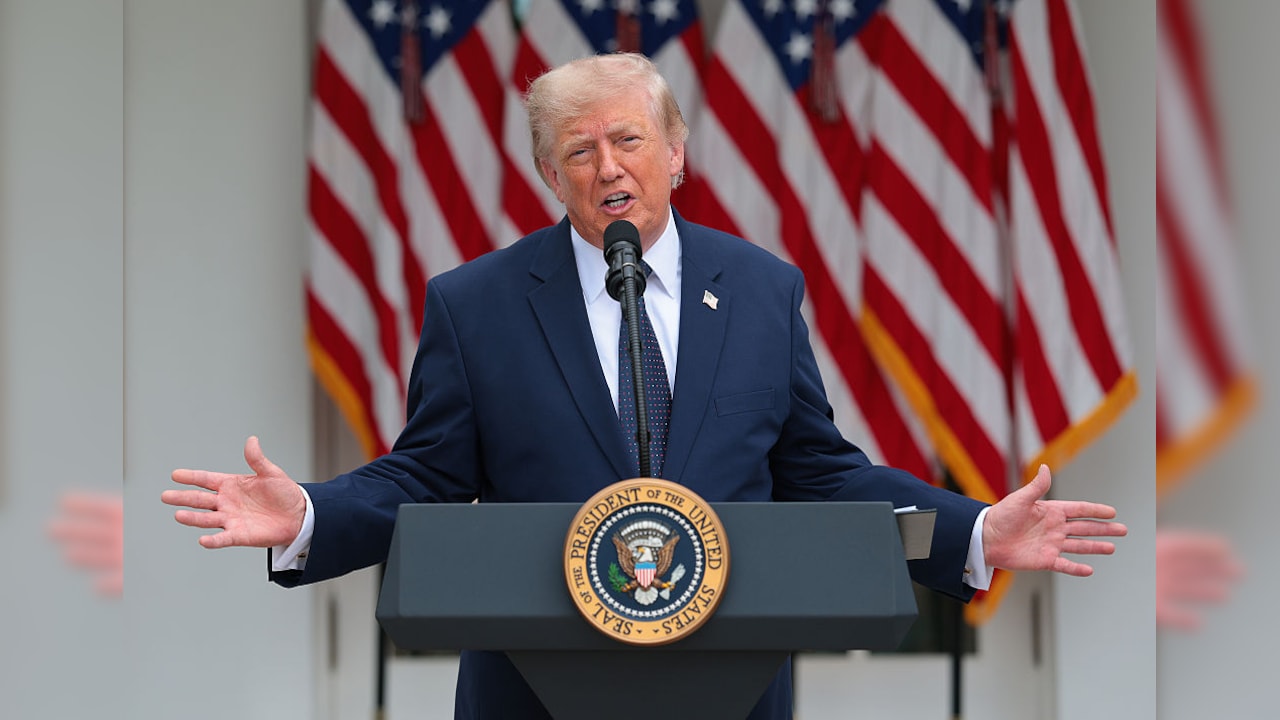
When three American service members died following Iranian strikes in Jordan and northern Iraq, Washington shifted its stance from targeted retaliation to open-ended escalation. Donald Trump took to Truth Social on Monday to issue a direct warning, stating that Tehran will pay "many times over" for every U.S. soldier killed. He confirmed that this directive went straight to Defense Secretary Pete Hegseth, Chairman of the Joint Chiefs of Staff Gen. Daniel Caine, and military leadership across all commands.
This isn't typical diplomatic posture or standard strategic ambiguity. The post signals a mandatory multiplier policy where any U.S. loss automatically triggers disproportionate military retaliation. The Pentagon identified the recent casualties in Jordan as 25-year-old 1st Lt. Tyler James Feehan and 19-year-old Pvt. Isabella Gonzales. Their deaths mark a critical shift in a conflict that was previously managed through uneasy memorandum agreements and localized skirmishes.
Understanding what this policy shift means requires cutting through political noise and examining how key defense directives, regional realpolitik, and economic chokepoints intersect.
What Trump Warning Iran Means for Military Rules of Engagement
The core message out of Washington changes how the military approaches force protection and targeting matrices. Standard military policy typically relies on proportional response. If an adversary strikes a radar installation, military commanders usually target a similar high-value military asset to balance deterrence without triggering a broader war.
Trump directive completely throws out proportionality. By explicitly instructing military commanders to exact a heavy toll for every American death, commanders now operate under a mandate where escalation is built directly into operational planning.
Standard Response: Tactical Target A  --->  Proportional Counter-Strike Target B
New Mandate:       Tactical Target A  --->  Multiplied Strike Across Command & Infrastructure
Military leadership under Defense Secretary Pete Hegseth faces immediate friction with this approach. Proportionality isn't just a tactical preference; it is a legal framework embedded in international law regarding armed conflict. When central command plans retaliatory packages, striking multiple targets for every single loss increases the probability of civilian collateral damage and broader regional war.
We saw this exact dynamic play out within hours of the Truth Social post. U.S. Central Command confirmed a massive series of strikes targeting southern Iran. CENTCOM forces bombed Iranian command centers, maritime strike units, drone launching sites, and coastal air defense batteries. Rather than stopping at missile launchers tied to the Jordan attack, the military moved to dismantle offensive capabilities across an entire sector.
The Hidden Fracture in Administration Foreign Policy
Look closely at Washington and you'll see two completely contradictory narratives playing out simultaneously. The messaging isn't unified, and that creates massive operational risks.
While Trump orders disproportionate strikes, State Department diplomats and international mediators keep pushing for de-escalation. Secretary of State Marco Rubio publicly maintains that a diplomatic deal remains achievable. At the exact same time, U.S. negotiators have been quietly weighing a 10-day temporary ceasefire to reopen maritime traffic and restore talks. Pakistani mediators previously helped secure a memorandum of understanding in June, though recent strikes have essentially shredded that agreement.
This dual-track approach creates real strategic hazards:
- Tehran misinterprets U.S. intent. Iranian leadership can't tell whether the White House wants a permanent ceasefire or the total destruction of their defensive infrastructure.
- Allies lose operational clarity. Regional partners hosting U.S. bases don't know whether to prepare for localized air defense or a full scale regional war.
- Diplomats lose bargaining power. Negotiators can't leverage concessions when military strikes escalate independent of table progress.
Some defense analysts suggest this contradiction is deliberate. Trump has long favored keeping adversaries off balance through unpredictable threats. But in high-stakes military standoffs, deliberate unpredictability can easily look like chaos. When adversaries can't accurately predict what actions will provoke a strike, deterrence breaks down entirely.
Why the Strait of Hormuz Remains the True Escalation Driver
Strikes on military bases get headlines, but energy supply lines drive the underlying strategy. Tehran knows it cannot match U.S. firepower in a prolonged conventional fight. Instead, Iran relies on its geographic position along the Strait of Hormuz, where roughly twenty percent of the world's petroleum flows daily.
When U.S. forces strike Iranian coastal positions in southern Iran, they aren't just neutralizing missile bases. They're trying to force open a critical maritime bottleneck.
Iran's response strategy centers on asymmetrical harassment. Instead of fighting U.S. naval groups directly, Iranian forces launch low-cost drones, fire shore-to-ship missiles, and lay sea mines to disrupt commercial shipping. Over the past several days alone, commercial tankers have reported direct strikes, forcing global maritime insurance rates to soar and compelling commercial fleets to re-route around Africa.
+-----------------------------------------------------------------------+
|                       STRAIT OF HORMUZ FLASHPOINT                     |
+-----------------------------------------------------------------------+
|  U.S. Goal:           Keep waterways open, eliminate shore batteries  |
|  Iran's Tactic:       Disrupt commercial shipping with cheap drones   |
|  Economic Impact:     Rising oil prices, soaring maritime insurance   |
+-----------------------------------------------------------------------+
The administration's stance puts Iran in a tight corner. If Tehran backs off, it looks weak internally and loses its primary economic leverage. If Tehran retaliates with missile attacks on regional bases housing U.S. troops, it triggers the exact directive Trump just handed to military commanders.
Regional Fallout and the Risk to Forward Deployed Troops
The immediate physical danger falls on American personnel stationed across vulnerable outposts in Jordan, Syria, Iraq, and Kuwait.
Since hostilities escalated, 17 American service members have died. The attack on the outpost in Jordan highlighted a sobering reality: modern air defense networks can still be overwhelmed by coordinated barrages combining ballistic missiles and low-altitude loitering munitions.
When the Iranian army launched counter-strikes targeting U.S. High Mobility Artillery Rocket Systems in Kuwait, it proved that Tehran is actively expanding its targeting envelope. U.S. installations across the region are no longer just fighting proxy militias like the Houthis or Iraqi paramilitary groups. They face direct targeting from Iranian military command.
This dynamic exposes several critical vulnerabilities for forward-deployed forces:
- Air defenses face saturation. Interceptor stockpiles are expensive and limited, while offensive drone swarms are cheap and mass-produced.
- Host nations face political fallout. Countries like Jordan and Kuwait face heavy domestic opposition when American bases on their soil become focal points for regional conflict.
- Logistical supply lines grow fragile. Moving supplies, medical evacuation assets, and spare parts becomes increasingly difficult as airspace shuts down across the Middle East.
Following the White House directives, the State Department issued a worldwide caution advisory for all American citizens traveling abroad. That alert reflects serious concern that retaliatory attacks won't be confined to military outposts, but could target diplomatic facilities, private contractors, or commercial interests globally.
Comparing the Statements with Operational Realities
To understand where this conflict is heading, compare the public political rhetoric against the concrete military realities on the ground.
| Strategic Element | White House Rhetoric | Tactical Reality on the Ground |
|---|---|---|
| Response Mandate | Pay "many times over" for every U.S. casualty | CENTCOM executes multi-target air and naval strike packages across southern Iran |
| Diplomatic Track | Open to talks and maintaining ceasefire options | Memorandum of understanding severely fractured after direct missile exchanges |
| Regional Goals | Deter Iranian aggression and eliminate threats | Deterrence breaking down as Iran expands strikes into host countries like Kuwait |
| Maritime Security | Total freedom of navigation through Hormuz | Commercial vessels face continuous projectile threats and rising insurance costs |
The gap between rhetoric and operational reality shows how difficult it is to control an escalation cycle once started. Announcing a high-multiplier retaliation policy sounds strong in political speeches, but on the ground, every strike creates new incentives for the other side to strike back.
Practical Takeaways for Tracking Foreign Policy Shifts
Geopolitical breaking news often moves fast, mixed with dramatic statements and sensational headlines. Tracking foreign policy moves effectively requires looking past political rhetoric and focusing on key operational markers:
- Watch CENTCOM operational releases. Ignore political speeches and monitor official Central Command updates. Pay attention to specific target sets, strike zones, and military assets deployed.
- Track maritime insurance rates and shipping corridors. The real indicator of conflict intensity isn't diplomatic posturing; it's whether commercial container ships and oil tankers continue navigating through the Strait of Hormuz.
- Monitor official travel advisories. State Department advisories and military force protection levels reveal how high intelligence agencies assess the risk of asymmetric retaliation against civilians.
- Distinguish between proxy actions and direct strikes. Pay attention to whether attacks originate from non-state proxy networks or directly from Iranian state military units. Direct strikes carry far higher escalation potential.
Keep these core indicators in mind as strategic military directives shift. The military balance in the region remains highly volatile, and operational updates over the coming days will reveal whether this multi-strike directive deters further attacks or pushes the region into deeper conflict.