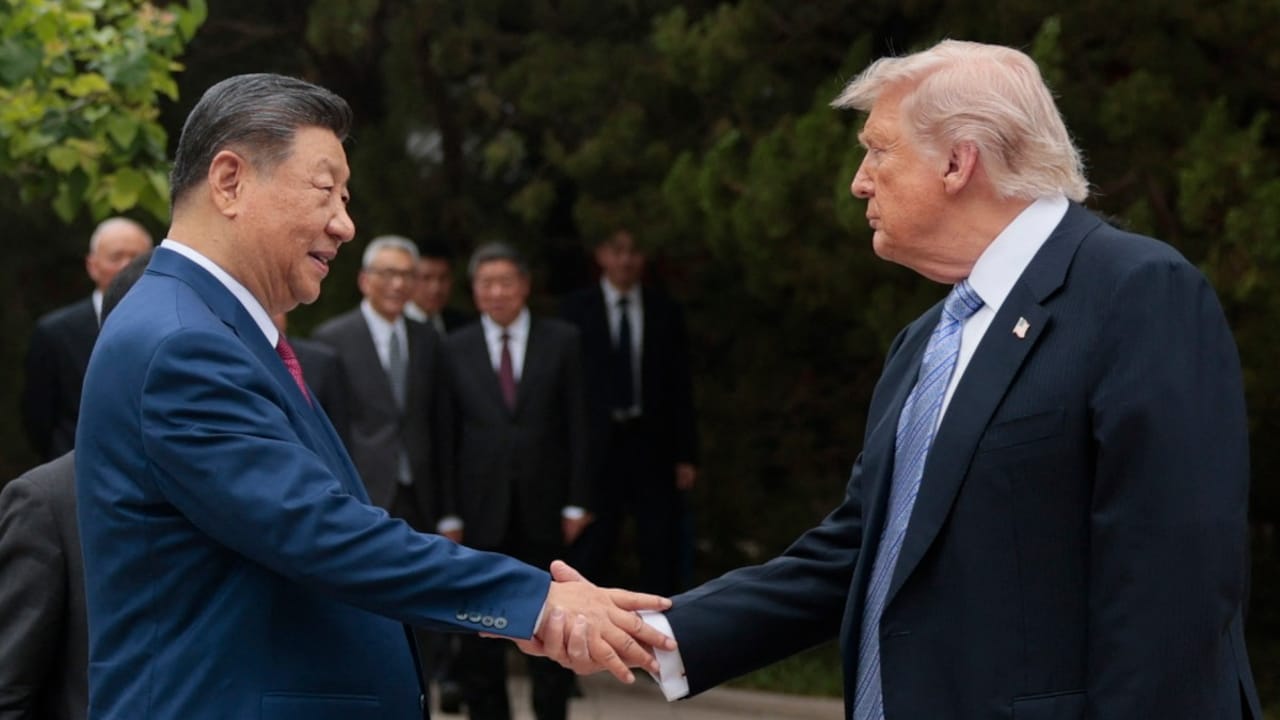
High-stakes diplomacy rarely pivots on a single technology, but the upcoming Washington summit between Donald Trump and Xi Jinping is an exception. Artificial intelligence sits right at the center of their agenda. Both superpowers view machine intelligence as the ultimate metric for economic dominance and military survival. Yet, Washington and Beijing remain deadlocked over advanced semiconductors, intellectual property theft, and the urgent need for international safety guardrails.
If you look past the standard diplomatic handshakes, the reality is stark. The technological gap between the two nations is practically gone. US officials once claimed a comfortable lead, but independent industry leaders admit that Chinese open-weight models are catching up at an alarming pace. Treasury Secretary Scott Bessent and Chinese Vice Premier He Lifeng are meeting ahead of the main summit to iron out these friction points, but finding common ground will not be easy.
The Nuclear Threat of Autonomous Military Systems
Military applications of machine intelligence present the most terrifying hazard on the table. Think about what happens when an algorithm misinterprets a routine defensive exercise as an active strike. You are left with minutes—literally minutes—to decide whether to retaliate.
Defense experts from both countries are sounding alarms. They want formal red lines drawn around nuclear command networks. They are pushing for mandatory human oversight on high-stakes cyberattacks and an emergency hotline specifically for autonomous tech incidents.
The hardest questions remain completely unanswered. How do you prevent a routine technical glitch from triggering a world war? Which combat decisions should machines never make? Right now, the two nations have very different views on how to manage algorithms that operate faster than human thought.
The Bitter Fight Over Model Distillation
Intellectual property theft has taken a new digital form known as distillation. This technique involves training smaller, cheaper AI models using the output generated by massive, expensive frontier systems. It bypasses billions of dollars in research and development costs.
Washington cracked down hard on this practice. Law enforcement officials accused several Chinese firms of maliciously copying American AI products through distillation, alleging state awareness. Beijing dismisses these accusations as baseless trade protectionism.
The dispute exposes a deeper insecurity in Silicon Valley and Washington. American firms spend massive fortunes training frontier models, only to see competitors replicate that capability on a fraction of the budget.
The Chip Blockade and Smuggling Networks
Hardware remains the choke point of the entire geopolitical conflict. The United States has spent years imposing sweeping export controls on advanced semiconductors and extreme ultraviolet lithography equipment.
Despite tough talk and strict border enforcement, advanced chips routinely find their way into restricted markets through smuggling networks. The exact volume remains unknown, but the leaks expose the limits of hardware blockades.
At the same time, policy decisions shift unpredictably. Trump previously greenlit sales of Nvidia H200 chips to ease industry pressure, outraging national security hawks who argued the hardware would directly bolster foreign military computing power. Now, Washington is even eyeing restrictions on remote data center access, trying to stop foreign firms from renting computing muscle hosted outside their borders.
Divergent Philosophies on Control
The two leaders approach governance from opposite extremes. Trump openly dismisses domestic calls for heavy federal oversight, calling industry requests for strict rules a hoax and arguing the country only needs a strong executive branch.
China takes the opposite route. Beijing enforces strict rules governing training data, algorithmic transparency, and mandatory labeling for synthesized media. Their state apparatus exercises direct control over what models can generate and who can access them.
These contrasting styles create a messy diplomatic landscape. You cannot easily negotiate a treaty on tech safety when one side treats regulation as bureaucratic red tape and the other treats it as an instrument of state control.
The meeting in Washington will not solve the structural competition between the two superpowers. Machine intelligence is simply moving too fast for traditional diplomacy to keep pace. The race for technological supremacy is accelerating, and neither nation intends to slow down.


