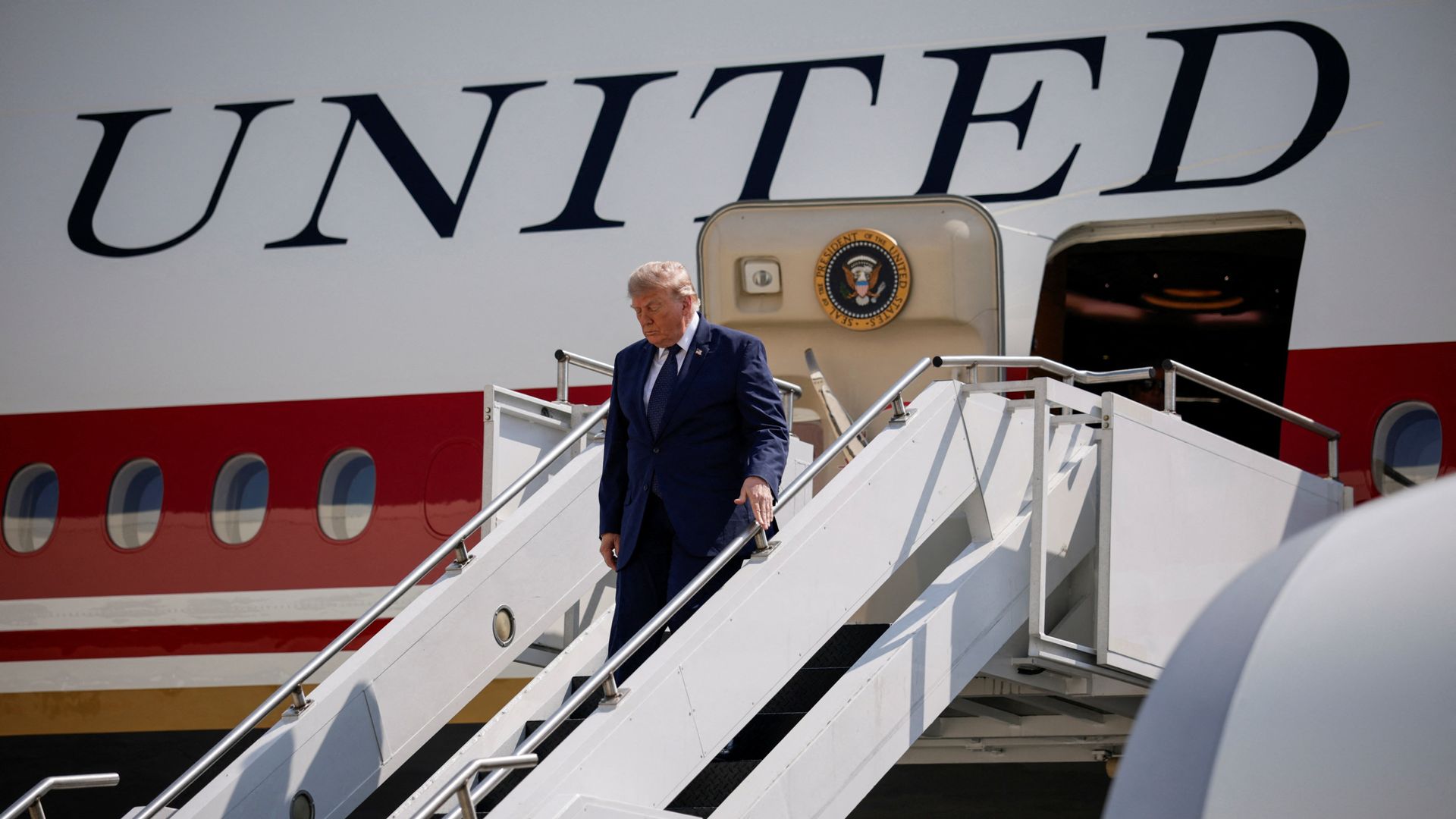
Donald Trump’s shiny new flying palace just ran into a massive reality check. Less than three weeks after taking off in a newly refurbished Boeing 747-8 gifted by the royal family of Qatar, the White House confirmed the plane is heading straight back to the hangar for a month of heavy upgrades.
The sudden decision comes right after media reports revealed something startling. The luxurious $400 million jet completely lacks the defensive military hardware required to protect a sitting U.S. president in a real crisis.
If you were wondering why the president suddenly swapped planes during a overseas trip, here is the short answer. You cannot simply throw a coat of paint on a commercial luxury liner and call it Air Force One. Commercial VIP jets are built for comfort. Flying White Houses are built to survive missile attacks and nuclear blasts.
The Security Flaws That Forced the Grounding
It turns out luxury finishes mean nothing when you enter contested airspace. When the administration accepted the former Qatari royal jet as a temporary bridge aircraft, officials insisted it met all necessary safety standards. That story fell apart fast.
During a trip to the NATO summit in Turkey, security advisers stepped in. Secret Service officials reportedly raised urgent flags about the aircraft's lack of missile defense equipment. When Trump departed the summit, he was not on the Qatari jet. He had quietly boarded one of the decades-old VC-25A planes instead.
He later transferred back onto the Qatari aircraft at RAF Mildenhall in England, brushing off claims of a safety scare. Yet the truth came out when Trump returned home from a World Cup event. Speaking to reporters on the tarmac, he admitted the plane lacks full defensive armor and announced it would be out of service for roughly thirty days so technicians could max it out.
The plane was missing three main protective layers:
- Missile countermeasures: standard Air Force One jets carry infrared jamming gear and flares to divert heat-seeking missiles.
- EMP shielding: purpose-built presidential aircraft feature heavy electromagnetic pulse hardening to protect onboard electronics during a nuclear event.
- Doomsday communications: the Qatari jet lacked the secure, hardened communication arrays needed to command military forces during an active crisis.
A Gift That Sparked a Legal and Political Firestorm
The drama around this aircraft goes far beyond missing flares and jammer pods. Accepting a $400 million foreign gift from Qatar raised instant legal and ethical red flags. Ethics watchdogs and congressional critics argued that taking a giant luxury jet from a foreign state violates the foreign emoluments clause of the U.S. Constitution.
The administration pushed back hard against those claims. They argued that using the gift saves taxpayers money while the military waits on delayed custom jets from Boeing. They also noted the plane would eventually end up in a presidential library rather than personal hands.
Then the situation got even messier. After journalists at the New York Times published details about the jet's missing security gear, the Department of Justice stepped in. Federal agents delivered grand jury subpoenas to the homes of reporters in an aggressive push to uncover their government sources.
Press freedom groups condemned the subpoenas as an overreach. The news outlet quickly moved to throw out the legal demands. This clash put a harsh spotlight on the exact operational weaknesses the White House hoped to downplay.
Why the U.S. Is Relying on a Foreign Jet in the First Place
You might wonder why the American military needs to borrow a foreign airliner at all. The answer lies in years of corporate delays and supply chain logjams at Boeing.
The primary presidential fleet consists of two heavily modified Boeing 747-200B aircraft, designated VC-25A. These planes have served every president since George H.W. Bush. They are almost four decades old. Maintenance costs on these aging airframes are soaring, and replacement parts are increasingly tough to source.
Replacement planes were supposed to arrive years ago. Boeing contracted to build two new VC-25B aircraft based on the 747-8 airframe, but the project suffered severe set-backs:
- The main interior modification subcontractor went bankrupt early in the project.
- Finding workers who possessed both niche aerospace skills and high-level security clearances proved extremely difficult.
- Air Force engineering requirement changes pushed delivery dates back repeatedly.
Because the new replacement fleet is not expected until at least 2028, the Air Force jumped at the opportunity to take the Qatari 747-8 as an interim solution. Retrofitting a pre-owned commercial aircraft is far more complicated than building one with defensive systems from the factory floor.
How Retrofitting a Flying White House Actually Works
Building a true Air Force One is a massive engineering effort. Converting an existing luxury jet into a hardened airborne command post requires gutting sections of the frame and wiring completely new systems from scratch.
When a commercial plane gets upgraded for presidential duty, engineers focus on three core areas:
- Structural and Electronics Hardening: Miles of specialized wiring must replace standard commercial looms to shield sensitive electronics against radiation and electromagnetic pulses.
- Defensive Suite Installation: Sensors must be embedded along the fuselage to detect incoming missile threats, alongside automated countermeasure dispensers.
- Encrypted Communications: Specialized satellite antennas and secure voice and data links must be integrated so the president can communicate securely anywhere on Earth.
Adding these systems after the fact takes time and money. Air Force estimates for initial modifications ran into hundreds of millions of dollars. Pushing the plane back into the shop for another month of retrofits shows how difficult it is to shortcut military standards.
What Happens Next
For the next month, Trump will return to flying on the legacy VC-25A aircraft. These older planes may lack the modern cabin finishes of the Qatari jet, but they possess decades of tested defense systems.
Keep an eye on three key indicators over the coming weeks:
- Retrofit timeline updates: Watch whether the Air Force completes the modifications within thirty days or if technical hurdles extend the grounding.
- DOJ subpoena rulings: Federal courts will decide whether to quash the subpoenas served on journalists, setting an important precedent for press freedom.
- Boeing progress reports: Congressional oversight committees will continue monitoring Boeing's progress on the permanent VC-25B fleet scheduled for 2028.