When federal agents show up at a reporter's front door with a subpoena, it isn't just routine legal bureaucracy. It's a heavy-handed attempt to silence the free press.
That exact scenario played out this week. Federal law enforcement served grand jury subpoenas to several New York Times journalists, ordering them to testify in Manhattan. The trigger? A high-profile report exposing massive security gaps on President Trump's new Air Force One—a plane gifted to the U.S. government by Qatar.
This isn't just about an airplane or leaked classified notes. It represents a dramatic shift in how the federal government targets the press, weaponizing the Department of Justice to track down internal leaks by squeezing the journalists who report them.
The Secret Service Plane Swap That Triggered the Subpoenas
To understand why federal prosecutors are so furious, you have to look at what happened high above Europe.
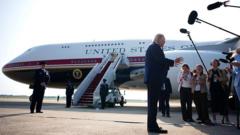
While traveling to a NATO summit in Turkey, President Trump flew aboard his newly acquired, Qatari-gifted Boeing 747. The aircraft had recently undergone a massive refit—costing between $400 million and $1 billion—to bring it up to presidential standards. But as regional tensions flared following renewed military action involving Iran, things took a weird turn.
On the leg from Ankara to Royal Air Force Base Mildenhall in England, Trump didn't take the new shiny jet. Instead, he flew on an older, battle-tested Air Force One model.
The New York Times—led by reporters Julian E. Barnes, Eric Lipton, Tyler Pager, and Eric Schmitt—broke the story explaining why. Citing internal government sources, the Times revealed that the Secret Service specifically asked the president to switch planes. Why? Because the newly donated Qatari jet lacked critical defense features, including state-of-the-art anti-missile countermeasures and specialized communications gear.
Trump immediately dismissed the report on social media, claiming the second plane was brought along merely so American troops stationed in Mildenhall could tour the new aircraft. White House Press Secretary Steven Cheung echoed this, asserting the stop was a tactical display of strength.
Still, the optics were impossible to ignore. Flying two massive presidential jets across the Atlantic just for a field trip didn't add up, especially with active military operations underway in the Middle East.
What the Justice Department Wants from New York Times Reporters
Within days of the story going live, US Attorney Jay Clayton’s office in Manhattan dispatched federal agents directly to the homes of the Times reporters.
The grand jury subpoenas demand that the journalists appear in court to testify regarding an alleged violation of federal criminal law. The Justice Department issued a public statement clarifying its legal posture. Officials claimed reporters aren't the primary targets of the investigation. Instead, the DOJ says it's hunting the internal administration whistleblowers who leaked classified national security details about presidential aircraft defenses.
"To be clear, reporters are not the targets, those leaking classified information are," the Department of Justice stated, adding that prosecutors "are not going to ignore the law and stop investigating the people who work in the administration and think it's OK to leak classified information impacting national security."
While that sounds like a standard government leak probe on paper, the execution tells a different story. Sending federal agents directly to journalists' private residences crosses a line that past administrations rarely touched.
David McCraw, the lead newsroom attorney for The New York Times, called out the tactic directly.
"The appearance of federal law enforcement agents on the doorstep of news reporters should shock the conscience of any American who believes in the Constitution and the press freedom it protects," McCraw stated. He described the subpoenas as a clear effort to intimidate reporters from doing their jobs and keeping the public informed about government spending and national security risks.
A Pattern of Press Intimidation
This standoff isn't happening in a vacuum. It follows a distinct pattern of aggressive legal maneuvers directed at major newsrooms over the past year.
Earlier, federal prosecutors issued similar grand jury subpoenas to journalists at The Washington Post and The Wall Street Journal over leak investigations. In those instances, public outcry and legal resistance eventually forced the Justice Department to back off and withdraw the demands.
The administration has also taken unprecedented physical enforcement steps elsewhere. FBI agents previously searched the home of Washington Post reporter Hannah Natanson, seizing her personal phones and laptops during an investigation into leaked memos concerning federal workforce cuts.
By compelling reporters to reveal confidential sources under threat of contempt or jail time, prosecutors bypass standard investigative steps. Bruce D. Brown, president of the Reporters Committee for Freedom of the Press, pointed out that these subpoenas breach long-standing Department of Justice guidelines. Traditionally, those rules dictate that prosecutors should only seek information from news outlets as an absolute last resort, after exhausting every other possible investigative angle.
Why the Qatar Jet Story Cut So Deep
The source of the White House’s frustration goes beyond basic media criticism. The Qatari-gifted 747 has been a lightning rod for political and security debates ever since its announcement.
Taking a $400-million luxury jet from a foreign nation raised immediate conflict-of-interest questions. Converting a foreign VIP aircraft into a secure command post for the President of the United States requires exhaustive technical overhauls. Every wire, panel, and circuit must be swept for surveillance bugs, while specialized defensive hardware gets integrated into the airframe.
When news broke that the Secret Service didn't feel comfortable flying the president through high-risk airspace in the new jet, it directly contradicted the official narrative that the plane was fully operational and secure. Exposing those defensive gaps publicly embarrassed high-level officials, turning a routine transport logistics issue into a major national security story.
What Happens Next and How to Track This Case
The legal showdown moves to federal court in Manhattan, where the New York Times is expected to file motions to quash the subpoenas before the scheduled grand jury date.
Here is what you should keep an eye on as this legal battle unfolds:
- Motions to Quash: Watch for the Times legal team to file emergency motions arguing that the subpoenas violate First Amendment protections and internal Justice Department regulations.
- DOJ Policy Reversals: Pay attention to whether public pressure forces Attorney General officials to back down, similar to the withdrawn subpoenas involving The Wall Street Journal and The Washington Post.
- Congressional Oversight: Look for members of the House and Senate Judiciary Committees to call hearings regarding the use of federal agents at journalists' private residences.
- Source Protection Legislation: Keep track of renewed pushes for a federal press shield law (like the PRESS Act), which would explicitly protect reporters from being forced to disclose confidential sources to federal grand juries.
You can follow updates on this specific case directly through The Reporters Committee for Freedom of the Press and court filings in the U.S. District Court for the Southern District of New York.
.jpg)