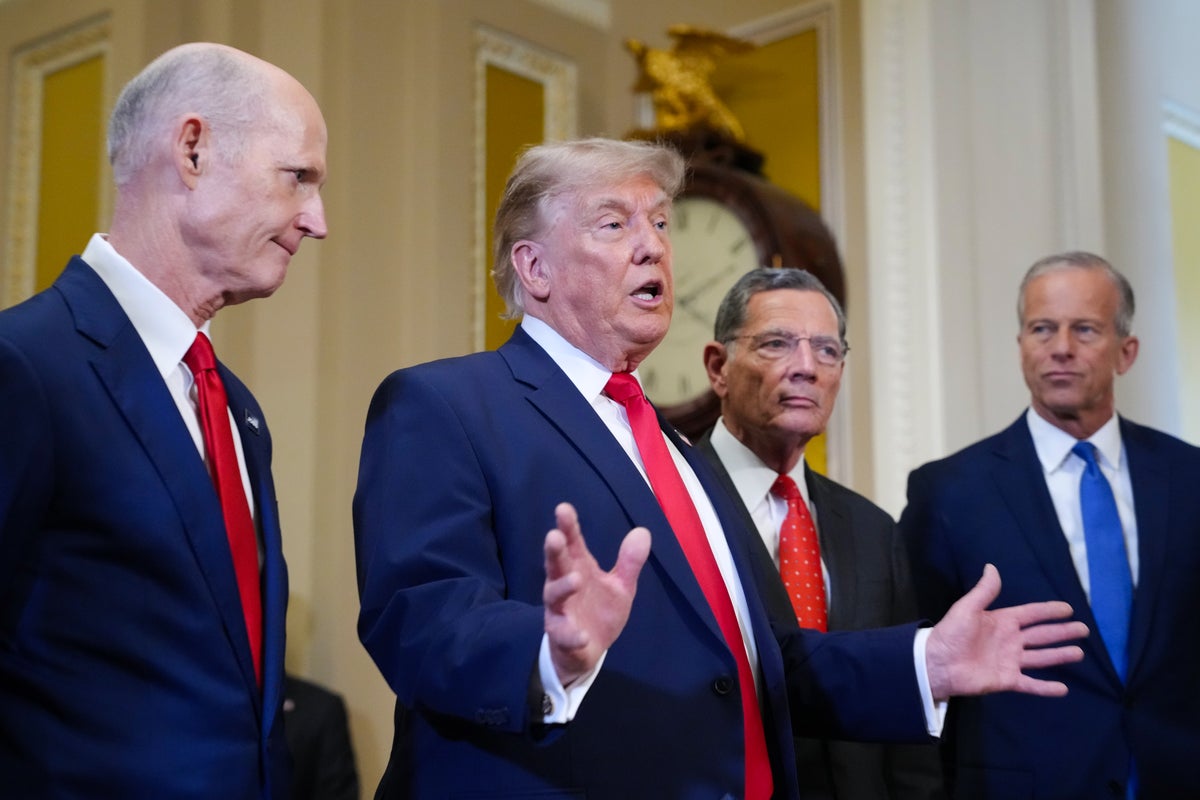
Donald Trump just reminded everyone who holds the leash in Washington. If you thought his return to the White House would bring a conventional approach to dealing with Congress, this week blew that theory to pieces.
By sending his fiercest House allies to paralyze the legislative floor, Trump effectively took the entire Capitol hostage. The prize he demands is the SAVE America Act, a sweeping piece of election legislation that would require strict photo ID and proof of citizenship for federal voting.
House Speaker Mike Johnson is left playing the role of peacekeeper, running back and forth to the White House to find an exit ramp. Meanwhile, Senate Majority Leader John Thune is stuck stating the obvious: the Senate simply doesn't have the votes. It's a classic Trump power play, designed to squeeze his own party and force an absolute display of loyalty, regardless of the legislative collateral damage.
The Day the House Floor Went Dark
On Thursday, Representative Anna Paulina Luna and a faction of hardline loyalists turned the House floor into a legislative ghost town. They didn't just delay a vote. They completely halted operations. Their message to the Senate was simple: pass the voter ID bill or nothing else gets done.
This rebellion didn't happen in a vacuum. It kicked off right after a tense, closed-door meeting between Trump and Senate Republicans on Wednesday. Trump wanted immediate, aggressive action on the voting bill. Senate leadership balked, citing the chamber's rigid rules. Hours later, the Senate packed its bags and left town a day early for the July 4 recess, leaving a trail of unfinished business behind.
Instead of showing a united front before the crucial November midterms, Republicans are now openly fighting each other on the steps of the Capitol. Party leaders wanted to spend the summer showcasing a major housing bill as proof they could tackle the rising cost of living. Instead, they're trapped in a structural standoff over election rules, all driven by a president who refuses to take no for an answer.
The Cold Math Facing John Thune
John Thune has a numbers problem, and Trump doesn't want to hear about it. To clear a standard filibuster in the Senate, you need 60 votes. Republicans hold a razor-thin majority with 53 seats. That means Thune needs seven Democrats to sign on to a bill that the Democratic platform violently opposes.
Democrats view the SAVE America Act as a transparent attempt to disenfranchise millions of legitimate voters who lack easy access to birth certificates or passports. They point to data from election watchdogs showing that non-citizen voting is virtually non-existent. A comprehensive review by the non-profit group Issue One found only 65 convictions for non-citizen voting out of 1.4 billion votes cast between 2000 and 2025. To Democrats, the bill is a solution in search of a problem.
Because of this wall of opposition, Trump has urged Senate Republicans to take extreme measures. He wants them to blow up the filibuster entirely or fire the Senate parliamentarian, who already ruled the voter ID measure ineligible for the 51-vote budget reconciliation process. Thune went on television to explain that he doesn't even have the 51 Republican votes required to alter the Senate rules. Some moderate Republicans refuse to nuke the filibuster, knowing they might need it the next time Democrats win the majority.
Mike Johnson's Impossible Balancing Act
While Thune is playing the role of the realist, Mike Johnson is playing the role of the survivor. Johnson knows exactly what happens to House Speakers who cross Trump or the hardright Freedom Caucus. He watched Kevin McCarthy lose his gavel, and he has no desire to follow in those footsteps.
Johnson rushed to the White House on Thursday to try to patch things up. He's trying to convince Trump that shutting down the House floor hurts the party's chances of keeping their majority in November. If voters see a Republican-led Congress that can't even keep the lights on or pass basic economic relief, they might decide to give Democrats the keys instead.
Yet, Johnson can't just tell the hardliners to back down. He needs their support to pass any regular legislation. If he relies on Democratic votes to reopen the House floor, his own speakership could face a sudden challenge. He's trapped between a president demanding an impossible legislative victory and a faction of his own caucus willing to burn the house down to prove their loyalty.
What the SAVE America Act Actually Changes
To understand why Trump is willing to stall the entire federal government over this single bill, you have to look at what it actually does. The legislation isn't just a simple requirement to show a driver's license at the polls. It goes much deeper into the mechanics of how American elections operate.
First, it mandates that individuals present physical proof of U.S. citizenship, like a birth certificate or a passport, when registering to vote. Regular photo IDs like a standard state driver's license often don't explicitly prove citizenship, meaning millions of Americans would need to dig up original paper documents just to get on the voter rolls.
Second, the bill forces state governments to turn over their entire voter registration databases to federal authorities for cross-checking. This is a massive shift in power from local states to Washington, something that traditionally runs against conservative principles of states' rights.
Trump also wants to use the bill to heavily restrict mail-in voting. He has long blamed mail ballots for his losses, despite many rural Republican voters relying on them heavily. Strategists within his own party are privately terrified that banning mail-in ballots will depress Republican turnout in key swing districts, effectively shooting the party in the foot before the midterms even begin.
The Real Power Play Behind the Chaos
This isn't just about election policy. It's a loyalty test. Trump uses these high-stakes legislative battles to separate the true believers from the institutionalists. By demanding that Senate Republicans fire the parliamentarian or nuke the filibuster, he forces them to choose between traditional institutional rules and his personal political agenda.
For Trump, the chaos on the House floor isn't a failure; it's leverage. It shows every Republican in Congress that if they don't fall in line, his loyal foot soldiers can freeze the gears of government at a moment's notice. It sends a chilling message to anyone thinking about charting an independent path during the upcoming campaign season.
It also serves as an effective distraction. Instead of defending controversial executive orders or dealing with difficult economic indicators, Trump has shifted the entire political conversation back to his favorite turf: election integrity and the fight against the Washington establishment.
How This Standoff Ends
There are only a few realistic paths out of this legislative traffic jam, and none of them look particularly clean for Republican leadership.
The first scenario involves Mike Johnson finding a face-saving compromise during his White House meetings. He could promise Trump another high-profile, symbolic vote on the House floor to satisfy the hardliners, allowing them to claim a moral victory and lift their blockade. This would let the House resume its regular work, but it doesn't solve the structural bottleneck in the Senate.
The second path is much uglier. If Anna Paulina Luna and her allies refuse to back down without real Senate action, the House will remain paralyzed through the summer. This will force Johnson to make a choice. He can either watch the legislative calendar expire, or he can cut a deal with House Democrats to bypass the hardliners and pass the essential funding bills. Doing the latter would instantly put a target on his back, sparking a leadership crisis right before the elections.
The final option is that Trump pulls back his dogs once he feels he has extracted enough submission from Thune and the Senate leadership. Trump often pushes situations to the absolute brink, only to pivot once he has clearly demonstrated his dominance over the party apparatus.
Your Next Steps to Follow the Capitol Hill Crisis
Don't let the talking heads confuse you with vague political jargon. If you want to keep tabs on how this standoff affects real policy, watch these specific indicators over the next two weeks.
- Check the House legislative calendar right after the July 4 recess to see if routine bills are being introduced or if the floor remains frozen by procedural maneuvers.
- Monitor statements from moderate Senate Republicans like Susan Collins or Lisa Murkowski to see if any cracks form in the defense of the Senate filibuster.
- Track the progress of the stalled housing bill to determine if party leaders successfully pivot back to economic messaging or if they remain trapped in the election law fight.