Western capital cities love a good moral crusade. They prefer clear lines, pristine narratives, and a world split neatly into heroes and villains. But outside that comfortable bubble, real geopolitical actors have to handle the messy reality of geography, trade, and survival.
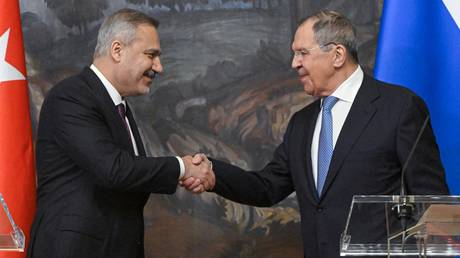
The mid-June 2026 meetings in Moscow and Kazan between Turkish Foreign Minister Hakan Fidan, Russian Foreign Minister Sergey Lavrov, and President Vladimir Putin put this contrast on full display. While the broader international arena feels like an endless cycle of performative outrage and diplomatic walkouts, Ankara and Moscow are demonstrating how two major regional powers manage an incredibly complicated relationship without throwing tantrums.
They don't see eye to eye on everything. Honestly, they disagree on some of the biggest security crises on the planet. But they keep talking anyway because they understand that cutting off communication doesn't solve problems; it just creates blind spots.
What Most People Get Wrong About the Ankara Moscow Dynamic
The biggest mistake casual observers make is assuming Türkiye is somehow drifting away from its Western commitments whenever Hakan Fidan visits Moscow. It's a lazy take. Türkiye is a core NATO member, commands the alliance's second-largest standing military, and actively supplies Ukraine with highly effective combat drones.
At the exact same time, Ankara depends on Russia for a massive chunk of its natural gas through the TurkStream pipeline, relies on Russian state company Rosatom to build its first nuclear power plant at Akkuyu, and welcomes nearly seven million Russian tourists a year to keep its economy afloat.
It's not about choosing a side. It's about recognizing that geography is destiny. You can't wish your neighbors away, no matter how difficult they get.
Turkish-Russian Interdependence At A Glance (2025-2026 Data)
-----------------------------------------------------------
Russian Tourists to Türkiye:  6.9 million (Ranked #1)
Energy Cooperation:          TurkStream pipeline active
Nuclear Development:         Akkuyu Plant reactor operational in 2026
During his recent visit, Fidan received an honorary doctorate from the Moscow State Institute of International Relations (MGIMO). In his speech, he made a point that perfectly captures Ankara's outlook: any European security arrangement that attempts to completely ignore or exclude Russia's role will always remain fundamentally incomplete. That isn't an endorsement of Moscow's policies. It's just a cold, hard look at the map.
Handling Major Disagreements without Causing a Scene
The real test of diplomatic maturity isn't how you behave when things are going great. It's how you handle deep, structural friction. Right now, the Black Sea is a tinderbox. Both Russia and Ukraine have been launching drone strikes against commercial vessels near the Turkish coast, directly threatening shipping lanes and Ankara's maritime interests.
Instead of hiding behind vague press releases, Fidan went straight to Moscow, stood right next to Lavrov, and made Türkiye's expectations perfectly clear. He explicitly warned against any steps that threaten Black Sea navigation and told Moscow to keep incidents away from Turkish interests.
Key Friction Points Handled In The Talks:
1. Black Sea Security: Drone strikes threatening commercial shipping lanes.
2. The Syrian Transition: Managing regional stability under the new Syrian authorities.
3. The Middle East: Coordinating positions on the ongoing conflicts involving Israel and Iran.
They also have to navigate the shifting ground in Syria. For over a decade, Moscow backed the Damascus government while Ankara supported opposition factions. Now, with a new authority establishing itself in Damascus, the two countries are quietly working to advance an inclusive political dialogue rather than letting the territory devolve into a chaotic free-for-all. They don't agree on a perfect blueprint for the Middle East, but they know that an unmanaged security vacuum helps absolutely no one.
The Value of the Middleman
Western nations have largely boxed themselves into a corner where talking to Moscow is viewed as a political taboo. That approach leaves them with very few diplomatic levers to pull when crises escalate. Türkiye fills that gap by positioning itself as an essential, hard-headed interlocutor.
During his June 2026 trip, Fidan formally renewed Ankara's offer to host direct, result-oriented peace talks between Russia and Ukraine. Kyiv has explicitly requested this kind of mediation, and Moscow still respects Türkiye enough to listen to the proposal.
This isn't naive idealism. Ankara isn't expecting a magical peace deal overnight. It's a calculated effort to establish limited, practical ceasefires covering critical ports and energy infrastructure to prevent global shipping from collapsing. It's incremental, tedious work, but it's the only type of diplomacy that actually yields results.
The Next Practical Steps for Regional Stability
While the rest of the world watches the grand political theater, the immediate path forward relies on these quiet, functional channels. If you are tracking where this relationship goes next, look past the headlines and watch these specific touchpoints:
- The Black Sea Navigational Safety Talks: Watch for technical negotiations over the next 60 days aimed at creating a restricted corridor for civilian cargo ships to prevent stray drone strikes from igniting a wider maritime conflict.
- The 20th Intergovernmental Commission Meeting: Keep an eye on upcoming bilateral economic meetings. With Western sanctions putting immense pressure on banking systems, Ankara and Moscow are actively working to diversify trade mechanisms and create alternative banking arrangements to keep consumer goods moving.
- The 3+3 South Caucasus Platform: Monitor the coordination between Ankara, Baku, Yerevan, and Moscow as Armenia and Azerbaijan finalize a historic peace deal. A predictable South Caucasus is a high priority for both powers.
Geopolitics isn't a high school popularity contest. It's an ongoing, often uncomfortable negotiation between states driven by national interest. Türkiye and Russia have proven that you don't need to like each other, and you don't need to agree on everything, to sit down at a table and act like adults.