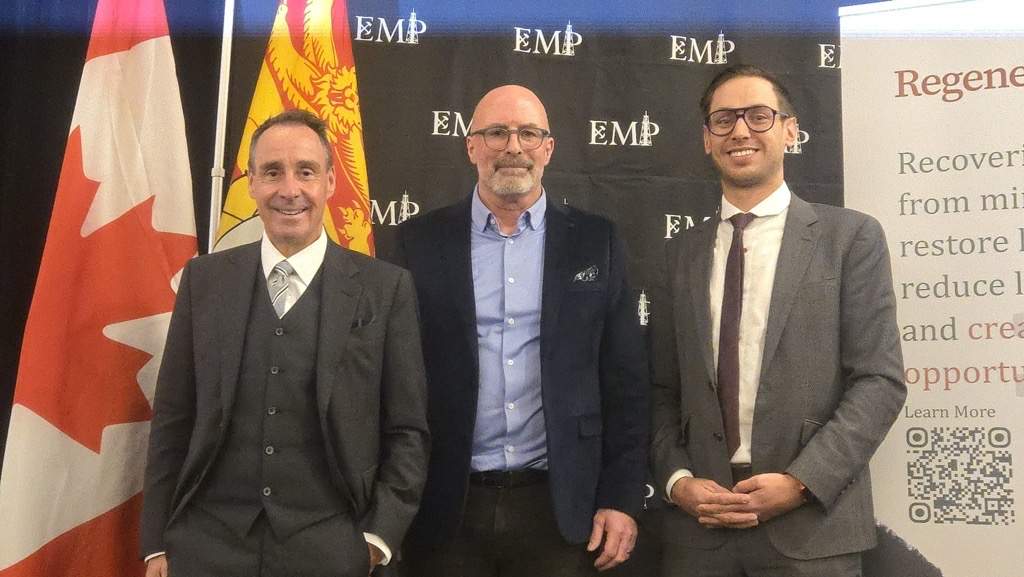
Old mine tailings don't usually get much attention unless they are leaking toxins or sitting on government balance sheets as multi-million dollar liabilities. But what if those rusted piles of discarded rock hold the exact metals modern electronics and green energy grids desperately need? That is the exact gamble New Brunswick is taking at the long-abandoned Nigadoo mine near Bathurst.
The province just signed a deal with Regeneration Enterprises, a U.S.-based firm, to figure out if extracting leftover metals from the site can pay for its own cleanup. Shut down for nearly fifty years, the property once yielded copper, lead, zinc, and silver. Today, it represents a thirty-five million dollar headache for taxpayers. If the upcoming assessment works out, the enterprise could flip that financial burden into an asset while scrubbing an environmental sore spot off the map. In other developments, take a look at: What Anthropic Going Public Means For The Ai Gold Rush.
The Economics of Mining Tailings
Mining leaves scars. Long after the extraction equipment is packed away and the workers go home, tailing ponds and waste rock remain. Traditional mine reclamation relies almost entirely on public funds or bonds left by defunct operators. Governments foot the bill to cap ponds, treat acidic runoff, and monitor watersheds for decades.
Regeneration Enterprises wants to change that equation by treating old waste as an above-ground deposit. According to Michael McPhie, the firm's managing director, recovering critical minerals from these sites generates the capital required for full environmental restoration. Instead of taxpayers funding the remediation, the extracted metals foot the bill. Investopedia has also covered this fascinating issue in great detail.
It is a clever pivot, but execution is everything. Processing decades-old slurry and tailings requires modern separation technology that didn't exist when Nigadoo was operational. If the company's feasibility studies pan out within the next year, actual processing could start within two to three years, subject to regulatory sign-offs.
Balancing Environmental Hope With Local Caution
Any time heavy machinery touches a legacy mine site, local watchdogs get nervous. The Conservation Council of New Brunswick points out a glaring risk. Stirring up settled tailings ponds can release dormant heavy metals back into local watersheds if containment fails. Beverly Gingras, executive director of the council, notes that while rehabilitating the land sounds great on paper, the devil hides in the engineering details.
At the same time, targeting an existing, disturbed footprint beats opening brand-new greenfield mines. You aren't clearing pristine forests or disrupting untouched wildlife habitats. You are simply cleaning up a mess that has been sitting there half a century, provided you don't make it worse while digging through it.
The initiative also involves collaboration with the Pabineau First Nation, ensuring local Indigenous communities have a voice in how the assessment unfolds. That inclusion matters, especially when historical industrial projects have left generations of mistrust in local watersheds.
What This Means for Industrial Cleanup
If New Brunswick pulls this off, the template will spread fast. Canada and the United States are littered with abandoned mines from the nineteenth and twentieth centuries. Many contain residual copper, nickel, cobalt, and rare earth elements that were treated as worthless gangue rock back when commodity prices were low and extraction techniques were primitive.
Governments are tired of holding the bag for bankrupt mining corporations. Turning private-sector exploration loose on public liabilities creates a compelling incentive structure. Companies get access to localized mineral feeds without the immense capital expenditure of sinking new shafts, and the state gets its balance sheet cleaned up.
Expect the results of the Nigadoo assessment to set a benchmark for similar legacy sites across Atlantic Canada. If the economics work, expect a rush of firms looking to sift through the industrial attics of the past.