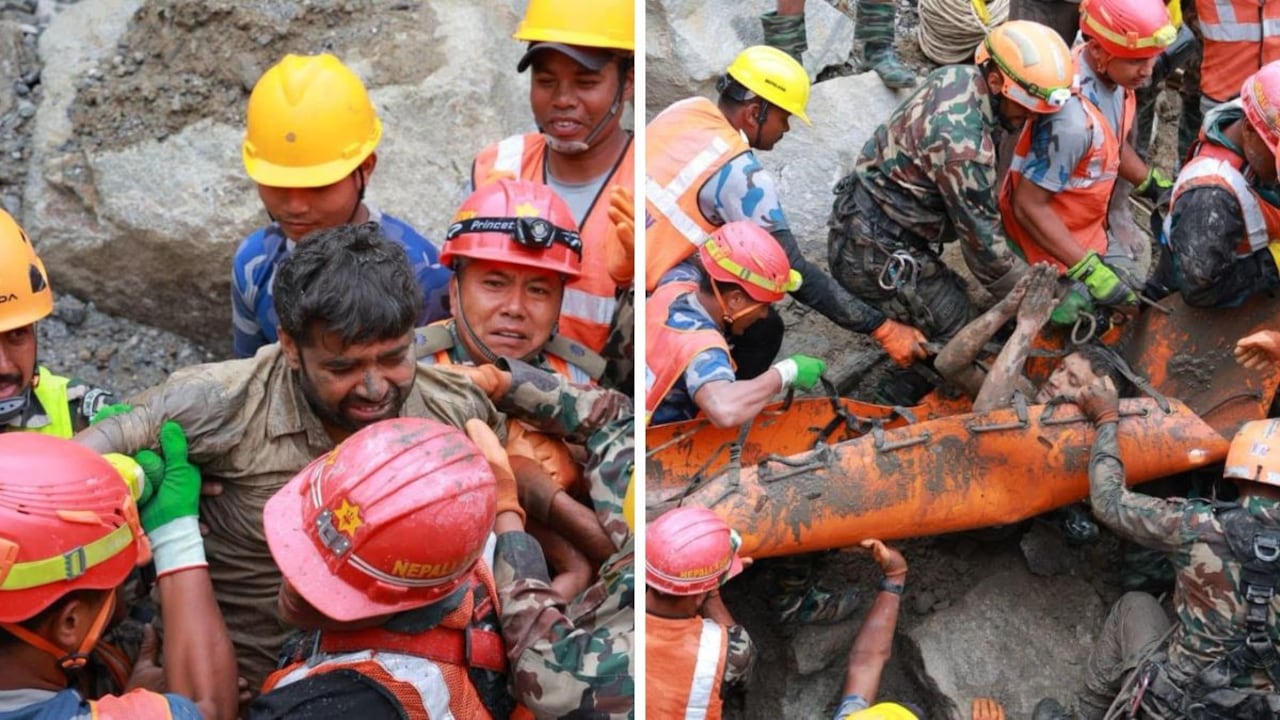
Nine days underground feels like a lifetime. When a massive wall of debris, mud, and water tore through the Trishuli-3 A Hydropower Project following a glacial collapse near the China-Nepal border, survival seemed mathematically impossible. Yet, against all odds, two workers walked out alive.
Sanjay Sah and Kabir Maharjan spent over a week trapped 170 meters deep inside a blocked, pitch-black tunnel. Their story is a stark reminder of human endurance, testing the absolute limits of physical and psychological survival when nature strikes without warning.
What Happened Inside the Trishuli-3 A Tunnel
On August 26, the region experienced a catastrophic flood triggered by a melting glacier surge along the Bhote Koshi and Trishuli river valleys. Water and heavy sludge rushed into tunnels and infrastructure sites. Dozens of workers found themselves cut off from the outside world.
For nine agonizing days, families held vigils while the Nepal Army and Armed Police Force pushed through tons of debris. Most people assumed the worst. Then, search teams heard faint voices echoing from deep within the underground passage.
Rescuers established contact, shifted heavy gear, and finally broke through. When they emerged, the images shocked the world. Covered in thick mud, Sah and Maharjan were pulled into the light. Sah was carried on shoulders while Maharjan was strapped to an orange stretcher, both conscious and breathing.
The Science of Surviving Underground
How did they manage nine days without food and fresh water?
Air pockets are the primary reason anyone survives disasters of this magnitude. When a tunnel floods unevenly, trapped air gets compressed behind water locks, creating pockets of breathable oxygen.
Beyond oxygen, survival depends entirely on psychological grit. Darkness strips away your perception of time. Panic burns precious calories and depletes oxygen faster through hyperventilation. Sah and Maharjan likely kept their heart rates low, conserved their energy, and fought off the sheer terror of being buried alive.
Medical evaluations later revealed injuries on their hands and legs, consistent with crawling through abrasive slush and sharp rubble inside the dark subterranean structure. Both men were quickly transferred to a military hospital in Kathmandu for urgent care.
What This Means for Ongoing Rescue Operations
The successful extraction of these two workers completely shifted the momentum of the entire disaster response.
Before this breakthrough, rescue teams were fighting severe fatigue and sinking morale. Finding survivors after more than a week changes the operational calculus. It proves that air pockets inside hydropower infrastructure can sustain human life much longer than standard emergency timelines suggest.
Authorities have intensified clearing operations across other blocked chambers. Over 270 people have already been rescued from the wider disaster zone, but search teams are treating every remaining underground cavity with renewed urgency.
Disasters like this expose the terrifying vulnerabilities of mountain infrastructure facing glacial melting events. Reconstructing the region is projected to cost billions, but right now, every ounce of focus remains locked on the tunnels.
Hope, it turns out, can survive underwater.