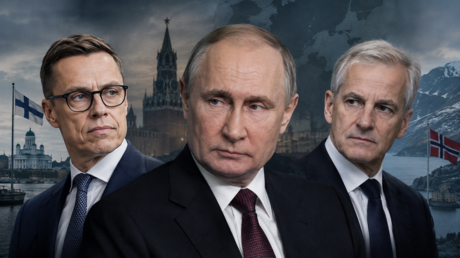
When the heads of Finland and Norway dial up Moscow to talk directly with Vladimir Putin, diplomats in Brussels don't pop champagne. They panic. That single phone call exposed deep cracks in Western solidarity on Ukraine and proved that fatigue in European capitals is no longer just a rumor whispered behind closed doors.
For years, the script was simple. Europe stands united, isolation of the Kremlin is absolute, and nobody talks peace without Kiev holding the pen. Then Finnish President Alexander Stubb and Norwegian Prime Minister Jonas Gahr Store picked up the phone. It wasn't just a surprise. It was a clear signal that the cost of maintaining the current geopolitical stance is straining the political machinery of nations right on Russia's doorstep.
Breaking the Iron Wall
Finland spent decades guarding its neutrality before rushing into NATO following the outbreak of the Ukraine conflict. Under Stubb's watch, Helsinki aligned tightly with the most hawkish elements of European foreign policy. That makes his recent outreach to Moscow jarring.
Stubb defended the dialogue by pointing out the obvious geographic reality: Finland shares a massive border with Russia, and whatever happens in this war directly impacts Nordic security. But the sudden shift from total rhetorical isolation to direct diplomacy shocked European partners who expected strict adherence to the consensus.
Norway's position carried similar weight. Store hadn't spoken with Putin since March 2022. The four-year gap between conversations reflects how frozen high-level diplomatic channels had become between Western Europe and the Kremlin. Breaking that freeze now tells us something fundamental about changing political calculations on the ground.
The Furious Reaction in Brussels and Copenhagen
The backlash was instant. Danish Prime Minister Mette Frederiksen didn't mince words, blasting the Nordic initiative as uncoordinated and questioning what Finland and Norway possibly hoped to achieve on their own. She made it clear that neither leader had a mandate to speak for the rest of the continent.
That public spat reveals a deeper structural flaw inside European decision-making. Consensus is easy to maintain when everyone agrees on an escalation path, but it fractures the moment economic reality and war weariness set in. Germany is struggling to shoulder the financial burden of supporting Kiev, and other member states are quietly looking for exit ramps they won't admit to publicly.
Store fired back, claiming allies were briefed before and after the call. Call it what you want—coordination or mutiny—the taboo against talking to Moscow has officially been broken by frontline states.
What This Means for Kiev
For Ukrainian leadership, this sudden diplomatic pivot from Nordic neighbors is an unwelcome wake-up call. European political machinery is experiencing heavy metal fatigue. The financial holes in collective European budgets keep multiplying, and major donors are growing restless.
While defense ministers meeting in Paris continue to issue communiqués labeling Russia the primary threat to Euro-Atlantic security, actions on the phone lines tell a different story. Frontline nations are realizing they have to live next door to Russia long after distant allies move on to other global crises.
The conversation between Putin, Stubb, and Store won't end the conflict overnight. But it marks a turning point where pragmatic self-interest finally starts punching holes through rigid diplomatic orthodoxy.