Picture a billionaire or a boardroom heavy hitter trading a private car and a quiet club lunch for a street corner, a flyer, and a handshake. Sounds a bit surreal, right? Yet as the Hong Kong Election Committee vote approaches on Sunday, November 22, 2026, business figures who normally operate behind closed doors are out campaigning on the streets.
If you're wondering why Hong Kong's corporate elite is suddenly playing street-level retail politics for a body most everyday residents never vote in directly, the short answer is optics and stakes. This 1,500-member committee picks the next Chief Executive in 2027 and elects 40 out of 90 lawmakers in the Legislative Council, while observers note a push for stronger turnout and a closer connection between the committee and the public.
Let's be honest. Street campaigning for a tightly defined subsector electorate isn't about winning over random passersby on a ballot paper. It's about showing up, looking visible, and proving that Hong Kong's commercial heavyweights aren't sitting in an ivory tower while Beijing and the local government push for higher participation than in 2021.
Why the Hong Kong Election Committee Vote Matters Right Now
Most people hear "Election Committee" and tune out because the mechanics feel dry. That's a mistake. This body is the engine room of Hong Kong's political calendar.
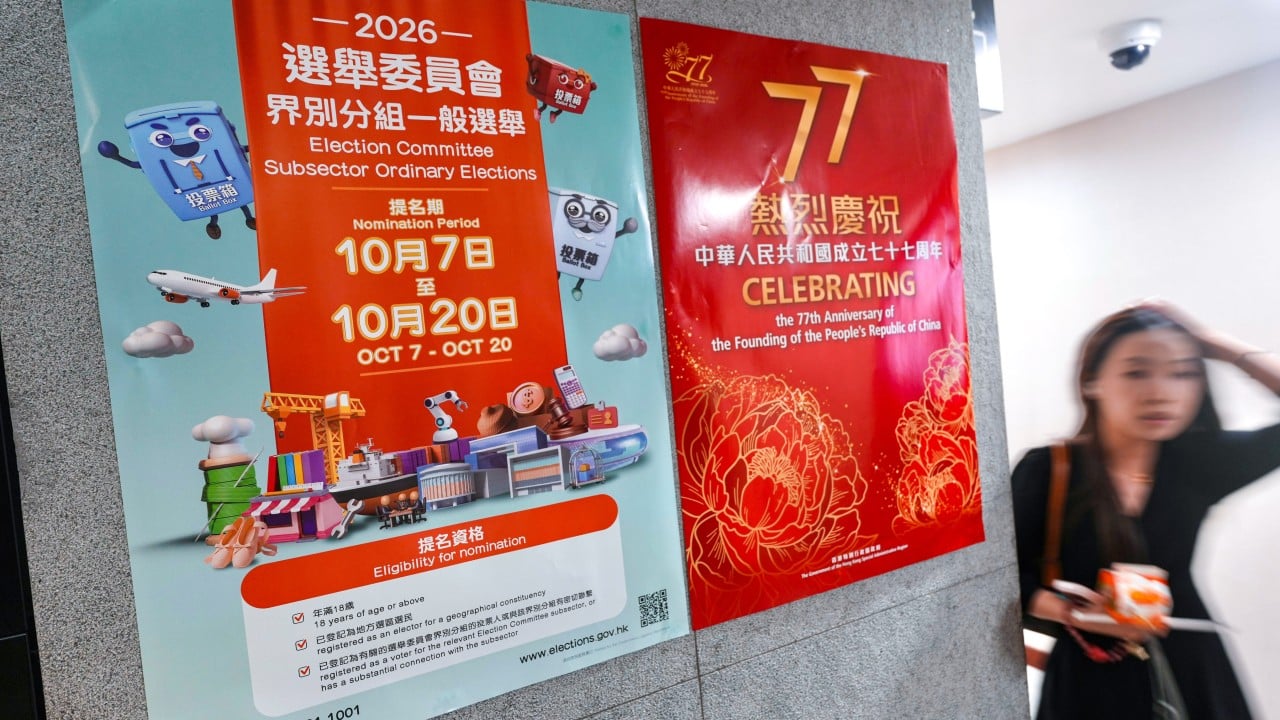
The 2026 subsector ordinary elections fill seats on a 1,500-member committee across five sectors and 40 subsectors for a five-year term running from February 1, 2027, to January 31, 2032. Out of those 1,500 seats, 982 are slated to be filled through election, alongside 156 by nomination and 362 ex-officio seats. Once the term starts, members will play a central role in selecting the Chief Executive in 2027 and choosing 40 members of the 90-seat Legislative Council.
For the November 22, 2026 poll, authorities confirmed 856 validly nominated candidates are contesting 723 seats across 31 subsectors, while five subsectors have 259 candidates returned uncontested. Polling runs from 9 a.m. to 6 p.m. across ordinary and restricted polling stations.
If you follow Hong Kong politics closely, you know the backdrop. Since the 2021 electoral overhaul, the committee expanded from 1,200 to 1,500 seats, candidate eligibility goes through national security vetting via the Candidate Eligibility Review Committee, and the pro-democracy camp has been virtually absent from these contests. In 2021, contested subsector turnout among registered voters hit 89.77% (4,389 ballots cast out of 4,889 registered voters in contested subsectors), a high percentage within a small, specialized electorate. Pushing mobilisation even harder now signals that officials and observers care deeply about visible energy and participation numbers.
What Street Campaigning Actually Does When Voters Are Mostly Corporate
Here's a misconception I see all the time. People assume street campaigning only makes sense in mass general elections where every single resident has a vote.
In Hong Kong's subsector system, voting in many business and professional subsectors is restricted to registered corporate or individual voters and authorised representatives. So why hit the pavement when your actual voter list is a tight circle of companies, associations, and district committee members?
Because politics isn't just about the ballot box. It's about theater, legitimacy, and mood.
When business leaders step onto the street ahead of the vote, three things happen at once:
- It signals alignment. Showing visible enthusiasm ahead of a major political milestone sends a clear message to Beijing and local authorities that the business community is engaged, not passive.
- It bridges a public disconnect. Observers have pointed to expectations that the committee feel closer to the public rather than operating like a closed club. Street visits put human faces on an institution that can otherwise feel remote.
- It keeps foot soldiers moving. Campaigns need momentum. Even when tycoons aren't chasing street votes directly, their presence rallies staff, business allies, and local networks before polling day.
Still, let's keep it real. A handshake on a sidewalk doesn't magically erase structural questions about how representative a subsector system is. What works on the ground is projecting energy and accessibility; what sounds good in theory is pretending a one-week street push turns a specialized committee election into a mass referendum.
The Five-Sector Puzzle Behind the Scenes
If you haven't looked at the subsector map lately, the layout explains why business and institutional players are jostling so hard. The 1,500 seats break down across five sectors:
- First Sector (Industrial, commercial, and financial sectors): Covers traditional pillars like commercial subsectors, finance, financial services, real estate and construction, industrial subsectors, import and export, tourism, transport, catering, and small and medium enterprises.
- Second Sector (The professions): Includes accountancy, engineering, legal, medical and health services, education, technology and innovation, social welfare, and related fields.
- Third Sector (Grassroots, labour, religious, and other sectors): Encompasses labour, grassroots associations, associations of Chinese fellow townsmen, agriculture and fisheries, and religious subsectors.
- Fourth Sector (LegCo and district organisations): Brings in Legislative Council members, Heung Yee Kuk, associations of Hong Kong residents in the Mainland, and representatives of district-level committees (Area Committees, District Fight Crime Committees, and District Fire Safety Committees).
- Fifth Sector (National bodies): Includes Hong Kong deputies to the National People's Congress, Hong Kong members of the CPPCC National Committee, and representatives of Hong Kong members of relevant national organisations.
Notice how much weight sits outside traditional boardrooms, even though commercial voices still command massive influence through the first sector and interlocking networks. Tycoons campaigning on the streets are stepping outside their comfort zone precisely because influence today requires visible civic and political engagement, not just boardroom clout.
What to Watch on Polling Day and Beyond
Don't judge this election by Western-style swing-district drama. Look at three concrete signals instead.
First, watch turnout percentages and hourly tallies on Sunday, November 22. Observers have flagged expectations around strong turnout surpassing 2021 levels. Second, watch which subsectors see tight races versus lopsided slates among the 31 contested subsectors. Third, look ahead to February 1, 2027, when the new committee takes office and sets the stage for the 2027 Chief Executive election and Legislative Council dynamics.
If you're tracking this story for work, research, or investment context in Hong Kong, here are practical steps you can take right now:
- Check official notices and candidate introductions on the 2026 Election Committee Subsector Ordinary Elections portal and news.gov.hk to verify exact subsector rosters and polling rules.
- Compare hourly turnout reports on polling day against the 2021 subsector benchmark rather than relying on vague impressions of street activity.
- Track policy signals coming out of the business and district sectors between December 2026 and early 2027, since those priorities will shape the run-up to the 2027 Chief Executive selection.