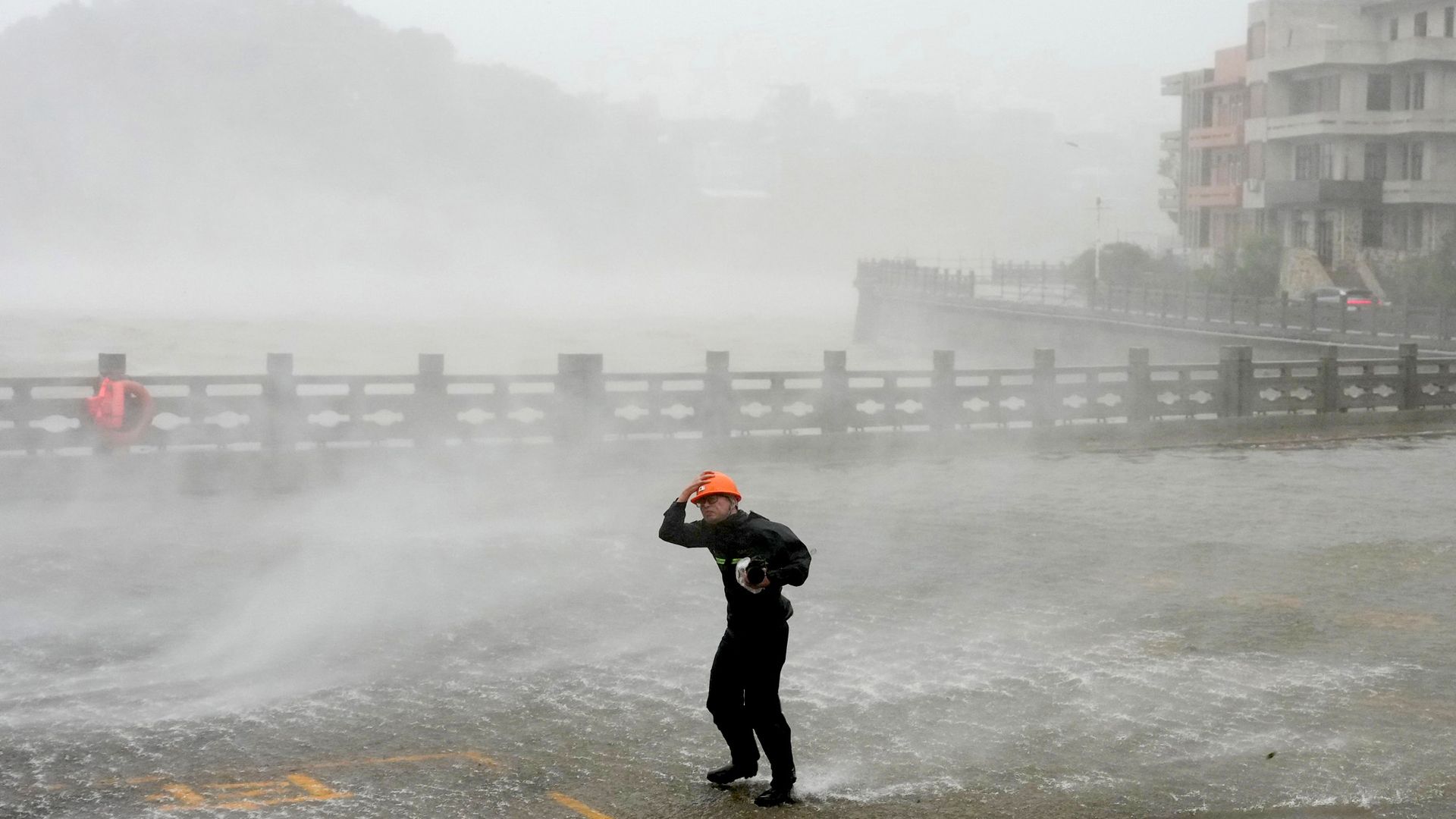
When Typhoon Dolphin tore into the eastern coast of China, it did not just bring wild weather. It effectively paused life for millions of people.
If you watched the updates roll in, you saw the numbers: over a million people evacuated, more than 1,400 flights wiped off departure boards in Shanghai alone, and major tourist hubs locked down tight. But statistics on a news screen rarely capture the sheer scale of disruption a storm of this magnitude brings to the region. Dolphin wasn't a standard, run-of-the-mill squall. It was a weather monster that carved a destructive path across the Pacific before slamming directly into Zhejiang province.
The Anatomy of a Massive Evacuation
The Chinese meteorological authorities did not take chances with this system. Long before the outer bands started lashing the coast, emergency protocols went into high gear. Officials issued top-tier red alerts as the storm approached.
More than a million residents across high-risk zones were packed up and moved to emergency shelters. In Wenzhou and Taizhou alone, hundreds of thousands of individuals living in low-lying coastal areas or vulnerable housing were relocated. Commercial vessels rushed back to port, offshore construction sites were frozen, and major shipping hubs like Shanghai's Yangshan port cleared their berths.
The rationale behind these extreme measures is straightforward. Modern forecasting models give authorities a clearer picture of potential damage than ever before, but they also highlight terrifying risks regarding flash floods and landslides. When a typhoon travels thousands of kilometers across the ocean—surviving three times longer than the lifespan of an average storm—its energy reserves are massive.
Aviation Chaos and Ground Zero Disruptions
Air travel throughout eastern China ground to an absolute halt as Dolphin approached. Shanghai’s Pudong and Hongqiao airports axed upward of 60% of their schedules before the storm even made landfall, eventually pushing cancellation figures past the 1,400 mark.
Passengers found themselves stranded across terminals as airlines scrambled to manage the fallout. High-speed rail networks in the Yangtze River Delta region suspended key routes, and local ferry networks were tied down at the docks. Even tourist hotspots felt the squeeze. Iconic locations like parts of Shanghai Disneyland, Legoland, and the famous viewing decks along the Bund were shuttered.
Ground-floor businesses in low-lying areas experienced sudden, aggressive street flooding. Footage shared by state media showed residents wading through knee-deep water in parts of the city, battling relentless winds that uprooted trees and ripped down signage.
A Long Journey and Regional Aftershocks
Dolphin's footprint stretched far beyond mainland China. Before striking Zhejiang, the system wreaked havoc across the region. It brushed past Japan's Okinawa prefecture, knocking out power to tens of thousands of buildings and injuring residents. It also heavily intensified seasonal monsoon rains in the Philippines, compounding a week of severe weather that triggered fatal landslides and displaced thousands.
Even after making dual landfalls—first near Yuhuan and subsequently in Wenzhou—and being downgraded from a typhoon to a tropical storm, Dolphin refused to fizzle out quietly. Meteorological agencies warned that the remnants of the system would continue pushing north, interacting with cold air masses to dump torrential rainfall over Beijing, Tianjin, and surrounding provinces.
Cities like Beijing prepared activate high-level flood responses, bracing for overflowing rivers and geological hazards long after the initial winds had died down on the coast.
The immediate emergency response may have prevented a much worse human toll, but the economic and structural cleanup across eastern China will take weeks to sort out. When systems like Dolphin form, they expose just how vulnerable modern transit networks and densely populated coastal zones remain in the face of escalating extreme weather patterns.