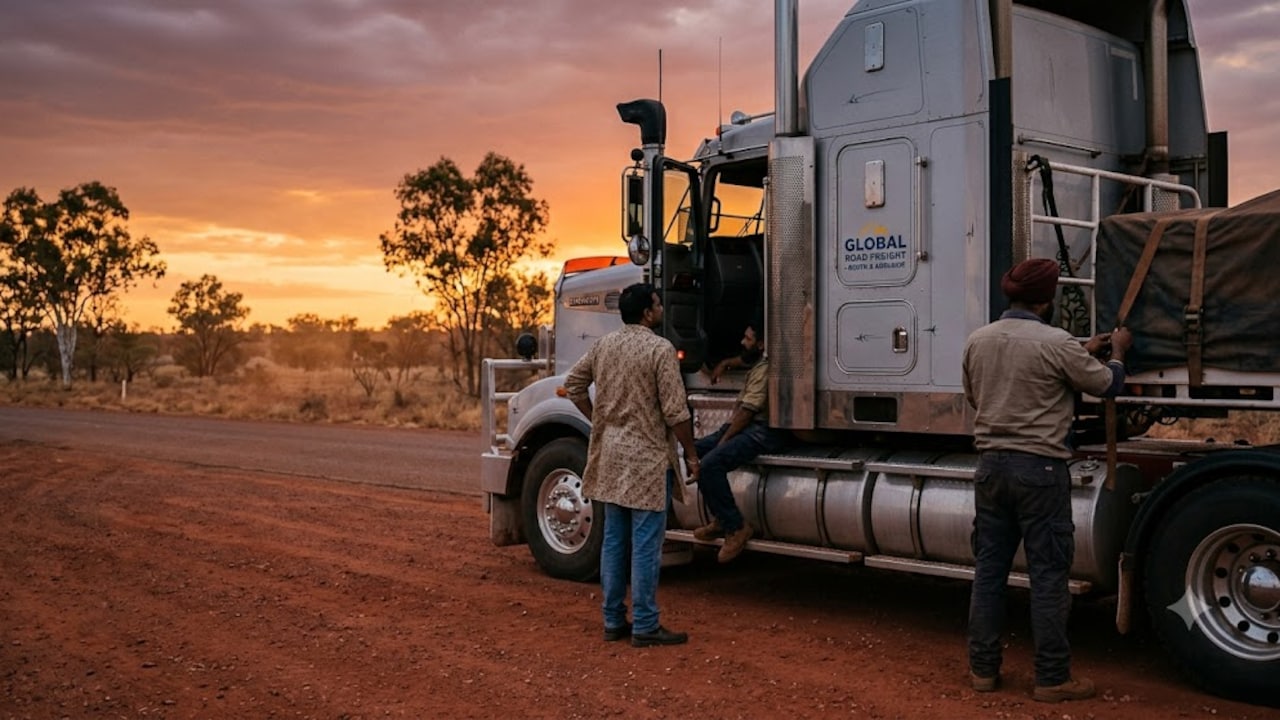
Imagine driving a 40-tonne semi-trailer down a pitch-black Australian highway, navigating exhaustion, tight deadlines, and unpredictable roads. Now imagine flicking on your Ultra High Frequency (UHF) radio—a vital lifeline for truckies to communicate about accidents, wildlife, and road hazards—only to hear a barrage of death threats and racial slurs targeting your heritage.
This is the daily reality for hundreds of Indian-origin truck drivers keeping Australia’s supply chains moving.
The Australian logistics sector faces a severe driver shortage. Migrant workers, particularly from the Punjabi Sikh community, have stepped up to fill the void. But instead of being welcomed as essential workers, many face an onslaught of toxic, xenophobic abuse that goes far beyond simple workplace friction. It is a severe, systemic crisis impacting mental health, operator retention, and actual safety on public roads.
When Safety Tools Become Weapons of Hate
The UHF radio is standard equipment in Australian heavy transport. It is meant to protect lives. Instead, specific channels are being hijacked to broadcast hate. Indian drivers report hearing explicit vitriol, including horrific statements like "a good Indian is a dead Indian" and violent threats regarding slavery or physical assault.
Many drivers now simply turn their radios off. Think about the ripple effect of that decision. A driver who switches off their communication tool to avoid psychological abuse misses crucial warnings about a broken-down vehicle around a blind bend, sudden flash flooding, or wandering livestock. By tolerating hate speech over the airwaves, the transport ecosystem becomes fundamentally more dangerous for everyone on the asphalt.
This hostility isn't confined to the cabin. It spills over into physical truck stops, loading docks, and digital spaces. Dedicated trucking groups on social media platforms function as echo chambers where keyboard warriors trade slurs, post pictures of minority drivers without consent, and baselessly blame them for every highway incident.
The Scapegoating Epidemic
There's a troubling double standard on the tarmac. When a white driver makes a mistake or gets into an accident, it’s treated as an individual error, fatigue, or bad luck. When an Indian driver is involved, the entire demographic is blamed on public channels.
Peak bodies like the National Heavy Vehicle Regulator (NHVR) and the Australian Trucking Association (ATA) have explicitly condemned this behavior, noting that racists online are egging each other on to dangerous extremes, including tampering with equipment like cutting air lines.
"This kind of behaviour is causing health problems, it's causing work safety problems and it's causing road safety problems, so it does need to be regulated." — Professor Sarah Anderson, Institute for Safety, Compensation and Recovery Research (ISCRR)
Let's look at the facts. The real issue confronting Australian roads isn't the ethnicity of the person behind the wheel; it’s the systemic failure of industry standards. Australia has incredibly low barriers to entry for starting a transport company. Shady operators can pay a couple of thousand dollars, complete a brief course, hire a rig, and call themselves a logistics firm without understanding safety frameworks.
When new, inexperienced drivers are put into demanding situations by predatory fleet owners with minimal training, mistakes happen. Blaming race instead of fixing the broken licensing and operational structures is just lazy scapegoating.
What Needs to Change Right Now
Fixing a toxic culture requires more than just issuing press releases about diversity. True reform means targeting the root structural and behavioral flaws.
- Tighten the Operator Licensing Loophole: Regulatory bodies must introduce strict accreditation for transport operators. If a company cannot prove it provides comprehensive, practical on-the-road training instead of rubber-stamping short courses, they shouldn't have a license to operate.
- Moderate and Monitor UHF Channels: Transport companies and regional infrastructure bodies need to explore technological and legal avenues to monitor open radio channels and report hate speech to authorities.
- Call it Out on the Ground: The vast majority of Australian truckies are decent people trying to do an honest job. But silence is compliance. As industry veterans argue, the supportive drivers need to speak up louder and drown out the vocal minority of bigots polluting the airwaves.
- Mandatory Workplace Health and Safety (WHS) Intervention: Because racism acts as a direct psychosocial hazard that impairs a driver's focus and reaction time, Safework agencies must audit transport hubs to ensure they are protecting workers from discrimination under existing safety laws.
The supply chain fails if the people driving the trucks walk away. Treating essential workers with basic human dignity isn't a political stance—it's a fundamental requirement for keeping the country moving safely.



.jpg)