If you buy an electric vehicle in Britain today, you're joining a club that just surpassed 2 million drivers. It sounds like a massive win for the green transition. But if you try to top up that shiny new battery on a long road trip, you might notice something worrying. The infrastructure isn't keeping up.
For years, building public charge points felt like an unstoppable boom. Now, the brakes are slamming on. Private companies installed just 5,100 public charge points across the country during the first half of 2026, bringing the national total to 121,171. According to fresh data from Zapmap, that represents a modest 10% annual increase. Compare that to 2024, when growth rates skyrocketed past 40%. Also making headlines in this space: Why The Impending Strait Of Hormuz Fee Crisis Matters For India.
The sudden slowdown matters immensely because the official government target is 300,000 public chargers by 2030. At the current pace, we aren't going to make it. If you're wondering why the private infrastructure market suddenly went cold, the answer comes down to shifting political targets and surging setup bills.
The Policy Flip Flops Killing Investment
Building a nationwide charging network takes serious cash. Private operators have pumped billions into the ground over the last few years, but they did it based on a clear promise. The government promised a strict zero emission vehicle (ZEV) mandate that would force car manufacturers to sell rapidly increasing percentages of electric cars every year. More insights regarding the matter are covered by Bloomberg.
Then the political panic set in.
Automobile manufacturers lobbied heavily to water down the rules. The Labour government caveated the mandate with structural loopholes, formally known as "flexibilities," which essentially let manufacturers keep selling fossil-fuel cars for longer. Even worse for investor confidence, ministers are now openly debating slashing the headline 2030 EV sales target from 80% to a measly 50%.
When the rules of the game change every few months, investors simply pull their money out. ChargeUK, the main voice for the charging industry, points out that the mandate has been argued over for three straight years across two different governments. No wonder the money is drying up. Businesses can't justify spending millions on heavy machinery and grid connections when the state keeps moving the goalposts on how many future customers will actually be on the road.
High Costs and High Speeds
Political drama is only half the story. The physical reality of digging up roads and laying heavy-duty copper cables has become brutally expensive. Rising inflation, supply chain strains, and the sheer cost of securing high-voltage power connections from National Grid have squeezed the profit margins of charging networks to the bone.
To survive, operators are changing their strategy entirely. Instead of spreading cheap, slow chargers everywhere, they are focusing almost exclusively on premium, high-margin locations.
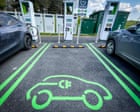
Zapmap's data shows a 37% year-on-year surge in ultra-rapid chargers, which deliver over 150 kW of power. These are the giant, expensive units you see at motorway service stations and major fuel forecourts. They can fill a modern car battery in about twenty minutes, and operators can charge a premium price for the convenience.
It makes financial sense for the networks. They get more revenue per kilowatt-hour sold, and nine out of ten of these rapid units over the last year were built outside of London, which helps fix the regional imbalance. But it leaves a massive gaping hole for ordinary drivers who live in terraced houses or flats without a private driveway.
The On Street Postcode Lottery
What happens if you can't charge at home? This is where the rollout completely breaks down for millions of potential buyers. Slow chargers (up to 8 kW) are what people need on their streets so they can plug in overnight.
Right now, getting these installed is an absolute mess. Local councils are supposedly rolling out chargers funded by the state's Local Electric Vehicle Infrastructure (LEVI) scheme. Tenders are finally being awarded, and you might see a few more plug points built into lamp posts or through-pavement charging channels.
But it's a total lottery. Some local authorities are moving fast, while others are paralyzed by bureaucratic delays, resident objections, or budget crises. If your local council is slow, you are stuck relying on commercial rapid chargers, which can cost three to four times more per mile than charging on a cheap overnight domestic electricity tariff.
Consolidation is Coming
Because the market has become so cutthroat, the era of dozens of independent charging startups is coming to an end. Small companies that scaled up fast during the 2024 boom are running out of cash as installation costs rise and utilization rates flatten.
We are already seeing the beginning of a massive wave of corporate mergers and acquisitions. Just last week, InstaVolt, one of the biggest players in the country, swallowed up the smaller GeniePoint network. Expect to see way more of this. The market is fracturing into a few well-funded giants who can afford to wait out the political uncertainty, while smaller networks get absorbed or simply go under.
What You Should Do Next
If you are currently looking to transition to an electric vehicle, don't rely blindly on the promise of a seamless public network. Take these practical steps before you sign a lease or drop cash on a new car.
- Audit your local streets: Don't assume your council has a plan. Search your local authority's website for LEVI scheme updates to see if any on-street charging tenders have actually been awarded for your neighborhood.
- Map your regular routes: Download apps like Zapmap or PlugShare to look at the specific ultra-rapid hubs along your frequent long-distance commutes. Look for locations with at least six to eight units to avoid waiting lines.
- Check the hardware capacity: Remember that not all cars can take advantage of the ultra-rapid network. If your car's maximum DC charging rate is capped at 50 kW, paying extra to plug into a 150 kW ultra-rapid charger is a complete waste of money.