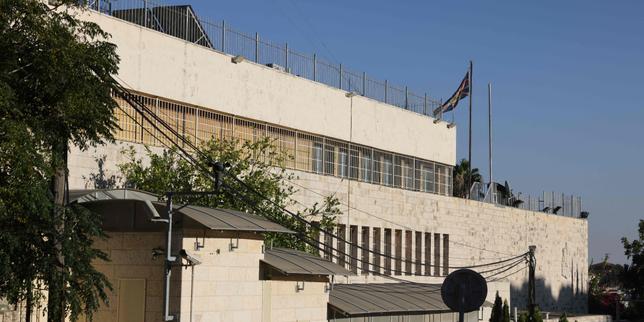
Diplomacy is messy. Right now, the diplomatic floor between London and Jerusalem has completely cracked.
If you think the recent administrative patches on the Jerusalem consulate issue solved anything major, you're missing the bigger picture. Relations are sitting at a historic low. Governments put on brave faces for public briefings, but behind closed doors, the friction is real, deep, and frankly hard to ignore.
The Reality Behind the Jerusalem Consulate Standoff
Let's cut through the official press statements. The core dispute involving diplomatic representation in Jerusalem isn't just about office space or paperwork. It touches raw nerve endings over sovereignty, international law, and shifting red lines in foreign policy.
When foreign ministries haggle over consular access, they are actually fighting over recognition and legitimacy. London wants to maintain traditional diplomatic protocols. Jerusalem wants total alignment. Neither side is willing to blink first. The recent minimal compromise looks less like a breakthrough and more like a tactical pause in a cold war.
Why London is Changing Its Tune
British foreign policy doesn't shift overnight. It takes a severe political earthquake to alter decades of calculated diplomatic inertia. Domestic pressure in the UK has skyrocketed. Lawmakers, civil society groups, and public opinion are pulling the Foreign Office away from its historical comfort zone.
You cannot ignore the human cost of the ongoing conflicts in the region. British politicians face daily demands from constituents to take a harder line. When policy drifts from public sentiment, governments usually choose self-preservation. That is why London's stance has hardened, even if diplomats try to keep things polite over tea.
What Most Observers Miss About UK-Israel Tensions
Most commentary treats this as a temporary disagreement between old allies. That view is dangerously outdated. Allies disagree all the time, sure. But this isn't a routine spat over trade tariffs or ambassadorial seating charts.
The divergence is philosophical. The strategic calculus that bound these two nations together for decades is fracturing under the weight of modern geopolitical realities. When core values on international law and regional governance diverge this sharply, superficial fixes won't hold.
Watch the intelligence-sharing and defense cooperation channels closely. That is where the true temperature of this alliance gets measured. If those quiet channels start freezing up, the diplomatic chill becomes permanent.
Take a close look at how foreign ministries manage their next round of appointments. That tells you everything you need to know about where this is heading.