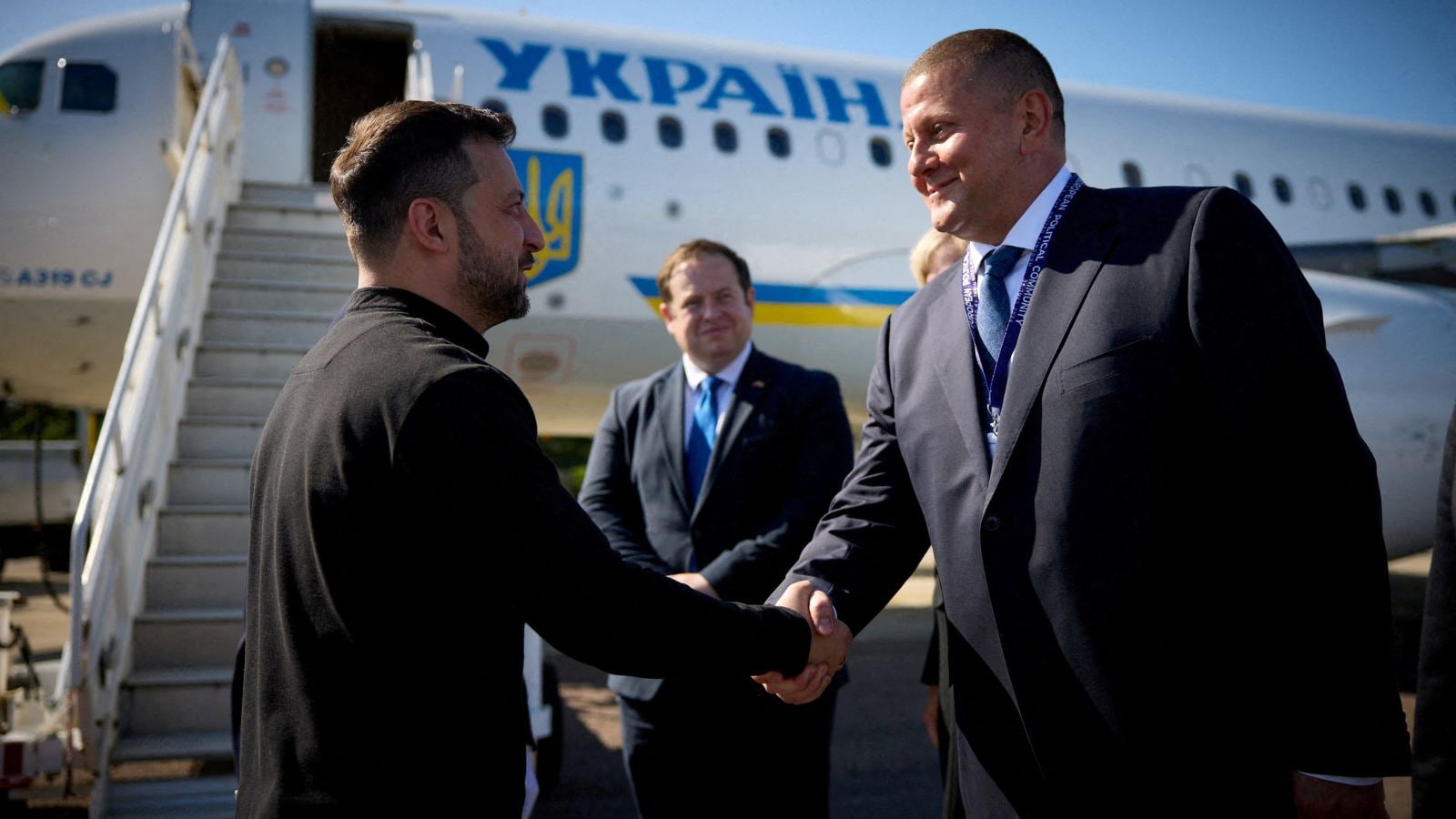
Hope is a terrible strategy for national security. While politicians in Kyiv and Brussels keep repeating the comforting script of eventual integration, the military reality on the ground tells a brutally different story.
Valerii Zaluzhnyi, Ukraine's former top military commander and current ambassador to Britain, recently stated the quiet part out loud. Speaking directly to Ukrainian ambassadors, he argued that Kyiv has no realistic prospect of ever joining the North Atlantic Treaty Organization. This isn't just diplomatic pessimism. It's a technical evaluation from a man who spent over a decade trying to drag his country's armed forces up to Western benchmarks.
If you strip away the optimistic communiqués and empty diplomatic promises, the structural barriers to membership become obvious.
The Myth of NATO Standards
For years, officials told the public that membership was just around the corner. Zaluzhnyi spent roughly twelve years working personally to implement Western military standards inside his own command. His conclusion? The targets were a moving illusion.
Ukraine's armed forces operate under unique operational pressures. They are locked in a grinding, high-tech war of attrition against Russia. Yet, Zaluzhnyi pointed out a harsh truth during his briefing with diplomats: an army shaped by modern trench warfare and drone swarms cannot easily merge with an alliance structure that relies on outdated strategic models.
It sounds counterintuitive. After all, isn't Ukraine's military the most battle-tested force in Europe right now? Yes, but fighting a defensive war against an invading neighbor is entirely different from integrating into a multinational command structure built decades ago.
The Technological Chasm
Military integration requires more than shared political values. It demands absolute hardware and software compatibility.
- Advanced anti-missile shields.
- Integrated satellite and space surveillance capabilities.
- Secure, multi-layered encrypted communication grids.
Kyiv lacks independent mass production of these high-end assets. While Western allies provide piecemeal shipments of advanced munitions, relying on donated gear is not the same as native defense architecture. Bridging that technological gap would require decades of sustained funding and industrial capacity that simply does not exist right now.
Furthermore, the political hesitation within the alliance remains strong. Not every member state wants to trigger Article 5 and inherit an active war with Moscow.
Where Kyiv Goes From Here
宪法 (The Constitution of Ukraine) still lists Euro-Atlantic integration as a primary national goal. Politicians cannot drop that phrasing overnight without facing massive domestic backlash. But realism requires looking past legal text.
Zaluzhnyi pointed toward alternative security architectures. Instead of waiting for a consensus that will never arrive inside Brussels, Kyiv needs to cultivate tighter bilateral pacts. Coalitions like the UK-led Joint Expeditionary Force offer alternative frameworks for regional defense. While these smaller groupings lack the sweeping mutual defense guarantees of Article 5, they offer practical pathways for operational cooperation.
Stop waiting for a golden ticket that will never be punched. The future of European security will be forged through direct bilateral capability, not bureaucratic entry requirements.
Ukraine will not join Nato, concedes President Zelenskiy
This video provides historical context on early high-level admissions regarding the difficulties of securing a Western alliance membership during active conflict.