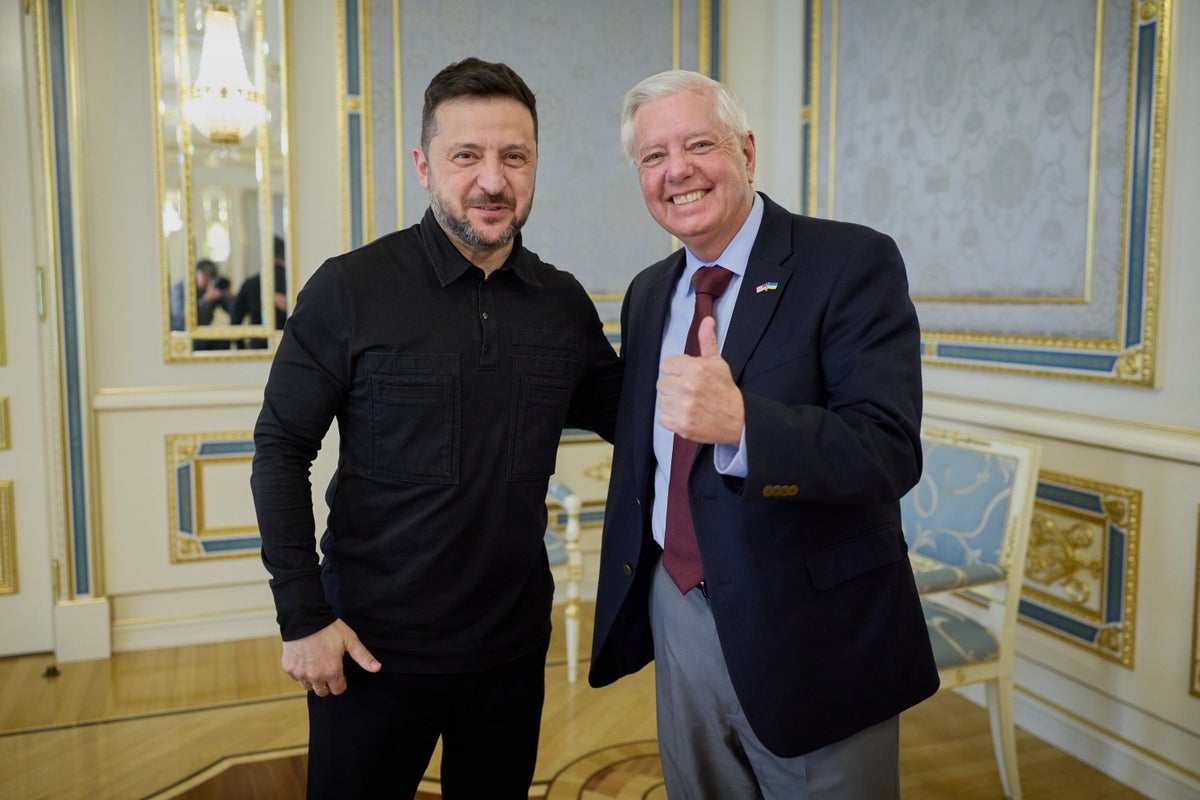
The sudden death of Senator Lindsey Graham on July 11, 2026, leaves a massive, unpredictable vacuum in American foreign policy. He died at 71 from an aortic dissection, just hours after returning from his tenth wartime trip to Kyiv.
While Washington reacts to the loss of a masterful, often frustrating dealmaker, the real panic is happening thousands of miles away. President Volodymyr Zelenskyy and his administration didn't just lose an American supporter. They lost their most effective translator. Graham was the rare figure who could sit in a bunker in Kyiv, look at Ukrainian soldiers, and then fly straight to Mar-a-Lago to convince Donald Trump why funding them was good business. Building on this idea, you can also read: Why The India Japan Defence Alliance Matters More Than Ever Right Now.
Losing that specific connection is catastrophic for Ukraine. The timing couldn't be worse, with the war dragging on and the Republican party pulling further inward toward isolationism.
The ultimate bridge between MAGA and military intervention
People always struggled to understand the relationship between Graham and Trump. It started with bitter insults in 2016 and evolved into a deep, golfing-buddy alliance. Critics called it opportunism. But for foreign leaders, especially in Kyiv and Jerusalem, it was a lifeline. Observers at The Washington Post have provided expertise on this situation.
Graham belonged to an older, hawkish era of the Republican party. He was the last of the "Three Amigos," alongside the late John McCain and Joe Lieberman. He believed American power should be used aggressively across the globe. When Trump took over the party with his "America First" doctrine, most traditional hawks either retired, got voted out, or became bitter critics who lost all influence.
Graham took a different path. He adapted. He realized that having the president's ear was worth more than holding onto pure ideological purity. By becoming one of Trump's most fierce domestic defenders, he earned the right to whisper in his ear about foreign policy.
Think about how critical that was for Ukraine. Whenever Trump publicly questioned the cost of the war or threatened to cut off funding, Graham was there to reframe the argument. He didn't lecture Trump on democratic ideals or global norms. He spoke Trump's language. He talked about loans instead of grants. He focused on the vast mineral wealth in Ukraine that shouldn't fall into Russian hands. He argued that letting Vladimir Putin win would make America look weak.
Now, that voice is gone. There is nobody else in the current Republican coalition who possesses that unique mix of hawkish conviction and MAGA credibility.
The empty seat at the Senate Budget Committee
Graham wasn't just a loud voice on cable news. He held the keys to the money. At the time of his death, he chaired the Senate Budget Committee. He also led the appropriations subcommittee that directly oversees foreign policy spending.
In a Senate where Republicans hold a tight 53-47 majority, his position was vital. He understood the mechanics of the legislative branch better than almost anyone. Just twenty-four hours before his death, while he was still on the ground in Ukraine, he helped announce a bipartisan deal with the Trump administration to punish countries buying Russian oil and gas.
Zelenskyy explicitly noted that Graham had briefed him on this legislative push during their final meeting. That was Graham's real strength. He didn't just offer thoughts and prayers. He was actively writing the laws and twisting arms in the cloakrooms to get funding through.
Without him, the defense spending bills face a much rougher road. The isolationist wing of the GOP, led by figures who want to halt all foreign assistance, faces much less resistance. There is no senior statesman left with the institutional weight to force a compromise.
The immediate fallout in South Carolina and Washington
The scramble to replace Graham begins immediately, and it will complicate things further. South Carolina Governor Henry McMaster has the power to appoint a temporary replacement to serve until January.
However, state law requires a special primary election within weeks to choose the official nominee for the November ballot. Graham was already running for reelection this year, having secured 57% of the vote in the June Republican primary. He was set to face Democrat Annie Andrews.
This upcoming special primary will turn into a proxy war for the future of the Republican party's foreign policy. You can expect a fierce battle between traditional conservatives who support global alliances and populist candidates who want to shut down foreign aid completely.
If a hardline isolationist wins that seat, the balance of power in the Senate shifts even further against Ukraine. It sends a chilling signal to other congressional Republicans who might want to vote for aid packages but fear a primary challenge from the right.
What Kyiv must do next to survive Washington politics
Ukraine can't waste time mourning. The political calendar in Washington moves too fast, and the threat on the ground is too severe. Kyiv needs a new strategy to replace the personal diplomacy they relied on with Graham.
First, Ukrainian diplomats must bypass the traditional foreign policy establishment and build direct ties with the next generation of conservative leaders. Relying on old-school hawks won't work anymore because that faction is officially extinct. They need to find younger Republicans who view containing Russia as a way to counter China.
Second, the messaging has to change completely. The arguments that worked with Graham—appeals to the legacy of Reagan, the defense of the international order—will fall flat with the current congressional majority. Every argument for aid must be framed in terms of American jobs, American manufacturing, and tangible economic returns.
Finally, Ukraine needs to strengthen its relationships with governors and business leaders in red states where defense manufacturing happens. If voting for Ukraine aid means keeping a factory open in Ohio, Pennsylvania, or Alabama, it becomes much harder for a populist politician to vote against it.
The loss of Lindsey Graham is a brutal reminder of how fragile international alliances can be when they depend on a few key personalities. Kyiv just lost its best defense attorney in the court of American public opinion. It is time for them to find a completely new way to make their case.